
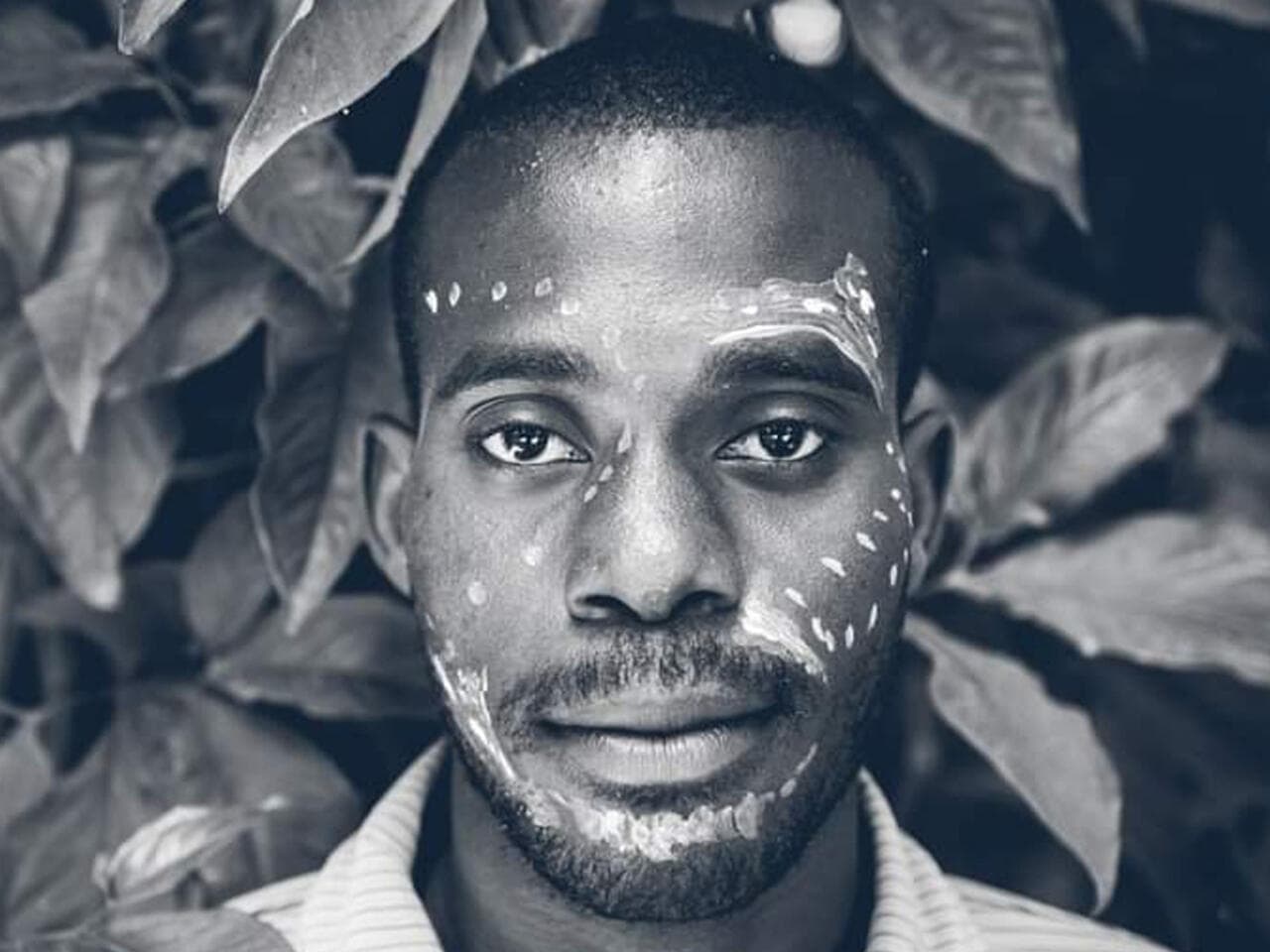
The Centre d'Art has announced that painter Bertho Jean Pierre will present his work for the first time in a solo exhibition from December 2026 to January 2027. Titled "ANIMA", the exhibition will be hosted by the Art Conscious gallery in New Orleans, United States. The institution warmly congratulates the artist and looks forward to this news, wishing him much success for this exhibition.<\/p>
The Centre d'Art reminds us that Bertho Jean Pierre joined them in 2017 after his first workshop with plastic artist Marie-Hélène Cauvin, who led the linocut workshop at that time. The institution claims to have monitored and supported his journey since then, a path marked, according to them, by years of hard work and research.<\/p>
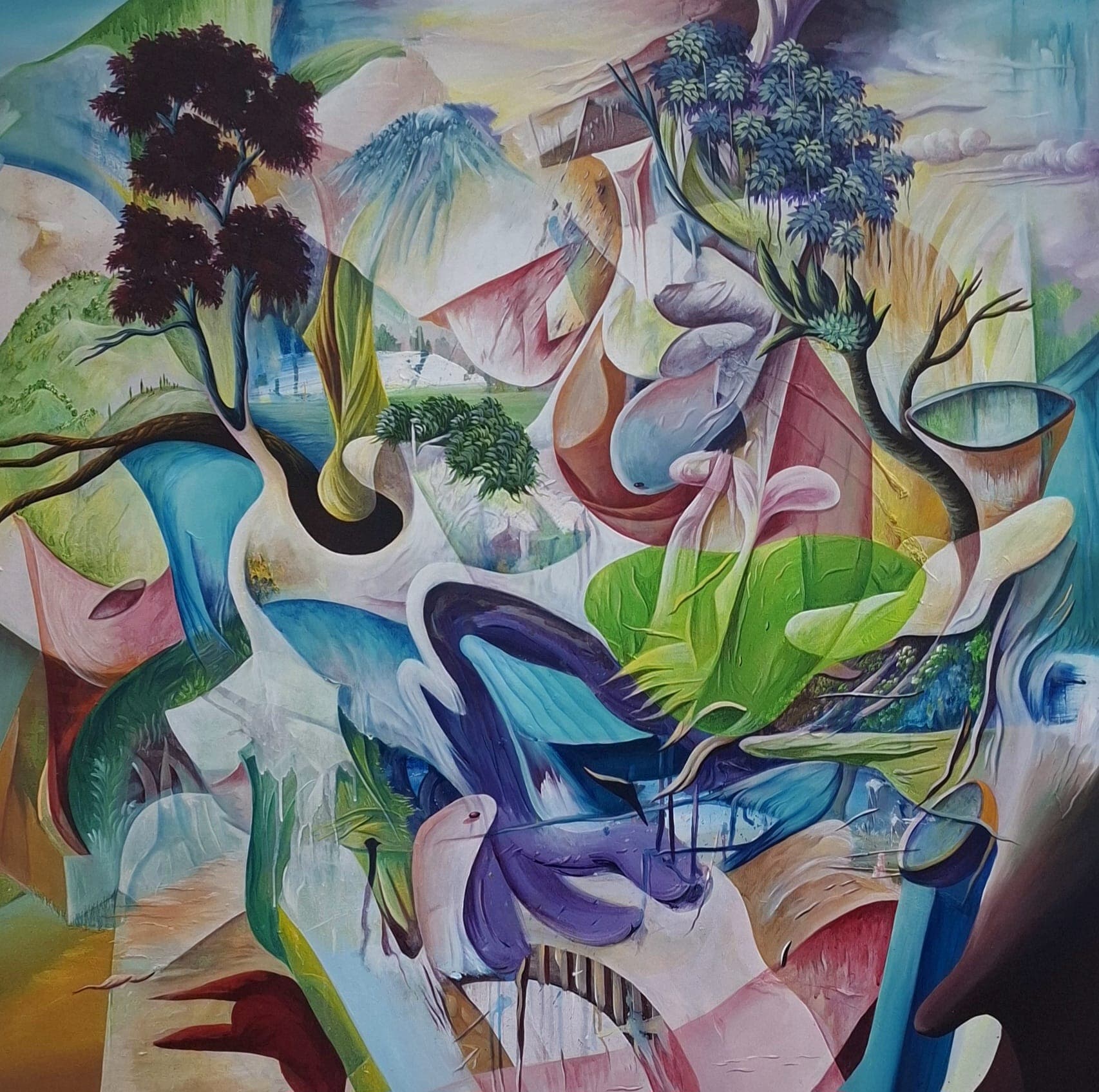
A sensation from the CDA 2023 workshop<\/strong><\/p> This American appointment confirms the rise of an artist already noted in Haiti. Bertho Jean Pierre was one of the sensations of the restitution-exhibition of the CDA 2023 workshop, according to the Centre d'Art. His painting, an acrylic on canvas measuring 100×100 inches according to the institution, dominated by a bright green associated with black on a white background, immediately captured attention upon entering the room. It stood out amid photographs applied to steel structures over three meters high, and visitors took pictures in front of the artwork.<\/p> The Centre d'Art sees this as a reflection of the long struggle the artist has waged against himself and his relatives to assert his art. Today, they classify him among the most promising artists and one of the emerging figures in Haitian art. Bertho Jean Pierre works and lives in the country.<\/p> A style forged at the Centre d'Art<\/strong><\/p> Arriving at the Centre d'Art in 2017 with much confusion about his future, the young artist found his aesthetic and rediscovered his love for art, the institution specifies. He had received a scholarship by applying for a new session. Through contact with artists like Frantz Zéphirin, he learned to liberate his art from the constraints of his early training, experimenting with various techniques, far from his parents and their confessional prejudices.<\/p> His style became more defined during a mentoring session, where renowned artists, acting as art critics, analyzed works created following a call for projects. Mario Benjamin, one of the critics, distinguished only one of the two works proposed by Bertho, seeing a certain originality in it. "Since then, I've adopted this technique that I refine each time," the artist recounts. He exhibited alongside other young artists from the Centre d'Art during the exhibition La relève<\/strong> in 2020.<\/p> A technique nourished by unnoticed forms<\/strong><\/p> His technique is nourished by forms that are difficult to identify and do not necessarily attract attention. "For example, water that is poured on the ground. It takes a shape, but often does not capture our attention," he explains. He says he has sharpened his visual sensitivity to perceive them and create an archive that remains buried in his subconscious. He does not know in advance what he will paint: "It's always an instantaneous exercise," he says.<\/p> A initially thwarted path<\/strong><\/p> Bertho's journey has not been linear. From about six years old, he enjoyed reproducing and coloring illustrations. His Protestant parents disapproved of his vocation. His father placed him with painter Ossey Dubic to initiate him into art, but the teenager experienced this assignment as a punishment. He found an escape in the Marcel Gilbert creative workshop at the Justin Lhérisson library in Carrefour, where he began writing, before taking up the brush again on the advice of librarian Lesly Giordani. The discovery of the Centre d'Art later weighed on his choices: "I was fascinated," he confides.<\/p>




Commentaires
Aucun commentaire pour le moment. Soyez le premier à réagir.