(When the decline of diplomatic support for Havana questions the international order, the freedom of states, and responsibility towards populations)
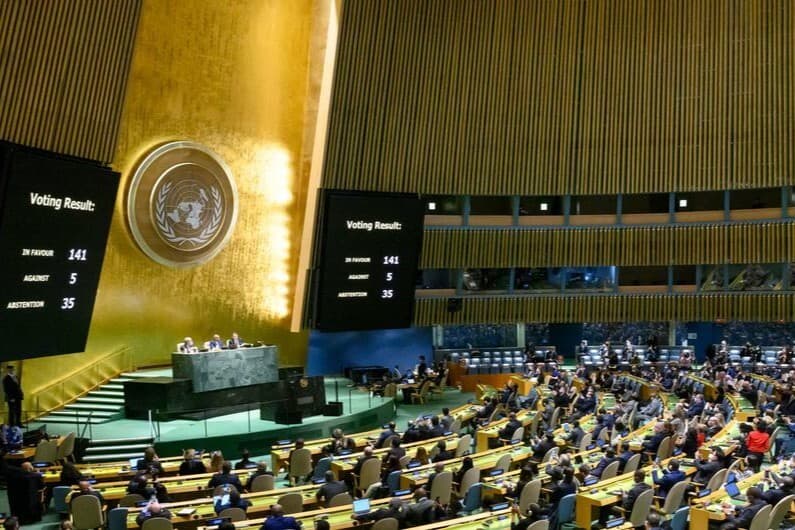
The vote on October 28, 2026, at the United Nations General Assembly deserves a reading that goes beyond the usual reactions triggered by the Cuban issue. For the thirty-fourth time, the majority of member states supported a resolution calling for the lifting of the economic, commercial, and financial embargo imposed by the United States on Cuba. However, with 130 votes in favor, 17 against, and 25 abstentions, the result reflects an important shift in diplomatic balances. Support remains majority, but it is significantly lower than that recorded the previous year. This change does not necessarily mean that the international community now approves of the embargo. Rather, it indicates that diplomatic positions are becoming more differentiated, in a context of international pressures, geopolitical rivalries, and concerns regarding the internal situation in Cuba. The issue thus raises a fundamental question: in a world where economies, technologies, supply chains, and power relations are closely interdependent, how far can one state exert economic pressure on another without undermining the principles that organize international coexistence? For Caribbean states, this question is particularly important. Their economic size, exposure to external shocks, and dependence on certain supplies make them sensitive to decisions made by major powers. Therefore, the Cuban affair is not merely a controversy over socialism, capitalism, or relations between Washington and Havana. It is also a test for the sovereignty of states, the coherence of multilateralism, and the ability of diplomacy to protect populations without renouncing the principles of international law.
I. The Decline of Support for Cuba: A Diplomatic Signal to Interpret with Rigor
A. A Persistent Majority, but Less Broad
The comparison of the votes from 2025 and 2026 reveals a significant evolution.
In 2025, the resolution had received 165 votes in favor, versus 7 opposed and 12 abstentions. In 2026, it garnered 130 votes in favor, 17 against, and 25 abstentions. Three observations can be drawn from this.
Firstly, the majority in favor of lifting the embargo remains significant. It would thus be excessive to present the result as a general abandonment of Cuba by the international community. Secondly, the increase in votes against the resolution and the abstentions indicates that several states have reevaluated their position, or chosen not to support the text under the same conditions as in previous years. Thirdly, the vote shows that repeated resolutions are not sufficient, on their own, to change foreign policy when they are not accompanied by the necessary political and legal mechanisms for their implementation. Diplomacy must therefore distinguish three realities: political support for a text, the existence of a legal obligation, and the effective capacity to influence the behavior of a state.
B. Abstention: Between Caution, Pressure, and Strategic Calculation
In international relations, abstention does not have a single meaning. It can express a legal reservation, a divergence on the content of a resolution, the desire to preserve bilateral relations, or the refusal to choose between two strategic partners. It can also result from a calculation related to anticipated economic, commercial, or security consequences. In the Cuban dossier, information published around the vote indicates American diplomatic efforts aimed at obtaining more oppositions or abstentions. Some Western countries have notably abstained even though they had previously supported the resolution. These developments do not alone allow for the motivations of each government to be established. However, they warrant examining the power relations that surround multilateral decisions. The scientific question then becomes one of the autonomy of diplomatic decision-making: to what extent does a state vote based on its legal analysis and national interests, and to what extent is its position influenced by pressures from more powerful partners? This question is particularly relevant for small states, whose margins for maneuver are sometimes reduced by their exposure to markets, financing, and external security guarantees.
II. The Embargo Tested by International Law and Economic Sovereignty
A. Economic Power as a Tool of Foreign Policy
Economic sanctions constitute a classic instrument of international relations. States use them to express disapproval, modify a government’s behavior, or exert pressure in favor of political objectives. However, not all economic measures have the same legal foundations, scope, or consequences. It is necessary to distinguish sanctions adopted within the framework of the United Nations Security Council, unilateral measures taken by a state, and restrictions whose effects extend to businesses and individuals established in third countries. The Cuban case particularly highlights the extraterritorial dimension of certain provisions of American legislation, notably the Helms-Burton Act of 1996. The resolution presented by Cuba to the General Assembly expresses concerns regarding the effects of such measures on the sovereignty of other states, their legitimate interests, and the freedom of trade and navigation. This question calls for a precise legal analysis. It is not enough to automatically qualify any unilateral sanction as illegal, nor is it adequate to invoke national security to dismiss any inquiry into its compliance with international law. The legal bases invoked, the territorial scope of the measures, their effects on third states, and the applicable international obligations must be examined.
B. Sovereignty is Not Reduced to Political Independence
Sovereignty is often understood as a state's right to freely determine its political organization and national choices. However, in a globalized world, it also depends on its ability to access resources, finance its activities, secure its supply chains, and maintain diversified economic relations. A country may formally retain its independence while having a reduced margin for decision-making due to its energy, financial, technological, or commercial dependencies. Cuba illustrates this vulnerability. The tensions surrounding the embargo arise as the island is experiencing an energy crisis and facing shortages affecting its population's living conditions. Supply restrictions on fuel and economic difficulties exacerbate the constraints the country faces. The strategic significance of this situation goes beyond the Cuban case alone: it shows that global interdependence can become a lever of power when one actor controls resources or networks on which another depends. For small states, contemporary sovereignty thus requires more than the legal recognition of independence. It assumes developing economic, institutional, and cognitive capabilities to reduce excessive dependencies and anticipate their consequences.
III. The Cuban Population at the Center of a Diplomatic Dilemma
A. Distinguishing the People, the State, and the Government
One of the difficulties of the Cuban debate lies in the frequent confusion between three realities: the population, the state, and the government.
The population includes citizens who must meet their daily needs for food, energy, health, housing, and education. The state refers to the permanent institutions and the legal order that organize collective life. The government, on the other hand, temporarily wields political power and is responsible for its choices. These three dimensions are interconnected, but they are not interchangeable. Criticizing the policies of the Cuban government does not necessarily mean supporting the embargo. Defending the rights of the Cuban population does not imply renouncing examination of the responsibilities of national authorities in the economic and institutional management of the country. Conversely, denouncing the failures of the Cuban government does not exempt one from evaluating the humanitarian consequences of externally imposed economic restrictions. A balanced analysis must therefore simultaneously examine the effects of American measures, the decisions of Cuban authorities, the structural constraints of the island's economy, and the concrete consequences for the population.
B. The Effectiveness of a Policy Must Be Evaluated by Its Results
An economic pressure policy should not be assessed solely based on the intentions announced by those who implement it. Its results, costs, and the real possibilities of achieving the pursued objectives must also be examined. A central question arises: do economic restrictions lead to the political transformations sought, or do they chiefly contribute to reinforcing the daily difficulties of the population and reducing cooperation margins? This question does not have a universal answer. It must be empirically studied, distinguishing the different instruments used, the sectors affected, short- and long-term effects, and the reactions of the concerned actors. Nevertheless, the protection of fundamental rights must remain an essential criterion. The needs of the population cannot be considered a secondary variable in a confrontation strategy between states. Diplomacy must seek solutions that allow for the defense of legal principles while minimizing human damage and opening realistic avenues for de-escalation.
IV. The Paradox of Multilateralism: Can a Majority Transform the Policy of a Major Power?
A. The Political Significance of a Non-binding Resolution
The United Nations General Assembly is a space where states express their positions on international issues. Its resolutions can contribute to clarifying norms, measuring diplomatic power relations, and exerting political pressure. However, a resolution from the General Assembly calling for the lifting of the embargo does not, on its own, have the legal power to compel the United States to change its legislation. The necessary decisions to lift certain restrictions fall within the American legal and political framework. This distinction is fundamental.
A diplomatic majority can express a strong collective position without having an equivalent enforcement mechanism. The vote then becomes an indicator of political legitimacy and international orientation, but it does not automatically constitute a transformation of applicable law or national policies.
B. Multilateralism Must Go Beyond the Repetition of Declarations
When the same resolution is adopted for several decades without producing the desired political change, reflection is required on the limits of the diplomatic instruments employed. This is not to conclude that the vote is useless. It can keep an issue on the international agenda, raise visibility for the concerns of the states involved, and express a collective position. But its impact also depends on the accompanying mechanisms: diplomatic dialogue, negotiations, regional cooperation, humanitarian initiatives, and the search for concrete measures likely to reduce tensions. The contemporary challenge of multilateralism, therefore, is to align norms, political will, and implementation mechanisms. A credible international order cannot solely rely on the repetition of principles. It must also provide pathways for dispute resolution and means of cooperation that allow states to gradually move out of prolonged confrontations.
V. What Lessons for Haiti and Caribbean States?
A. Reject Reflexive Diplomacy
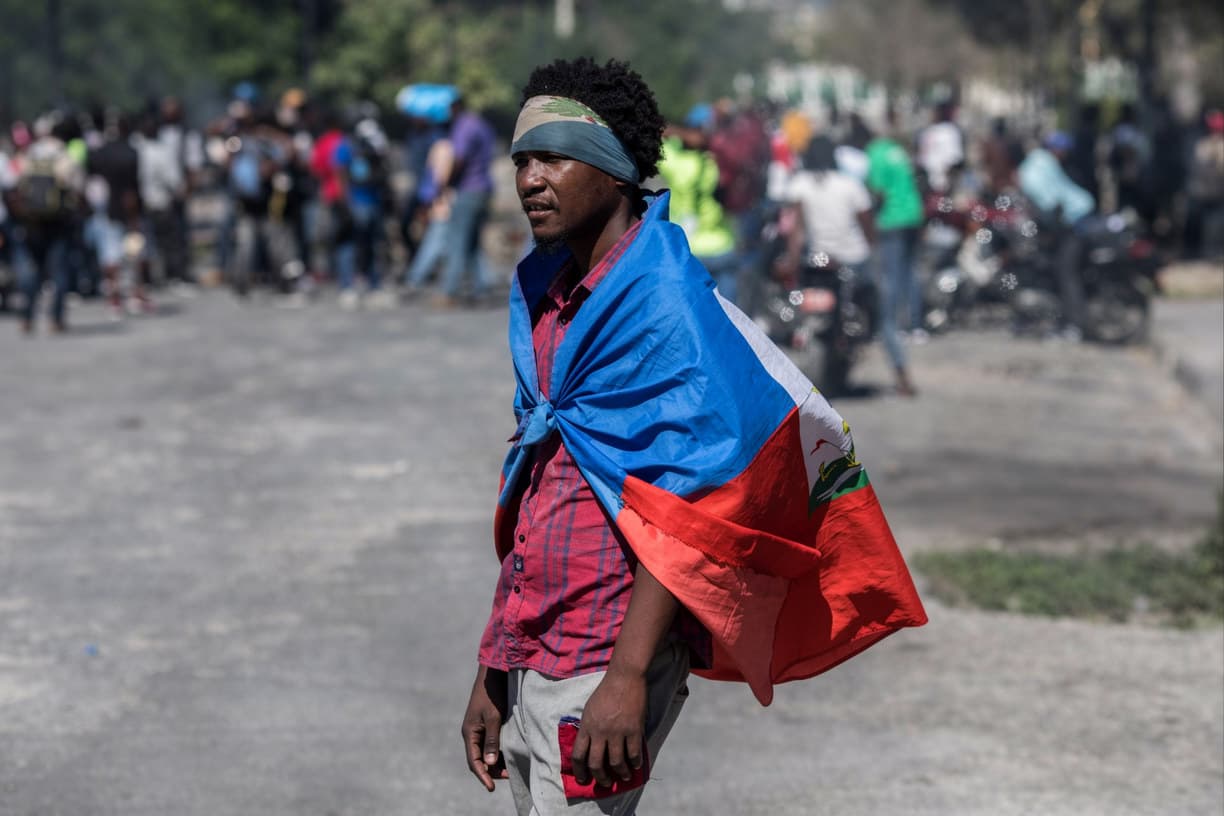
Haiti cannot approach the Cuban issue solely through a logic of automatic solidarity or alignment with a major power. Its position should be based on a rigorous assessment of international law, its national interests, its regional relations, and the human consequences of the policies examined. Responsible diplomacy can advocate for the right of peoples to self-determination, support the peaceful resolution of disputes, and oppose measures whose effects on populations appear disproportionate, all while maintaining the freedom to criticize the political choices and institutional practices of each government. This posture is not contradictory. It represents a form of diplomatic coherence.
B. Making Sovereignty a Concrete Capacity
The Cuban experience reminds Haiti that political independence is insufficient if the state remains highly vulnerable to supply disruptions, financial shocks, and external pressures. Reducing these vulnerabilities requires a strategy of economic diversification, strengthening productive capacities, securing essential supplies, and developing national skills. It also assumes the ability to produce and analyze reliable data to understand the country's dependencies, measure risks, and assess available options. This is where cognitive sovereignty intersects with economic diplomacy: a state that knows its vulnerabilities and has credible scenarios has better conditions for negotiating, diversifying its partnerships, and preserving its decision-making margin.
C. Building Caribbean Cooperation Based on Common Interests
Caribbean countries share vulnerabilities related to their exposure to external shocks, logistical costs, climate risks, and the concentration of certain markets and supplies. Without denying their political differences, they could strengthen cooperation in several areas: energy security, public health, disaster response, scientific training, maritime transport, and regional coordination mechanisms. Cooperation should not be confused with adherence to a single political model. It can be built around common interests, verifiable needs, and mutual commitments. For Haiti, the challenge is developing Caribbean diplomacy capable of defending its interests without locking itself into the rivalries of major powers.
Ultimately, the United Nations vote on Cuba reveals a major paradox of globalization: states are legally sovereign, but their freedom of action can be profoundly affected by economic interdependencies and power relations. The decline in diplomatic support for the resolution neither signifies the disappearance of the majority in favor of lifting the embargo nor a general approval of American policy. It rather shows that international balances are evolving and that small states must carefully analyze the consequences of their diplomatic choices. The Cuban question also imposes a dual requirement: to examine the effects of external measures on the population and to maintain a critical perspective on the internal responsibilities of the government. Neither the embargo exempts an analysis of Cuban governance, nor do internal failures render the examination of the consequences of economic restrictions unnecessary. For Haiti, the lesson is strategic. Sovereignty must not only be proclaimed; it must be supported by strong institutions, a less vulnerable economy, coherent diplomacy, and a national capacity to produce the knowledge necessary for decision-making. In a globalized world, true autonomy does not consist of isolating oneself. It consists of cooperating without renouncing one’s judgment, negotiating without abandoning one’s principles, and defending one’s interests without losing sight of the rights of populations.
Me Jonel Dilhomme, Av.
Researcher in International Law and Global Governance
Analyst of Applied Foresight to Fragile States and the Future of Haiti
Researcher on the General Theory of Cognitive Sovereignty Applied to Fragile States
Former Professor at the State University of Haiti
Email: Jonel.dilhomme30@gmail.com
Select References
- United Nations, "Cuba: at the UN, the condemnation of the American blockade loses ground," October 28, 2026.
- United Nations General Assembly, annual resolution on the necessity of ending the economic, commercial, and financial embargo imposed by the United States on Cuba.
- OECD, work on public governance, government coordination, and the institutional capacity of states.
- International Monetary Fund, Haiti: Technical Assistance Report, Governance Diagnostic Report, 2025.


Commentaires
Aucun commentaire pour le moment. Soyez le premier à réagir.