
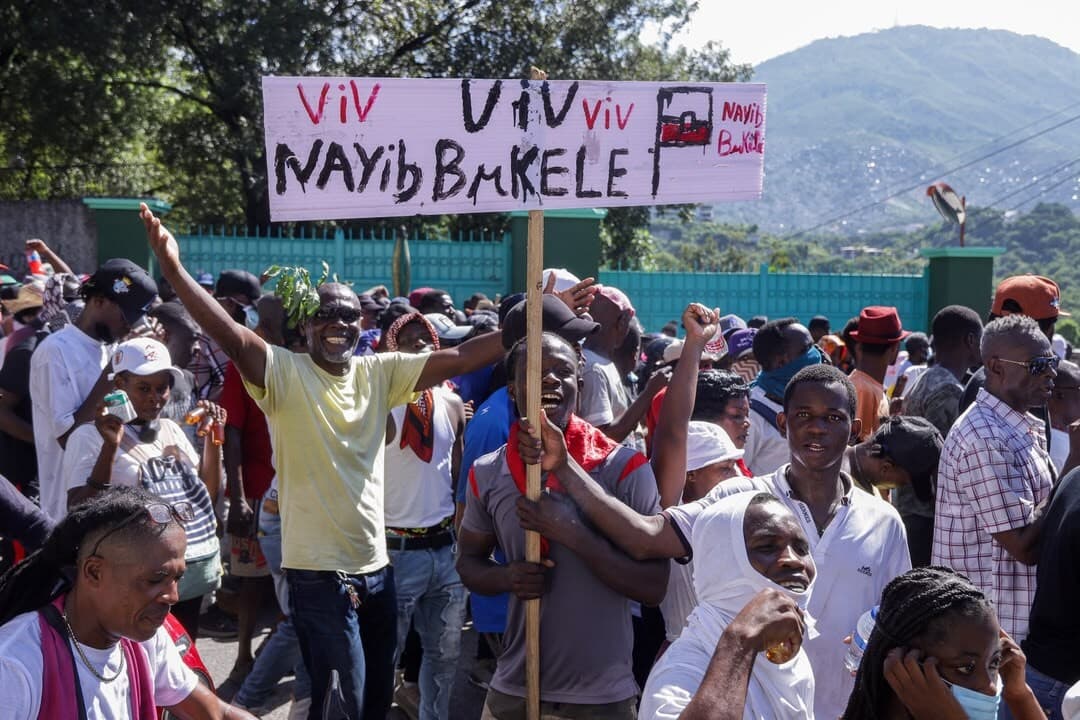
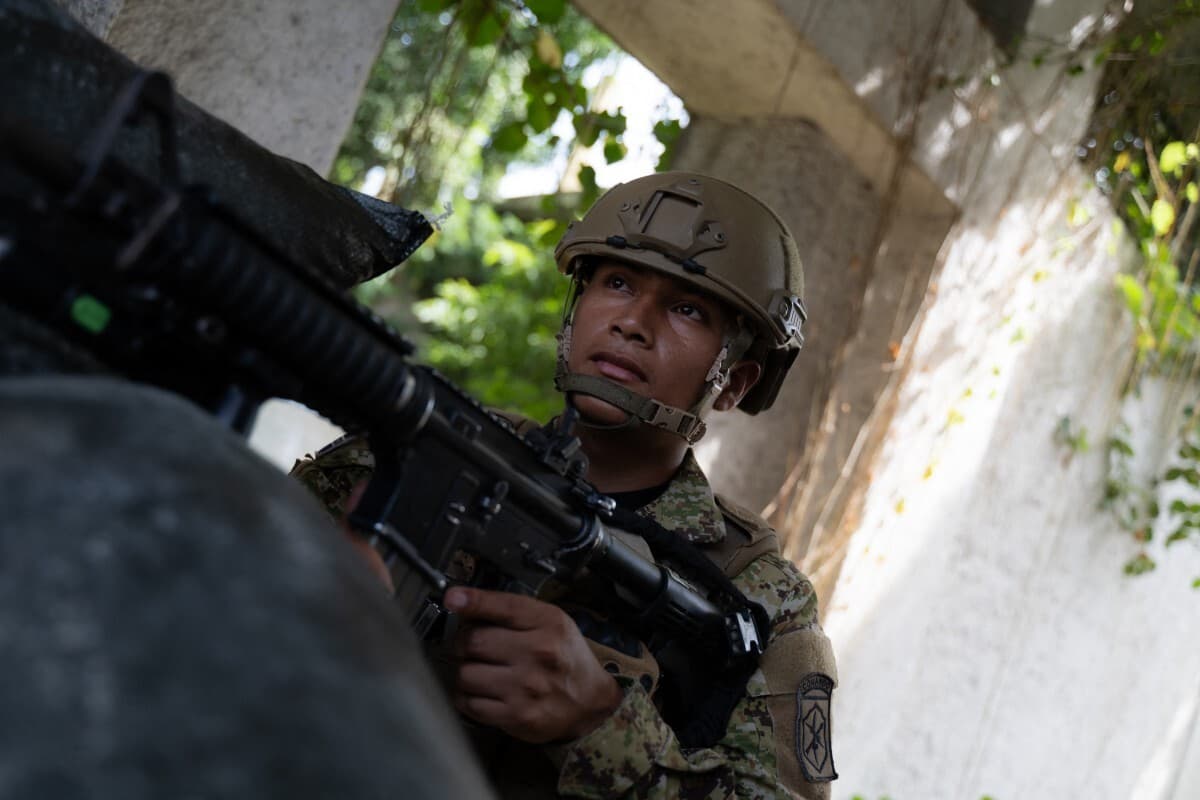
While El Salvador mobilizes its military to contribute to restoring security in Haiti, our authorities should already consider the nature of the relationships we wish to maintain with this country in the years to come. The solidarity shown by President Nayib Bukele offers us an opportunity to rethink our diplomacy and to give a new direction to our cooperation with Latin America.<\/p>
In recent days, expressions of gratitude towards the Salvadoran president have multiplied. This popular momentum primarily reflects the weariness of a population that has lived too long in fear, neglect, and uncertainty. Haitians want to reclaim their neighborhoods, resume their economic activities, and live with dignity in their own country.<\/p>
But beyond this popular recognition, there is a political responsibility that rests with the Haitian authorities: transforming this rapprochement into a genuine strategic partnership.<\/p>
A Haitian diplomacy that must emerge from its passivity<\/strong><\/p> The absence of a Haitian embassy in San Salvador and Salvadoran diplomatic representation in Port-au-Prince deserves special attention, given the importance that cooperation between the two nations is taking today.<\/p> For too long, Haiti's international relations have been primarily dictated by its internal crises. When the situation deteriorates, we seek international assistance. Yet, we pay relatively little attention to building partnerships that could prevent certain crises and support our development.<\/p> Our foreign policy must transcend this logic.<\/p> The Ministry of Foreign Affairs should, from now on, engage in official discussions with Salvadoran authorities in view of establishing permanent diplomatic representations in both countries.<\/p> An embassy is not just a mere symbol of rapprochement between two nations. It plays a crucial role in negotiating bilateral agreements, promoting investments, protecting nationals, and defending national interests.<\/p> Haiti must learn to take diplomatic initiatives rather than systematically waiting for those from its international partners.<\/p> Not limiting our relations to security issues<\/strong><\/p> It would be a political and strategic error to view El Salvador solely as a military partner.<\/p> Cooperation between the two countries could extend to several sectors essential to national reconstruction, including police training, judicial reform, public administration modernization, education, university exchanges, tourism, and economic development.<\/p> Haiti would also benefit from encouraging exchanges between Haitian and Salvadoran entrepreneurs, negotiating vocational training programs, and establishing technical cooperation mechanisms between the institutions of the two states.<\/p> Of course, this is not about completely replicating the Salvadoran model. Haiti has its own history, social realities, and institutional particularities. However, nothing prevents us from studying foreign experiences and adapting relevant initiatives to our national context, in respect of our constitutional principles and fundamental rights.<\/p> An intelligent foreign policy also consists of identifying, among our partners, the possibilities for cooperation that meet our needs.<\/p> Nationale sovereignty also demands transparency<\/strong><\/p> Any foreign military intervention on national territory, however necessary it may be, must occur within a clearly defined legal framework.<\/p> The Haitian authorities must make public the agreements that frame this cooperation, clarify the nature of the commitments made, the duration of the mission, the responsibilities of the parties involved, and the control mechanisms.<\/p> The Haitian people cannot be kept out of decisions that directly concern the security and future of their country.<\/p> This demand for transparency does not reflect any hostility towards El Salvador. It stems from respect for democratic principles, national sovereignty, and the citizens' right to information.<\/p> We cannot claim to restore the rule of law while neglecting the very principles on which it rests.<\/p> Gratitude towards Bukele must not erase the responsibility of our leaders<\/strong><\/p> Personally, I understand the admiration that many Haitians express towards President Nayib Bukele. After years of violence, forced displacement, and humiliation, any initiative capable of restoring security represents a source of hope.<\/p> However, it would be dangerous to develop a political or psychological dependence on a foreign leader, no matter how determined and well-intentioned he may be.<\/p> Nayib Bukele was elected to govern El Salvador. It is up to Haitian leaders to govern Haiti.<\/p> We must be able to appreciate our partners' commitment while demanding from our own authorities the same level of determination, leadership, and accountability.<\/p> Patriotism also involves holding accountable those who exercise power on behalf of the nation.<\/p> And what after the gangs?<\/strong><\/p> Reconquering the territories occupied by armed groups will only be the first step in a vast national undertaking.<\/p> We will need to rebuild the destroyed neighborhoods, allow displaced families to return home, reopen schools, restore public services, revive economic activities, and reform our judicial system.<\/p> Above all, we will need to tackle the conditions that fostered the expansion of crime: impunity, corruption, unemployment, social exclusion, and the weakening of public institutions.<\/p> Without a national policy capable of addressing these issues, military victories may have only temporary effects.<\/p> This is why our leaders must begin, as of today, to prepare for the post-crisis period.<\/p> El Salvador's commitment will certainly remain an important chapter in our contemporary history. But it is up to the Haitian authorities to determine the historical significance of this cooperation.<\/p> I hope that in a few years, we will be able to speak of El Salvador as a privileged partner of Haiti in the diplomatic, economic, educational, and institutional fields, and not exclusively as a country coming to help us fight gangs.<\/p> Our greatest ambition should be to build a Haiti where no citizen will need to place their hopes for security in the hands of a foreign president.<\/p> We can be grateful to Nayib Bukele while remaining deeply demanding of our own leaders.<\/p> For while international solidarity can help us out of this crisis, constructing a stable, prosperous, and sovereign Haiti remains above all a Haitian responsibility.<\/p>

Commentaires
Aucun commentaire pour le moment. Soyez le premier à réagir.