The West is in turmoil…
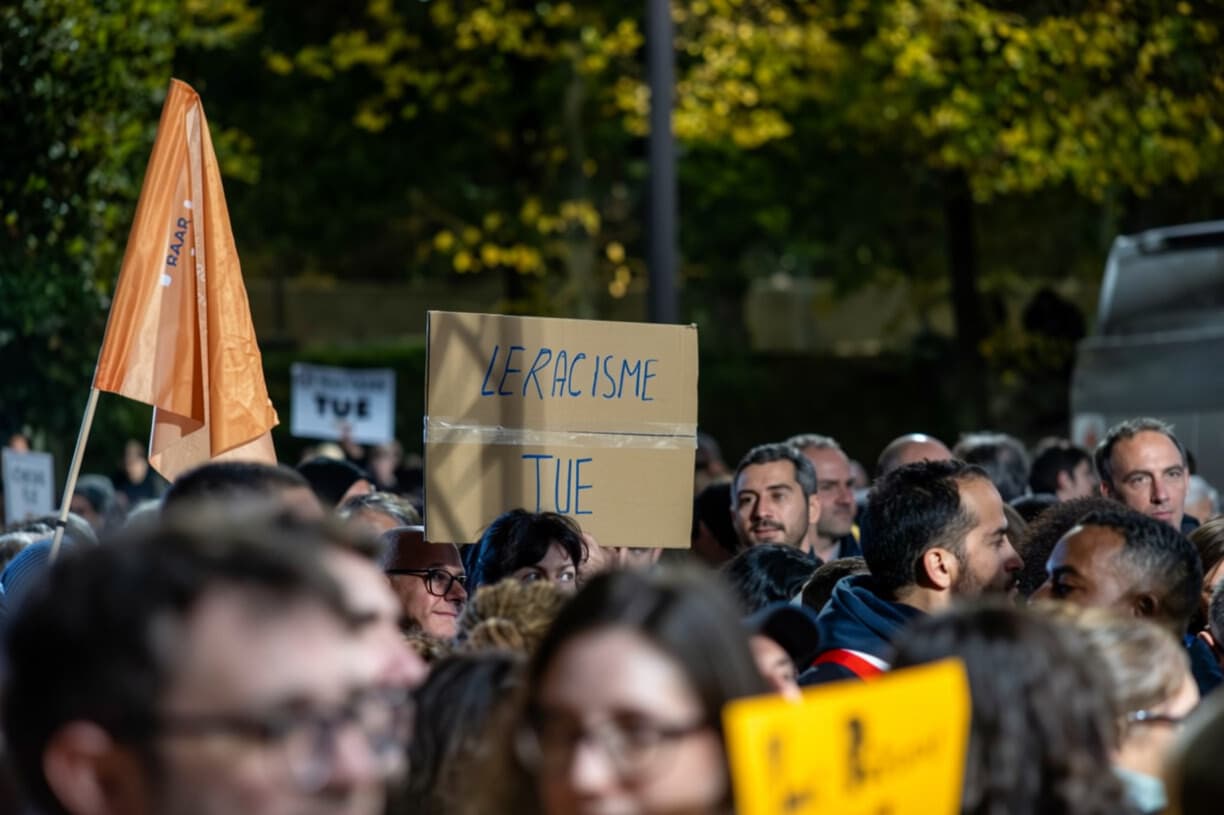
Racism has never rested, nor has it ever dreamed of being a dormitory or a place of rest. It is a hard worker; it engages in multiple jobs and professions that keep it always awake and active. Throughout its history, racism has experienced only one moment of performance decline, which its victims consider a parenthesis that has had no lasting influence on it: it was at the very beginning of the end of the Cold War. Released from prison on February 11, 1990, South African martyr leader Nelson Mandela (July 18, 1818 – December 5, 2015) was elected president of the Republic of South Africa; he served from May 10, 1994, to June 14, 1999. Mandela's liberation and election marked an unprecedented turning point in the contemporary history of racism and sharply rejected the apartheid regime that had been supported by the collective West. It was this same collective that awarded him the Nobel Peace Prize in 1993, jointly with Frederik de Klerk, the gravedigger of the South African black people. It is a shame that President Nelson Mandela accepted this distinction; he should have refused it and been satisfied with the Lenin Peace Prize he received in 1990, which seems to hold much more symbolic significance in the fight to strengthen peace among peoples. But such is not the focus of the debate we pursue in this article.
Racism is a political and social barometer through which we can assess the mental state of peoples yesterday, today, and tomorrow. Its resilience never weakens and cannot be explained solely from a psychological perspective, but also in light of the capitalist economy, which relies on the exploitation of the laboring masses. Its intellectual and cultural side is important and must always be observed, but the capital it brings to the physical and moral persons who exercise it is even more significant and must never cease to be combated. In modern times, slavery was imposed in the name of the superiority of the Caucasian ethnicity, which sparked debate among progressive intellectual circles opposed to irreducible denialists and segregationists. However, the economic relations generated by slavery are often overlooked as an objective contribution to the development of capitalism, which has been able to thrive by exploiting the servile labor of slaves, as we can observe in these contradictory debates that persist in our time. Today, capitalist exploitative classes manage to tighten the job market by relying on the reserve army of workers, which serves as a pressure tool on wage reductions within the system. Thus, the universal worker has no choice but to accept their low-wage labor at the risk of being fired immediately, while others without work are ready to replace those who resist the cruel conditions imposed by the profit-oriented capitalist.
With our definition of racism established, let us now examine the circumstantial causes currently stirring the collective West. The West is the land of racism that embodies fascism, extreme right, and xenophobia: toxic fermentations that erode trust and feed crises of political and economic instability. After the Cold War in December 1991, the imperialist powers of the West found themselves intoxicated by their victory over the Soviet Union, opening a new international context that facilitated the free movement of capital, which the titans of finance and monopoly capitalism exploited to maximize their profits. They created a capitalist structure they called Globalization or Global Village, whose implementation tends to make customs borders porous and further weaken state institutions. The theorists of globalization dismiss and/or eliminate protectionism and economic nationalism, which for a long time had been symbols of the dominant ideology. But the mistake they made was not investing enough in improving the living conditions of the working classes who bear the brunt of globalization.
While the discourse of petty-bourgeois nationalism seduces and thrives within the capitalist states of the united West, it seems powerless to the resurgence of fascist extreme right parties that voice racism and anti-Semitism. The United States of America, the leader of capitalist imperialism and of Western society, is led by an extreme right president, namely Mr. Donald Trump, whose term begins on January 21, 2025. In Italy, a neofascist has been in power since October 22, 2022, referring to Mrs. Giorgia Meloni as the President of the Council of Ministers. In the United States, the black community is constantly persecuted; even as the current American administration extends its repression against illegal immigrants, they claim. Deadly victims are perpetrated during illegal raids by immigration police, of which American citizens are also collateral damage. Jews are also persecuted in most EU member states, which lament the fate of their liberal democracy, whose application has led to what one of their own calls without conviction the Reactionary International.
In the era of rampant post-Cold War universalism, international intellectual awareness witnesses an intertwining of concepts, ideas, and actions such as unbridled liberalism (market primacy without state intervention), facade nationalism, the abandonment of religious values replaced by other no less suspicious or dubious values, intellectual denial, and the brutal reemergence of extreme right parties, closely akin to fascism. This ensemble forms a toxic and corrosive cocktail within a political-intellectual cacophony capable of sowing confusion in public opinion. Let’s say better: this hubbub expresses in real-time the chaos on Western soil. Germany, France, and England are under threat from rising Nationalist Parties in anticipation of the upcoming elections next year, and the agitation seems feverish. If France has a chance to escape the cyclone of the extreme right with the leader of La France Insoumise (LFI) Jean-Luc Mélenchon, whose presence in the presidential runoff seems credible according to the polls conducted so far. It is therefore not evident for the other two countries (Germany and England) that are mired in Pax Americana; moreover, the current president of the United States is situated on the far right of the American political establishment.
We believe we have answered the posed question to the best of our ability. May this article serve as a testimony to what is currently happening in Western lands, where the remarkable rise of extreme right parties and figures is explanatory. The current vice-president of the United States, Mr. James David Vance, known as J.D. Vance, has received the official endorsement of President Trump and stands a strong chance of being elected president in the presidential election scheduled for early November 2028. JD Vance is situated to the right of American right; he is better suited to succeed Donald Trump for his isolationism than his rival Marco Rubio, the current Secretary of State, who seems more open with regard to US foreign policy. In France, Emmanuel Macron is a masked right-leaning president; over the last ten years, he has pursued and implemented an excessively liberal policy that has ultimately exploded the French public debt to its highest level since the end of World War II in 1945. This liberal policy has also favored the rise of Mrs. Le Pen (Marion Anne Perrine known as Marine Le Pen), the unmovable head of the Le Pen dynasty, whose National Rally (RN) party, formerly the National Front (FN), is predicted to win the first round of the presidential election in May 2027. At this crucial election, the French proletariat and its natural allies will decide their future between the choice of maintaining the status quo and the choice of rupture as proposed by the leader of the La France Insoumise movement.


Commentaires
Aucun commentaire pour le moment. Soyez le premier à réagir.