

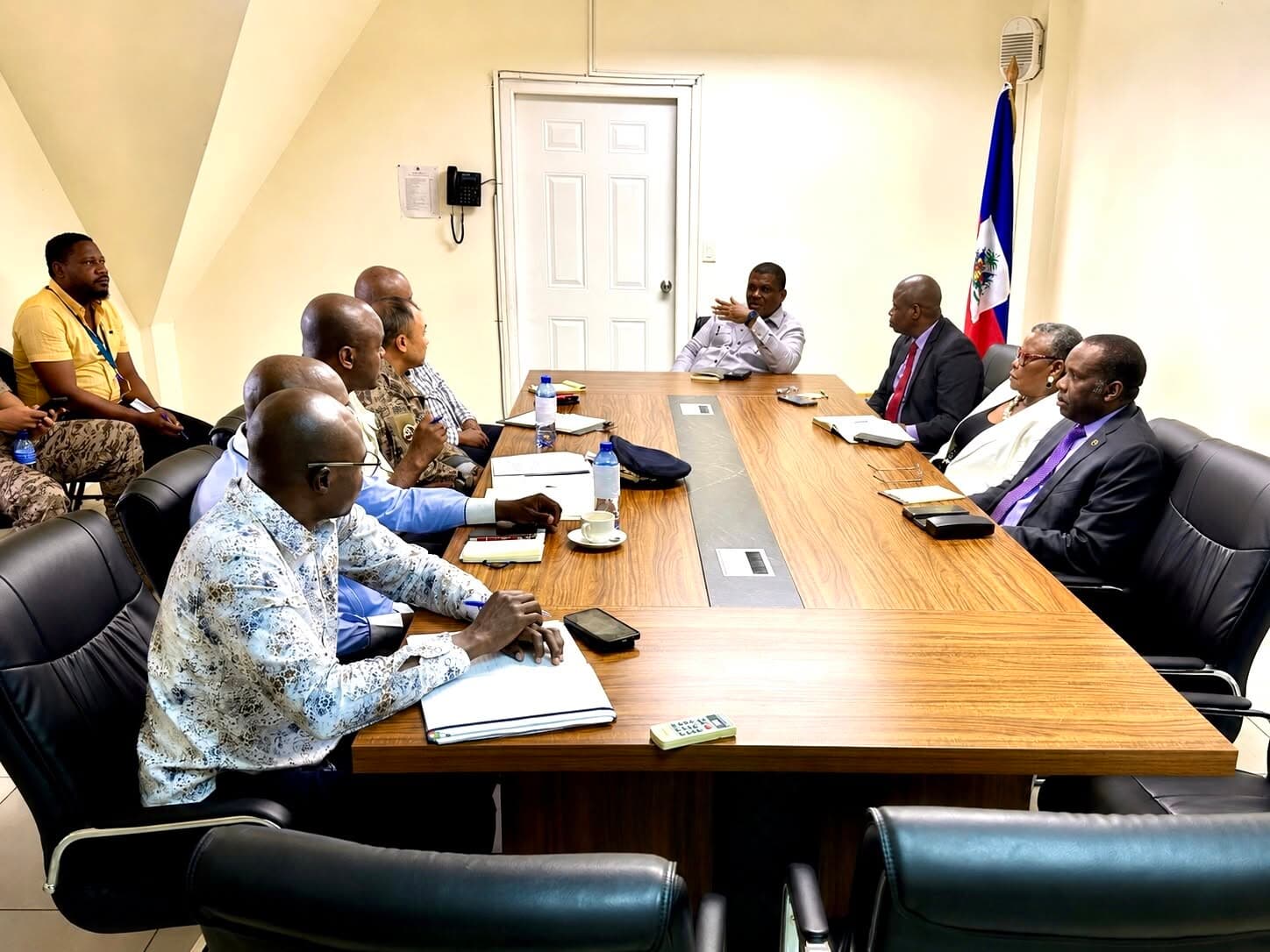
The Minister of Justice and Public Security, Patrick Pelissier, has sent a memorandum to the government commissioners of the twenty prosecutors near the first instance courts in the country. He asks them to respect procedural deadlines and ensure the legality of arrests, as part of the fight against prolonged detention and arbitrary arrests.<\/i><\/p>
The document, dated November 27, 2026, instructs the government commissioners to adopt "the necessary provisions" for the final indictment to be communicated within the deadlines set by law. The ministry invokes Article 7, second paragraph, of the law of July 26, 1979 on criminal appeal.<\/p>
The text is unambiguous. It stipulates that the public prosecutor must, under threat of reprimand, conclude definitively within five days of receiving the documents. The reminder of this potential sanction underscores the firmness of the approach: a magistrate of the prosecutor's office who exceeds this deadline would be exposed to liability action.<\/p>
The ministry does not limit itself to the issue of deadlines. It also asks the commissioners to ensure the "legality and usefulness" of the arrest measures. This requirement is based on two references: the Constitution and Article 8 of the American Convention on Human Rights, which enshrines judicial guarantees, including the right to be tried within a reasonable time.<\/p>
The memorandum also addresses the daily functioning of the courts. The ministry reminds that the start time for hearings is set at ten o'clock in the morning, in accordance with Article 61 of the decree concerning judicial organization.<\/p>
"The hearings of Courts and tribunals are public, except in cases where the Law, in the interest of public morals and order, authorizes closed sessions, which must be pronounced by the judgment at the hearing," states the article.<\/p>
"The hearings last at least three hours, from ten o'clock in the morning to one o'clock in the afternoon, until the agenda is exhausted," the ministry reminds in the memorandum.<\/p>
The tone becomes firmer regarding punctuality. "Unjustified delays and absences will be subject to disciplinary measures," warns the ministry. This warning aims to ensure that hearings actually take place at the scheduled times, a basic condition to unclog the agendas and reduce judgment delays.<\/p>
The Minister of Justice and Public Security, Patrick Pélissier, launched this Monday, November 23, 2026, at the Jacmel courthouse, the project titled "Mobile Initiative for the Reduction of Prison Overcrowding and Prolonged Preventive Detention," in the presence of judicial, police, and political authorities, as well as representatives of civil society.<\/p>
According to the minister, prolonged preventive detention is particularly linked to delays in processing judicial cases, from their transmission to the prosecutor's office to their instruction. "The average time that a person must spend in prison without being tried is five years," he stated.<\/p>




Commentaires
Aucun commentaire pour le moment. Soyez le premier à réagir.