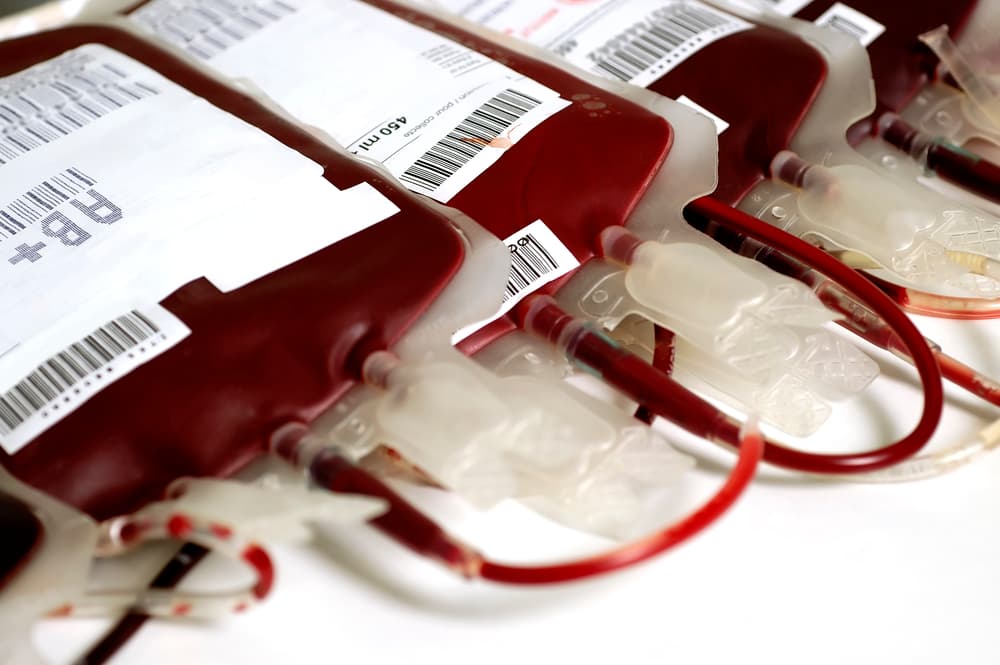
The director of the National Blood Transfusion Center, Ernst Noël, admitted that he has been unable to process blood bags for a week due to the climate of violence prevailing in the country, where roads are blocked and traffic is paralyzed, hindering the free movement of people and goods.
The demand for blood has sharply increased in Haiti following the escalation of violence, resulting in numerous gunshot wounds. However, the National Blood Transfusion Center struggles to make it available due to the lack of available inputs. "We fought to ensure there were enough inputs available to address the situation. But the increase in demand led to the overuse of the stock we had compared to the needs. After two weeks, we no longer had the ability to test the blood to make it available to the population. Due to roadblocks, we have not been able to receive the products that should have come through the Dominican Republic and arrived in Haiti for a week. Since planes cannot fly and roads are blocked, we have not been able to receive them," explained Dr. Noël during his appearance on the Panel Magik show on Monday, March 11.
However, the director of the CNTS announced that the Ministry of Public Health and Population is seeking to create a humanitarian corridor to allow the arrival of products in Haiti. "They should be airlifted; we are awaiting confirmation. Once they are available, we can resume operations," he hoped before noting that the center's operation faces a new problem. "Several employees cannot travel to reach the center," so when this center is dysfunctional, the 15 posts cannot be supplied either. "Even if we manage to find all the reagents and inputs, a second problem will arise. How can we supply the posts that are on the periphery?" he wondered.
"The system has never managed to produce the amount of blood that would allow everyone to obtain blood when needed. Efforts are being made because blood cannot be produced anywhere, it is donors who make blood available to those who need it. It's a culture we don't have. However, efforts are made to instill it to have more voluntary donors," he promised. "In over 90% of cases, the blood bags collected come from the relatives of the patients. Sometimes, these donors are under pressure, and for every 100 bags, we lose about ten. This does not make them our best donors," he argued, complaining that the center does not always receive products on time to allow for blood collection and processing.
According to WHO projections, for a population of approximately 12 million people, we would need 120,000 bags of blood, which is 1% of the population. "However, these needs correspond to the technical capacities available in the country. Since we do not have many people on dialysis and we do not perform many open-heart surgeries, our need is around 60 to 80 thousand bags of blood. Considering the data from 2023, the demands were around 35 thousand bags of blood, and we were able to produce at least 20 thousand. About 53% of the applicants were able to benefit from it," revealed Mr. Noël. However, he expressed dissatisfaction. "This is very low to reduce mortality related to accidents, childbirth, and gunshot wounds because in these types of situations, we need many bags of blood to save the person concerned."
 .com


Commentaires
Aucun commentaire pour le moment. Soyez le premier à réagir.