
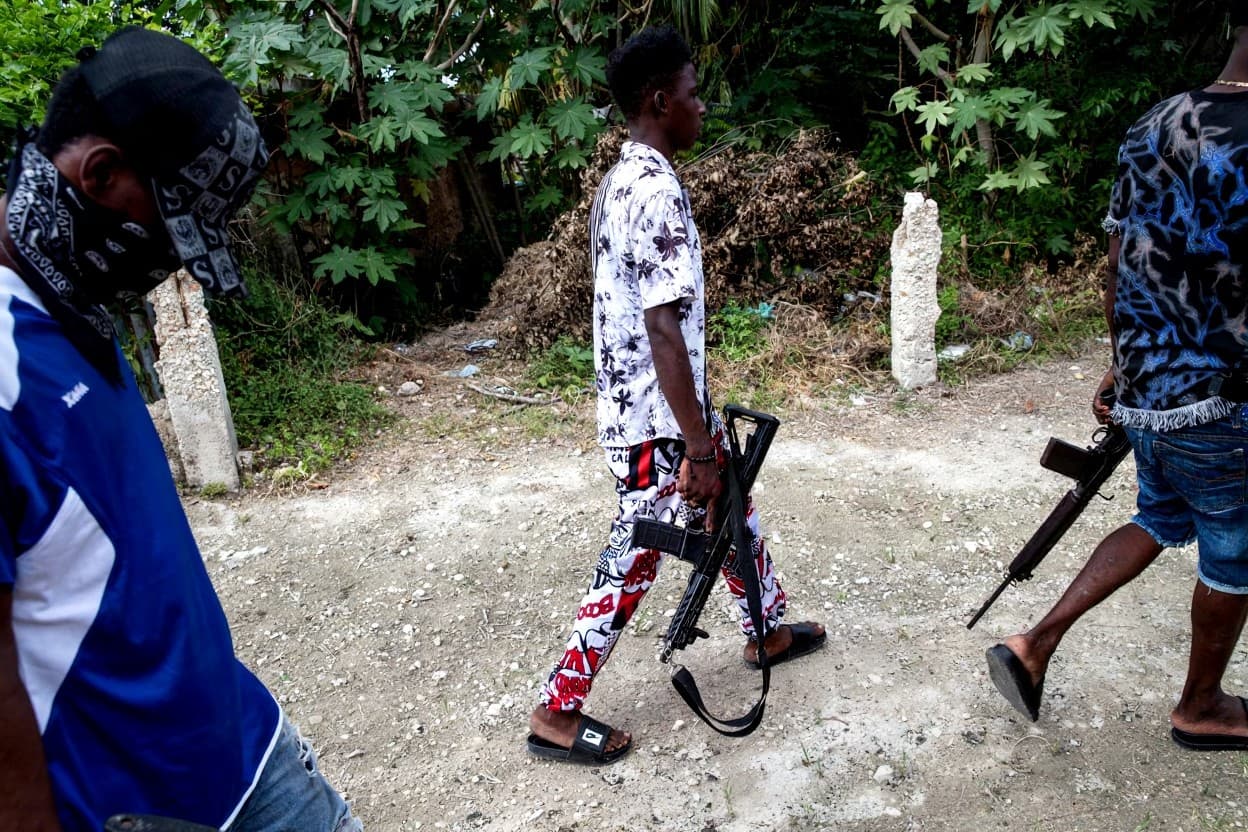
The gangsterization of Haitian society is, in reality, a form of barbarism that can only lead to a pariah country, to a lawless state. The State does not exist without the monopoly—legitimate or not—of force; public authority, expressed through taxation and coercion, is its irreducible manifestation. If the quotation invoked here has remained so clearly etched in all academic memory, it is because, assuredly, nothing written by the German sociologist Max Weber (1) has illustrated it better, and at the same time more tragically brought it into present reality: the (in)security trap in which the country of Jean-Jacques Dessalines is so frightfully mired. It is an infernal trap worthy of a horror film. Despite all the advances in knowledge, we still see political parties and activists or pseudo-ideologues grounding themselves in hatred of the “military vermin,” drawing from it anti-state arguments, or referring to it as if it were public policy. The republican order is crushed by the nihilistic infamy embodied in the collusion of visionless leaders and opponents bent on seizing “power for the sake of power.”
There is no reason to be surprised, after the grim assessment of the security situation calmly yet bluntly presented by the Chargé d’Affaires a.i. of the United States in Haiti, Henry P. Wooster, before the U.S. Senate Appropriations Committee: 12,000 bandits, nearly 3,000 of them well armed, facing “approximately 6,000 registered police officers, of whom at most 400, and often fewer, actually take part in combat.” Let this not be feared as an interpretation akin to a cry of alarm for some, and a call for national awakening for others. Everything is harmful. Nothing is reassuring.




Commentaires
Aucun commentaire pour le moment. Soyez le premier à réagir.