
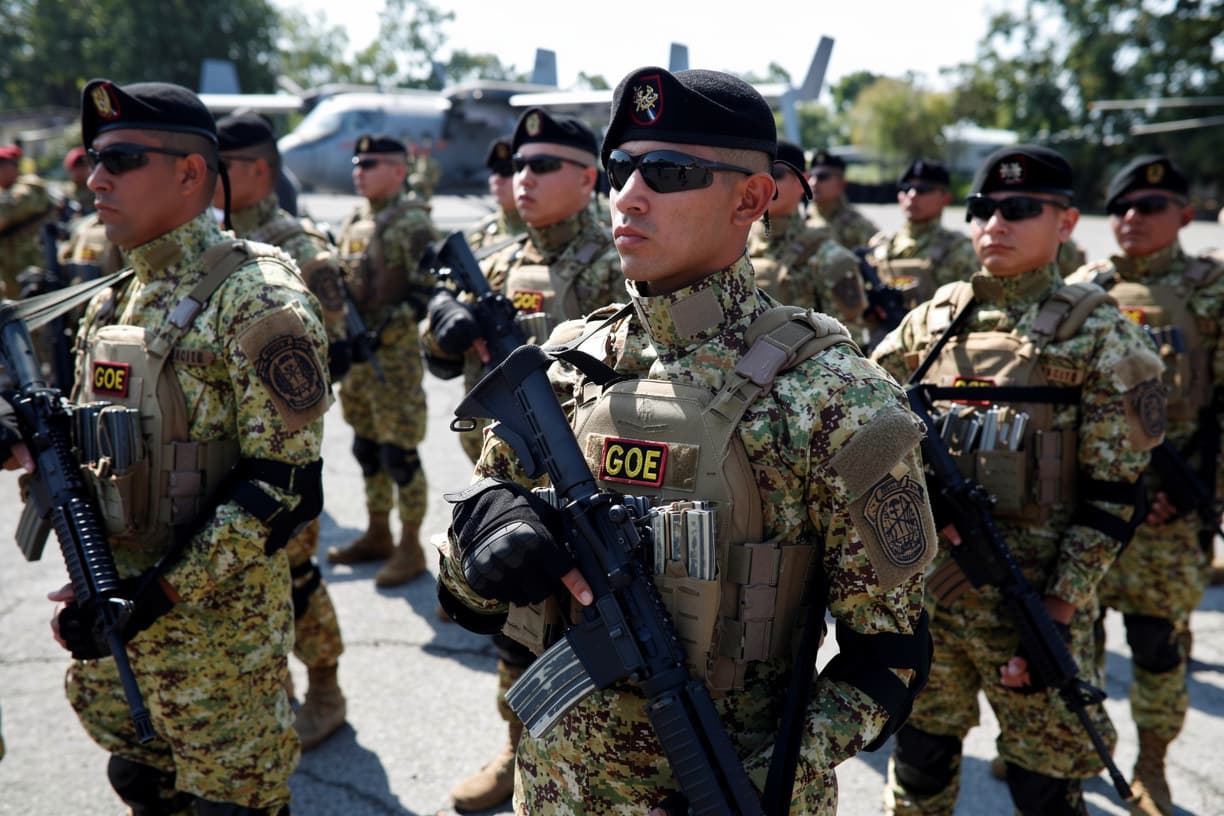
But what has happened anew, really new, after / with the last massacre (August 23 – 24, 2026) in Kenscoff? Two things. First, what is referred to here and there as the security infrastructure (PNH, FAD'H, UTAG, Task Force, FRG, American mercenaries, brigades, and what have you with their UN (BINUH) and limited or deficient international coaching) is unable to deliver results. The security challenge is, we must admit, monstrous, confounding in every way. After each massacre, government and foreign press releases pour in like crocodile tears. The money pocketed by the infamous Eric Prince and his clique of 'saviors' should have been used to strengthen the national military infrastructure with equipment, military bases, training, and intelligence while intensifying multilateral cooperation (regional and international). Next, the 'Fils-Aimé power' - to borrow the very suggestive expression of Lyonel Trouillot - in operation since November 11, 2024, stands at a crossroads. As before (Ariel Henry and CPT), Alix Didier Fils-Aimé's government does not reflect a personal power; it arises from a brief multipartite coalition singing 'Joyful Bêchons'. But we must consider this: 'Dying is beautiful for the homeland' is not a tune that these 'party-affiliated' are going to sing loud ...
Embodied most horrifically in the terrible assassination of President Jovenel Moïse, this unprecedented societal crisis, which has all the characteristics of a crisis of social or collective intelligence (absence of a national development project, reign of impunity, supremacy of a criminal economy, failing and inadequate educational system, etc.) is the result of the irresponsibility and incompetence of our ruling and owning elites who manage the post-Jovenel Moïse era with astounding inefficiency. That the Haitian procedure regarding the assassination of President Jovenel Moïse is futile is evidenced by the continuing American procedure, as can be seen with the extradition or transfer on Sunday, September 20, 2026, 'at the request of the American authorities,' acknowledged Justice Minister Patrick Pelissier in a pathetic style, of Joseph Félix Badio who once again makes striking revelations or reminders and the 17 incarcerated Colombian ex-soldiers indicted by Haitian justice. This speaks volumes about the judicial insecurity that prevails among us. This deeply gnaws at our society. This risks ultimately destroying everything. Upon reflection, it is a detestable enterprise of self-elimination, vetting, and decantation. In a country ruined because of its failing elites and in a tumultuous, uncertain, and depressing international context, Peterson Benjamin Noël, Michel Soukar, Sonet Saint Louis, and Yves Lafortune have found the right words and an argumented rhetoric to describe the Haitian kakistocracy, that is to say, a system of government run by incompetents and mediocrities. Concerned above all with conflict, most of those who want to replace Alix Didier Fils-Aimé, who is a transitional being like his predecessors, participated in the disastrous management of Ariel Henry, for example. Is it not through the performance of its legitimate or provisional rulers that a society can transform and progress? For analytical reasons, I do not wish to elaborate further on those two observations.



Commentaires
Aucun commentaire pour le moment. Soyez le premier à réagir.