

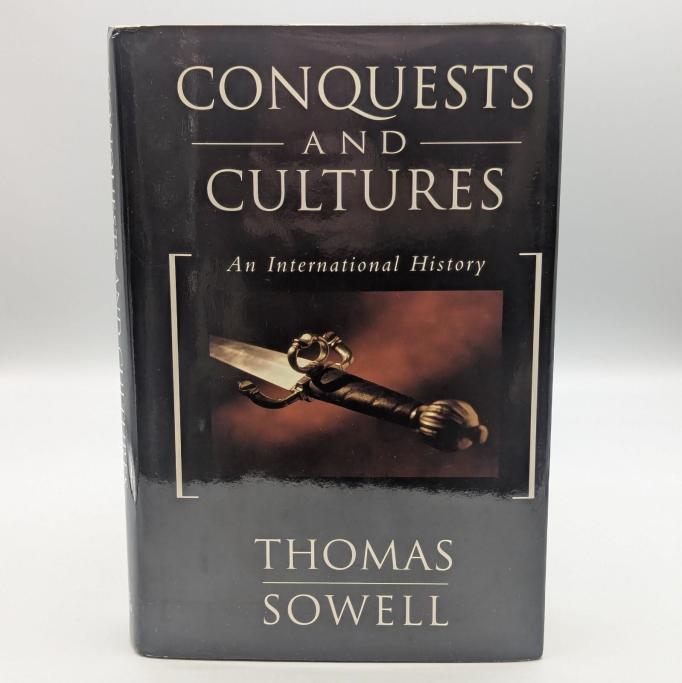
In 1998, Thomas Sowell, one of the brightest North American conservative economists of the past five decades, relying on an essentially qualitative, historical, social, and empirical methodology, published "Conquests and Cultures: An International History," the third volume of his monumental trilogy on cultures (Race and Culture, 1994; Migrations and Cultures, 1996). In the last book of the series, Sowell, after defining "cultural capital" as the set of habits, values, work ethics, specific skills, attitudes towards education, and discipline that a human group has accumulated over generations, argues that when a society endowed with higher human capital conquers or invades another whose human capital is much lower, the flow of skills contributes to the advancement of the conquered or invaded nation. His favorite example is the Roman conquest of Britain, which began in 55 B.C. and officially ended in 410 A.D. I would dare add another case: the Muslim conquest of Spain, which started in 711 and ended in 1492 A.D. The Arabs possessed more scientific and technological knowledge than that which prevailed in Visigothic Hispania. This contributed to the fact that the economy of the occupied territories experienced significant progress during the nearly 800 years of the conquest.





Commentaires
Aucun commentaire pour le moment. Soyez le premier à réagir.