On the evening of Friday, March 8, 2024, messages circulating on social media leave no room for doubt. The coalition of gangs is attacking police stations, bases of the Haitian National Police, and institutions located in the Champ de Mars area. There are even reports of intrusions into the Turgeau neighborhood.
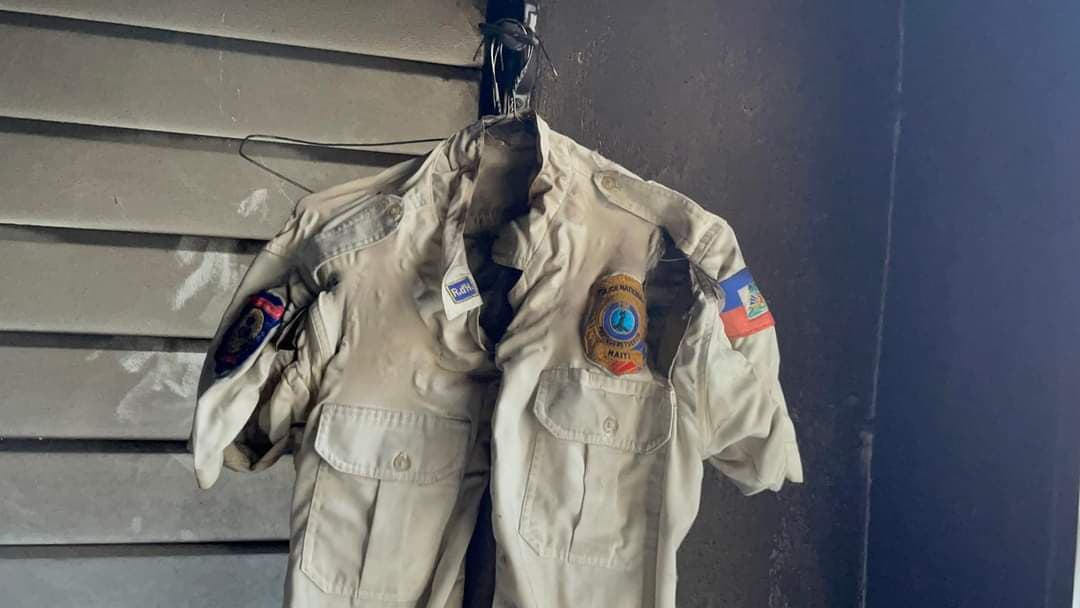
It's a systematic operation aimed at erasing any trace of police presence in the metropolitan region. But it's not only police stations that are targeted.
Downtown Port-au-Prince has fallen; there is no doubt about it anymore. There have been scenes of looting at the Saint-Francois de Sales Hospital on Charéron Street and at the Sage-femme School on Monseigneur Guilloux Street, respectively on March 4 and 5, 2024. Solar panels, official vehicles are among the losses recorded.
A few days earlier, on February 29, 2024, the apocalypse descended upon downtown Port-au-Prince, which had been in agony for at least three weeks: students, patients, doctors all fled from this new offensive by armed gangs.
Interviewed two days later on Magik 9 radio, Dr. Jude Milcé, the executive director of the State University Hospital of Haiti, the largest hospital in the country in terms of the diversity of healthcare services offered, suggested that it was difficult to envision a resumption of activities.
A visit by certain officials to assess the situation at the State University Hospital of Haiti and conduct a partial assessment nearly turned into a disaster on Thursday, March 7, 2024. Armed gangs, masters of the area, act as lookouts for the main hospitals and educational institutions in the area. They decide who should have access, when, and under what conditions. For now, they are the ones calling the shots. They no longer hide.
Medical Education at a Standstill
Those who experienced this black day on February 29 in faculties and hospitals narrowly escaped death. Downtown looks like a wasteland stretching from Champ de Mars to Portail Léogane. Everyone agrees that there was a rupture on that day. February's last day will be remembered. There is now a before and an after February 29, 2024.
Thousands of students in nursing, dentistry, midwifery, pharmacy, medicine, medical biology, optometry, legal and economic sciences, civil engineering, arts, ethnology, etc. suddenly find themselves without a place to learn. Hundreds of interns and residents without a center for training and advancement. For now, there is an urgent need in Haiti.
For these young trainees, when things return to normal, if they ever do, some, those who can, will be far from the country and its problems. Then, and only then, will it be possible to tally up the causes and assess the consequences that follow.
In the meantime, the trauma caused by this situation, which stifles the future, is discreetly discussed in WhatsApp groups and awkwardly displayed in statuses. Students grumble, interns and residents complain... Trainer doctors moralize. They all knew that they were getting their hands dirty by choosing to teach in an area that has become uninhabitable; today, they dream of elsewhere, as if to overcome the affront. To give themselves a second chance.
For the millions of inhabitants of the metropolitan area of Port-au-Prince, public hospitals mainly consist of the State University Hospital and a few reference community hospitals. Before the State University Hospital, it was the Sanatorium Hospital in Carrefour-Feuilles that healthcare professionals and patients fled like the plague under pressure from armed gangs. It is, it must be remembered, the only training center for pulmonologists in Haiti.
In the meantime, residents and other staff at the Isaïe Jeanty Maternity Hospital in Chancerelles had vacated the premises several weeks ago. This maternity hospital is the only facility specializing in obstetric and gynecological care in the metropolitan area, serving several thousand women in Cité Soleil and surrounding areas.
Private hospitals are no better off
"The administration of Saint François de Sales Hospital informs the general public and the medical community in particular that on the night of March 3 to 4, all its healthcare and service structures were vandalized," lamented the director-general of this hospital, Mgr Jean Théodule Domond, in a statement before reminding that "this act of vandalism suffered by Saint François de Sales Hospital undermines the right to health, which is a fundamental right that everyone should enjoy regardless of their social status. The hospital administration expresses its dismay at this act, which will only result in further weakening an already fragile healthcare system."
On Wednesday, March 6, 2024, the main association of private hospitals issued an SOS, arguing "that hospitals may be unable to meet the urgent medical needs of our patients due to severe shortages of essential medical supplies, fuel, and oxygen."
As for hospitals run by non-governmental organizations, between permanent closure and temporary opening, it's a mixed bag. The worm is in the fruit.
On March 7, the main downtown station is located at Champ de Mars; everything else is inaccessible. A new page is being written, at least, in the history of medical education in Haiti. To say that the year 2024 is the deadline for Haitian medical faculties to comply with accrediting bodies' standards (ECFMG) at the risk of losing international accreditation.
The End of an Era
From the world of old, from medical life in downtown Port-au-Prince, from Chemin des dalles to Rue Monseigneur Guilloux— the elders spoke of them with pride and dismissed any possibility of decay of these cherished symbolic places.
Dr. Wilfrid Pierre-Noël, in an interview shortly before his death, explained that just thinking back to Rue de la Réunion; those years spent between medical school and the general hospital; his comings and goings between Lycée Toussaint Louverture and the Immaculate Chapel that extends from Rue Joseph Janvier, brought a smile to his face.
"These are my most precious memories. From the window of our classroom, we could watch our role models stroll down Oswald Durand Street. Our most eminent professors held their clinics just a stone's throw away from the medical school. We knew why we were studying. We wanted to be like them," he confided in an interview six years ago.
He will not experience the sensation of those eminent doctors, teachers who, holding their clinics close to the faculty, paraded with measured movement, gracefully sinuous, in their white coats between the State University Hospital of Haiti and the "mythical polyclinics" that populated this environment.
He died where he went to do his social service, in Trou-du-Nord, a town where he spent around forty years, never looking back.
The dream medical life of the 1980s as he described it is a world that post-2010 students cannot fathom. The earthquake and successive crises have taken their toll, migration has paid the bill. In the meantime, many doctors from his class have completed their service, summoned by God as pioneers.
From his time, only a handful of survivors remain, faced with a present that will eventually erase this memory.
Looking back on February 29, 2024, when students, interns, residents, professors, and attending physicians had to evacuate the area in a rush, it is undeniable that for many, this is probably the last image they will have of these institutions and streets in a context where the allure of elsewhere has never been stronger. One day, they will want, as Georges Moustaki wrote so well, to lose their memory by changing sidewalks every time they encounter these memories.
 .com



Commentaires
Aucun commentaire pour le moment. Soyez le premier à réagir.