
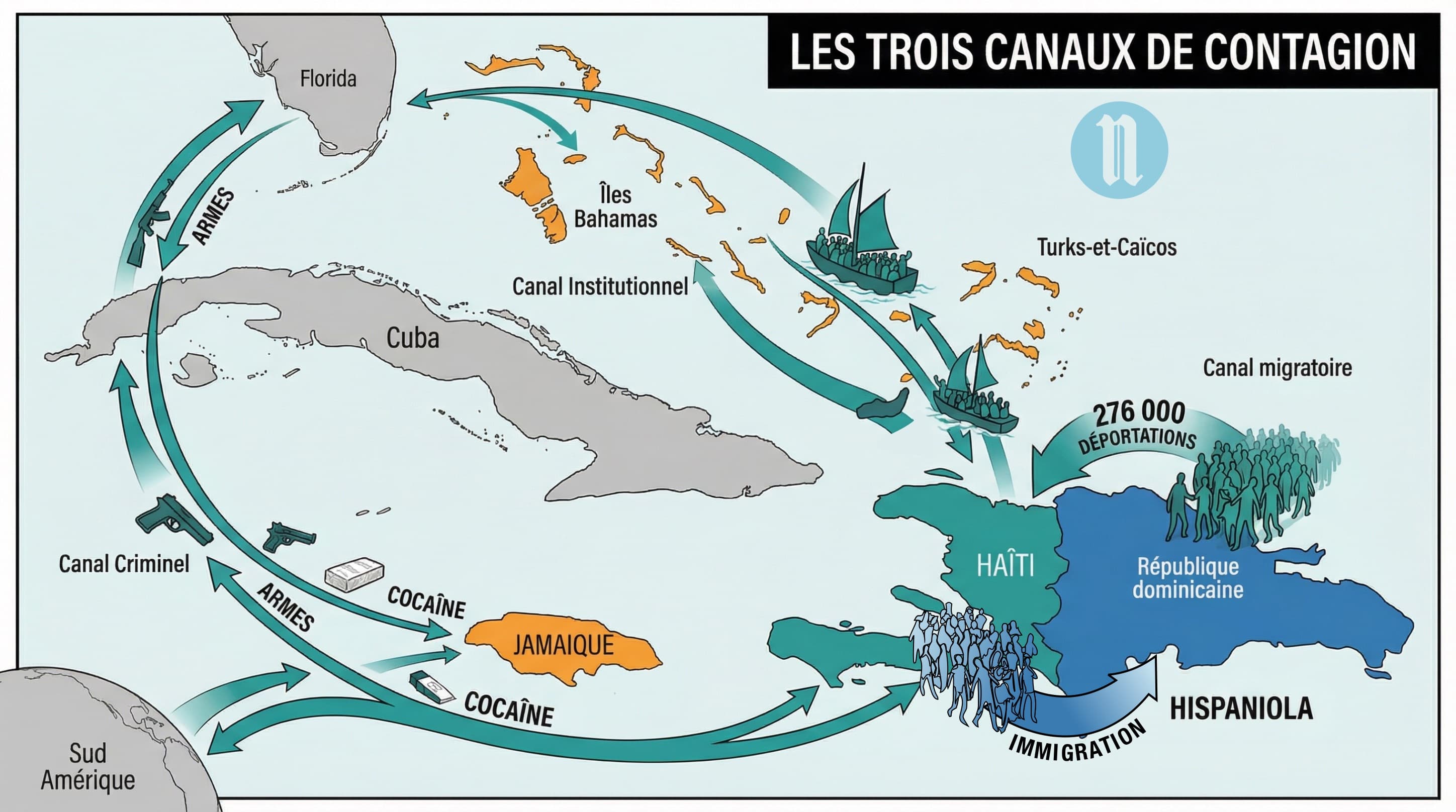
In January 2025, the International Organization for Migration (IOM) published a figure that, on its own, sums up the scale of Haiti’s institutional earthquake: more than one million people displaced within the country. A threefold increase in twelve months. That same year, the Dominican Republic deported 276,000 people, the Bahamas intercepted dozens of boats loaded with migrants and cocaine, and Jamaica saw its maritime trafficking corridors intensify. The Haitian crisis is no longer confined within its borders. It is spreading.
This spread is generally described by commentators in impressionistic terms: “shockwave,” “domino effect,” “spillover.” These metaphors capture a valid intuition, but they do not allow for measurement, comparison, or prediction. For that, a formal framework is needed. And such a framework exists: it comes from epidemiology.





Commentaires
Aucun commentaire pour le moment. Soyez le premier à réagir.