
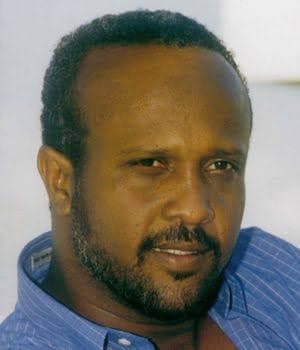
Through a pen haunted by memory and traversed by the pain of Haiti, poet Widly JEAN revives the memory of Jacques Roche, journalist, poet, and performer, who was murdered in July 2005. By making his verses resonate, his struggles, and the silences of a justice that eludes, he restores to this man a presence that violence could not erase. His tribute transcends the fate of a single poet: it brings us back to our own humanity, to our collective responsibility, and to this land that still bleeds, even as it so desperately needs its children. For in Haiti, a victim of violence is never just another's death: it is a piece of you that dies, a piece of us that extinguishes.<\/strong><\/p> Seven days before his birthday, journalist, poet, and performer Jacques Roche is executed by his captors. The image of his body, found early in the morning in Delmas 4, will remain etched in my memory as a poet.<\/p> I was sensitive to the poems of this mage, to the three volumes of Wind of Freedom<\/i>, these discs that took us to our hearts. I remember the melodious chords of Turgot Théodat, the face-to-face between his saxophone and the soft, enveloping guitar of Pierre Rigaud Chéry, as well as Jacques' voice on these titles that seemed to announce his impending death: "The Poet", "The Land of Silence", "Victim", "Incarceration", "The Closed Door" and "Everything is Bad".<\/p> Born on July 21, 1961, Jacques was in charge of the Culture section at the daily Le Matin<\/i>. I was familiar with his literary critiques, his poems, his plays, his songs, and even his sports columns on the radio. He was a sports enthusiast. A football fanatic.<\/p> On July 14, 2005, I, poet, learn of the horrible death of an alter ego. Kidnapped on July 10 in the Nazon neighborhood of Port-au-Prince, you are found four days later in Delmas 4, tortured, riddled with bullets, eyes gouged out.<\/p> In Wind of Freedom<\/i>, like a mage, you seemed to have foreseen this tragedy:<\/p> "Yo krible kadav la atè Jacques, I am searching for you<\/strong><\/p> Jacques Roche, poet with a loud voice, your words carried your ideals of justice, freedom, solidarity, peace, and love.<\/p> In Cyclone<\/i>, you seem to unravel the thread of Ariadne of your life and destiny:<\/p> "Yon jèn powèt apèn ap parèt Jacques, I search for you in the breath of the wind, the guts of poetry, and the eye of the cyclone. The night keeps the secret, while justice gets lost in the labyrinth of oblivion. Yet, your favorite word refuses to die with you. The silence of the poet is never that of a cemetery: it is an underground rumbling, a clamor that transcends time and haunts the conscience of the living. Poetry watches. It testifies. It accuses. It does not forget.<\/p> Ripped dreams<\/strong><\/p> You were poetry made flesh, a full moon in the night of men, a fire smoldering beneath the ashes of Haiti, this country that you carried in your guts and in your heart. For you, poetry was a way of inhabiting the world, embracing its struggles and defying its injustices. Your word had the sharpness of a blade and the power of thunder: it unmasked the impostors and revealed the wounds of a people too often sacrificed.<\/p> You also denounced the tragedies that befell Haitian peasants:<\/p> "Yon ekip kochon kap vire bouda yo This imaginary disease, diagnosed by charlatan doctors and corrupt politicians, tolled the death knell for the peasant economy. For our peasants, the Creole pig was much more than an animal: it was a bank without a vault, an insurance against uncertain tomorrows, the fruit of their sweat and hopes. On its back, they traced the vèvè of their dreams, depositing the savings of a lifetime, their children's school fees, and the hope for a better future.<\/p> To destroy this wealth was to rip apart their dreams, amputate their children's future, and trample the dignity of an entire people.<\/p> "Yo fèmen bèl rèv yo nan prizon These verses speak of the tragedy of a people from whom even the right to imagine tomorrow is stolen. But your words refuse prison: they break the bars of oblivion and restore freedom to dreams. One can ruin an economy, mutilate hopes; one cannot silence poetry forever.<\/p> As long as the ink flows<\/strong><\/p> Jacques Roche loved Haiti, poetry, and his compatriots to the point of tearing, to the point of confusing his own pain with that of his land. Like in The Quest<\/i> by Jacques Brel, this love is an obstinate march towards the ideal, a fidelity to dreams that pushes one to go to the end of oneself, even when the path disappears.<\/p> Violence wanted to reduce your body to silence, Jacques, but it could not stifle the power of your words, the revolt of your conscience, or your indestructible love for Haiti. Your work is a rock that neither time nor death can reduce to dust. As long as the ink flows, your story will traverse generations.<\/p> This is what the writer Euphèle Milcé wanted. I still hear his voice resonating within me, like a reproach directed at our memory:<\/p> "Sa m pa ka padone tèt mwen Twenty-two years later, the assassins of Jacques Roche still roam the streets. Port-au-Prince bleeds; from Carrefour to the Central Plateau, up to Artibonite, terror is gaining ground while justice gets lost in the night of impunity.<\/p> And I, poet, write and cry out. Against oblivion, against silence, so that the Republic may still hear the cry of your verses and remember the spilled blood of the poet.<\/p>
Pou kadav la ka pi kadav
Yo krible sèkèy li kouche a
Pou sèkèy la ka pi sèkèy
Yo krible silans ki vlopel la
Pou silans ka pi silans"<\/p>
Ak yon pil bèl lide lan tèt li
Tankou yon douvanjou
Tankou bonjou
Bouch moun ap simaye gran maten
Jouk kounia yap chèche misye
Yo paka jwenn li."<\/p>
Nan tout peyi a tankou yon posesyon jenès
Chalatan yo disparèt espès la
Pou geri l anba yon maladi imajinè."<\/p>
Yo efase yo sou tablo lavi."<\/p>
E mwen pap padone yon pakèt zanmi : nou bliye Jacques Roche twò vit.
Si sete youn nan nou ki te mouri
Jouk kounya Jacques t ap fè siting nan lari."<\/p>



Commentaires
Aucun commentaire pour le moment. Soyez le premier à réagir.