
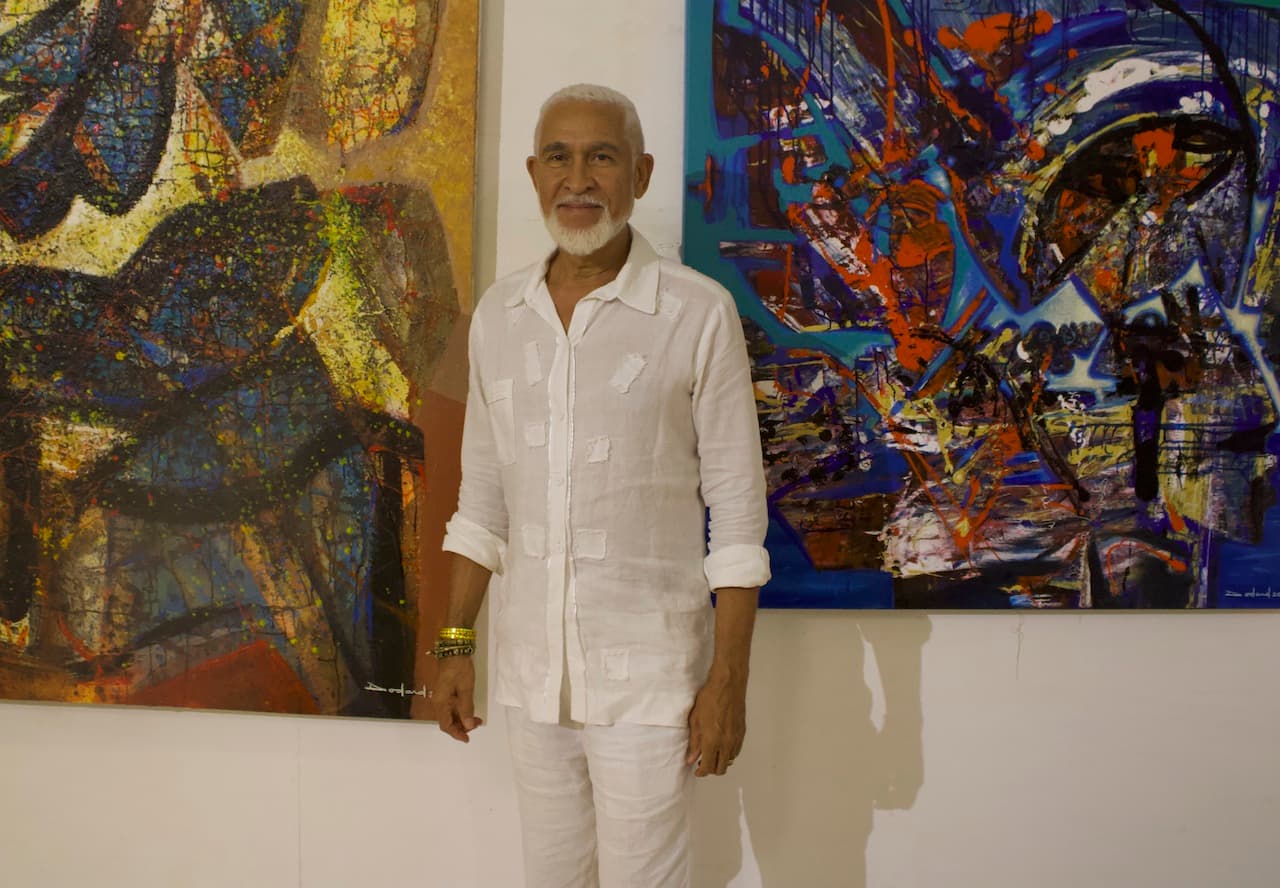
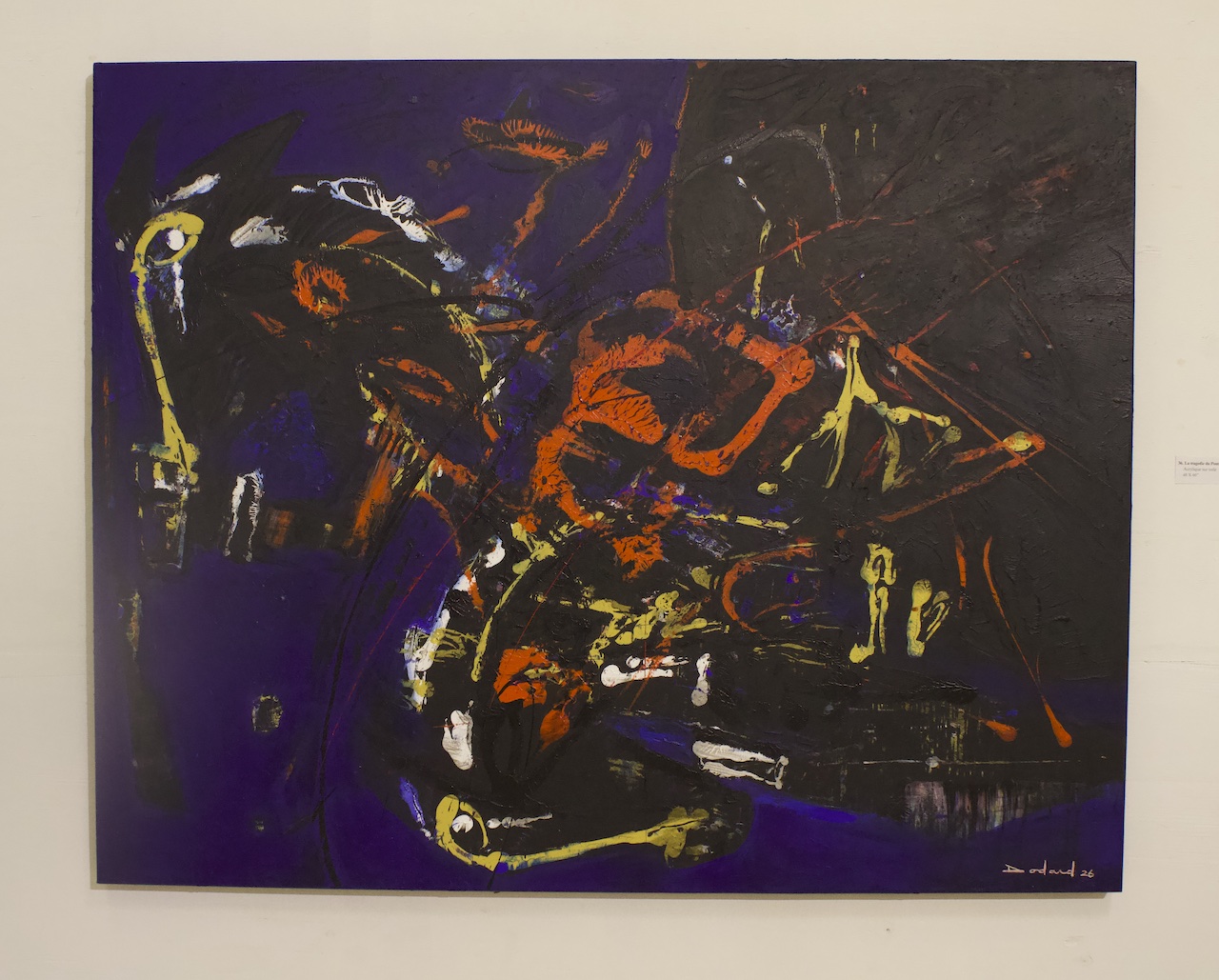
Presented as part of the National Awakening at the Karibe Convention Center, Philippe Dodard's exhibition "Haiti, the Heart Still" invites viewers to look at Haitian history and reality through painting. Between memory, violence, and hope, the artist offers a reflection on the country's wounds and the strength of its people.<\/strong><\/p> The colors, shapes, and signs can sometimes tell what words struggle to express. This is what Haitian artist Philippe Dodard offers with his exhibition "Haiti, the Heart Still," presented at the Karibe Convention Center as part of the National Awakening. Through his works, he invites the public to take a moment to see Haiti differently, beyond the difficulties that mark its daily life.<\/p> The displayed paintings address themes related to memory, suffering, displacement, and the history of the Haitian people. They remind us that behind crises, there are lives, families, memories, and a culture that continues to resist.<\/p> The exhibition thus goes beyond merely presenting paintings. It opens a reflection on how art can bear witness to an era, preserve the memory of a people, and maintain hope.<\/p> This painting tells the wounds<\/strong><\/p> Among the exhibited works is The Tragedy of the Pont-Rouge, an acrylic painting on canvas created in 2026. The painting stands out with a mix of deep blue, black, red, yellow, and white. The lines cross and overlap, giving the whole a sense of movement and tension.<\/p> Facing this work, the visitor is invited to take the time to observe the shapes and colors. Without imposing a single interpretation, the painting opens a space for reflection on the tragedies that can mark collective memory.<\/p> Other titles also catch the eye, including The Flight, The Martissant Door, The Tears of Solino, and The Door of No Return. These works are part of an artistic ensemble that evokes displacement, ruptures, and human suffering.<\/p> In this approach, Philippe Dodard uses painting to give a place to difficult realities. His works do not simply seek to reproduce the world as it is. They also propose to reflect on what events leave behind: memories, wounds, and questions that sometimes remain unanswered.<\/p> Between history and memory<\/strong><\/p> Memory occupies an important place in Philippe Dodard's universe. His exhibition resonates with several periods of Haitian history, particularly slavery, forced migrations, and struggles for freedom.<\/p> The question of chains, for example, recalls the violence inflicted on enslaved people. In the folder accompanying the exhibition, their representation is also associated with the possibility of breaking the bonds of oppression. The past is thus not presented as a distant history, but as a memory that continues to question the present.<\/p> This reflection takes on particular importance in Haiti, where history, culture, and identity are deeply intertwined. Remembering allows for a better understanding of the paths taken and for passing on to new generations a part of their heritage.<\/p> For the artist, creation thus becomes a means of preserving this memory. The shapes, signs, and colors compose a visual language that leaves the public the freedom to feel and interpret the works.<\/p> The blue, between movement and emotion<\/strong><\/p> Among the other works presented are The Blue March, created in 2022, and The Blue Mother, dated 2026. Both paintings testify to the importance placed on colors and shapes in the artist's work.<\/p> Blue occupies a visible place in these works. It can evoke different emotions depending on each viewer's perspective: calm, depth, distance, or sadness. It would, however, be reductive to assign it a single meaning without knowing the artist's explanation.<\/p> This freedom of interpretation is part of the experience offered to the public. A painting can touch visitors in different ways, depending on their memories, experiences, and sensitivities.<\/p> The exhibition thus invites everyone to look beyond the first impression. The works do not necessarily provide all the answers; they also allow for questions to be raised and for a dialogue between the artist and the public.<\/p> A heart that refuses to extinguish<\/strong><\/p> With the title Haiti, the heart still, Philippe Dodard expresses a central idea of his exhibition: despite the challenges, the country retains a history, an identity, and a capacity for creation.<\/p> The introductory text of the exhibition emphasizes this desire not to reduce Haiti to its crises. It reminds us that the country is also a symbol of a historic struggle for freedom, justice, and dignity.<\/p> This vision aligns with the spirit of National Awakening, which places culture at the center of a process of memory and gathering. In a difficult period, artists can help keep memories alive, question the present, and pass on reasons to believe in the future.<\/p> Painting alone cannot solve the country's problems. However, it can help view them differently, give space to emotions, and remind us what unites a society beyond its difficulties.<\/p> Through "Haiti, the heart still," Philippe Dodard thus offers a meeting between art and memory. His works invite us not to turn our eyes away from the country's wounds, but also not to forget its cultural richness and the strength of its history.<\/p> Because, even when times are tough, creation continues to voice a message. And perhaps that is one of the most important messages of this exhibition: Haiti has its wounds, but its heart continues to beat.<\/p>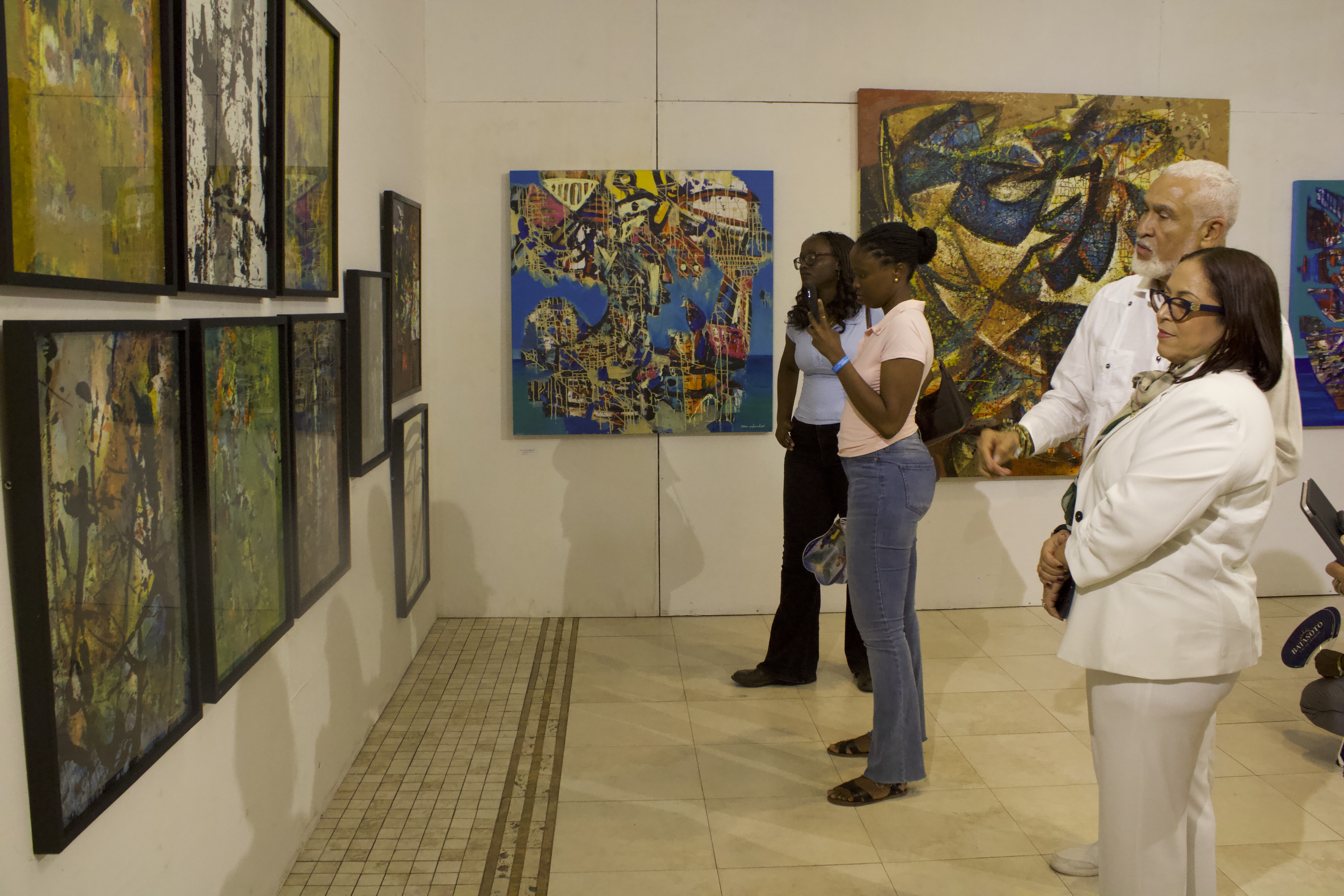 <\/figure>
 <\/figure>




Commentaires
Aucun commentaire pour le moment. Soyez le premier à réagir.