
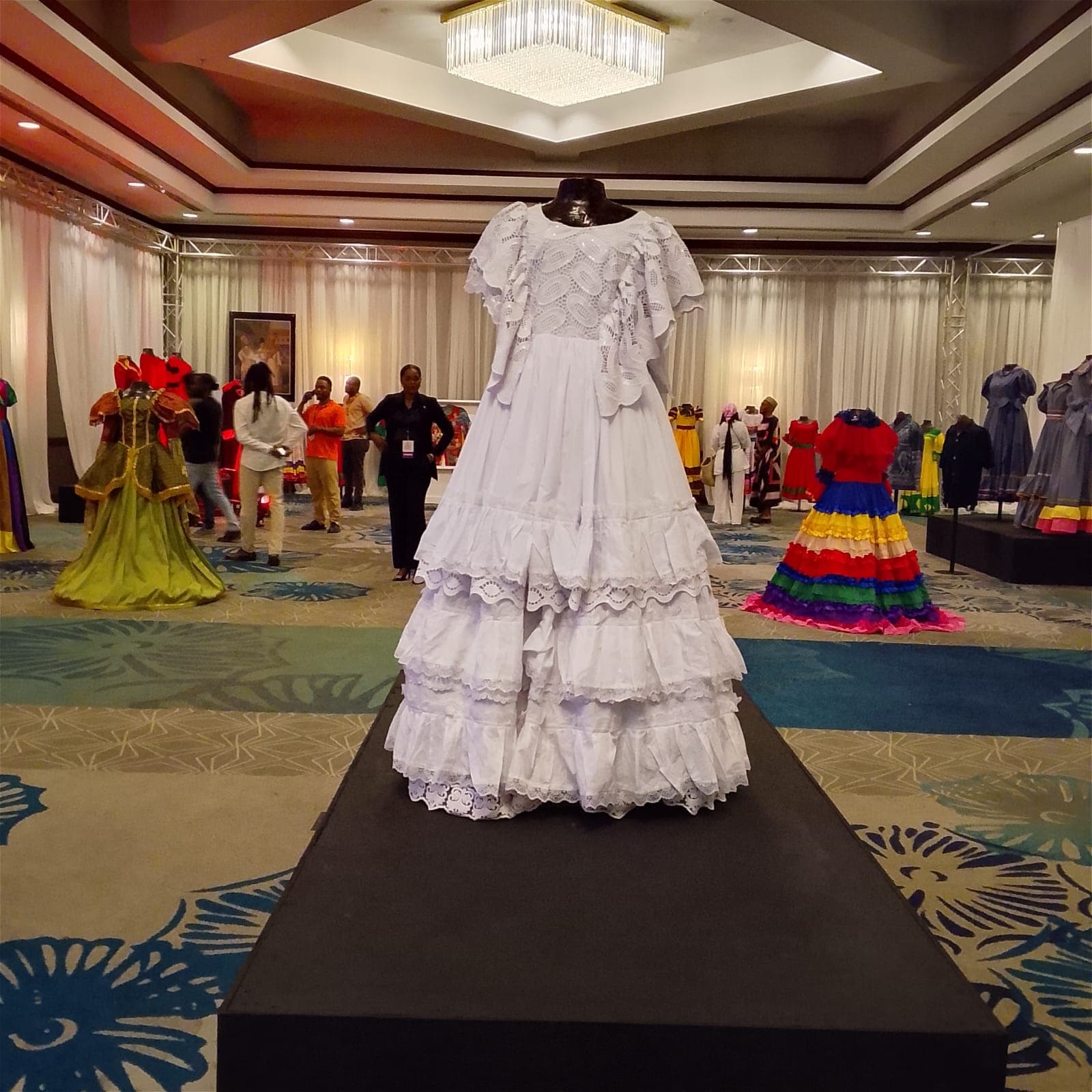
Among the paintings of Philippe Dodard, the dresses of Madan Sara presented by Jamessy Collection, and the heritage pieces exhibited by the Faculty of Ethnology, Réveil national highlighted several facets of Haitian culture at the Karibe Convention Center.
Haitian culture was expressed in various forms at the Karibe Convention Center, as part of this event organized by Réveil National. Through painting, fashion, and heritage, this meeting offered a perspective on the country’s history, identity, and wealth.
Among the notable presentations was “Haiti, the Heart Still Beating,” the exhibition by artist Philippe Dodard. Through his paintings, he invites the public to reflect on Haiti's wounds, its historical memory, and its ability to maintain hope despite difficulties.
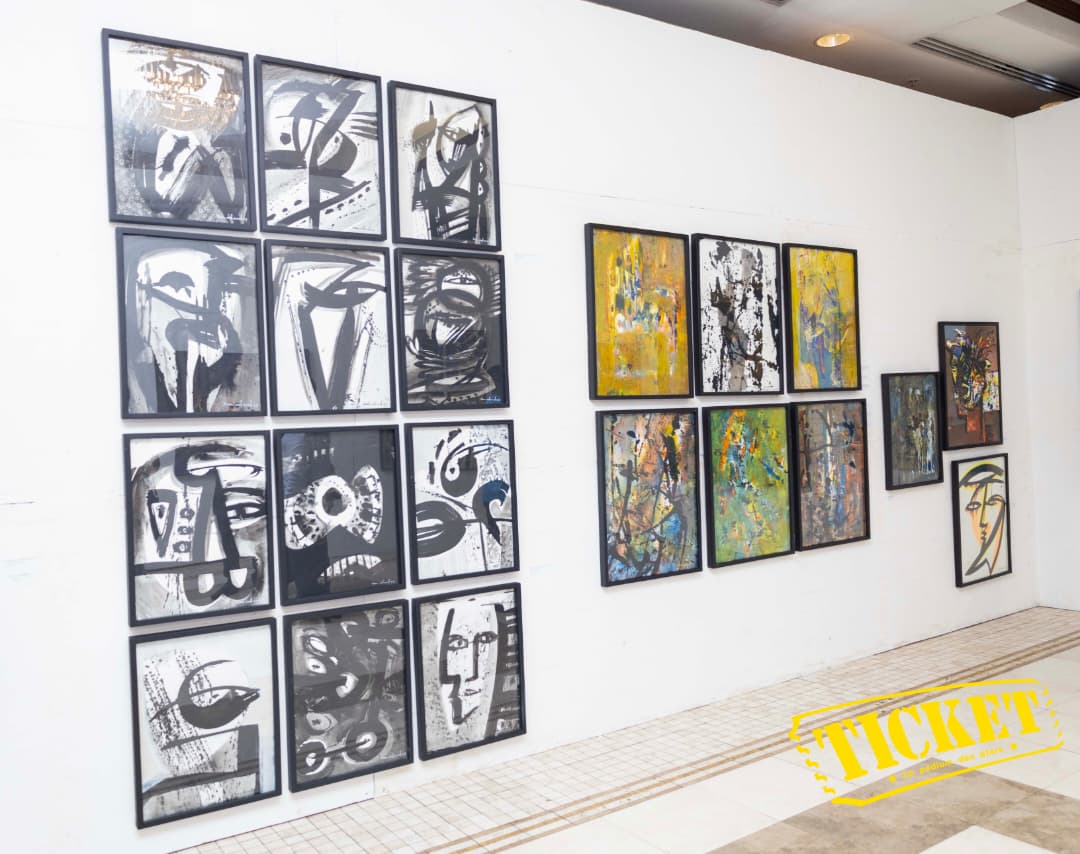
In his works, the artist addresses themes such as suffering, displacement, and the violence that plagues Haitian society. Among the exhibited paintings is The Tragedy of Pont-Rouge, created in 2026. Its dark colors, intermingled with red, yellow, and blue, compose an intense scene that captures the eye.
Other works such as The Escape, Solino's Tears, and The Door of No Return evoke human ruptures and suffering.
Another highlight of the event was the exhibition of Madan Sara dresses presented by Jamessy Collection, which was breathtaking. This presentation shed light on an essential figure in Haitian society. Indeed, through its clothing creations, Jamessy Collection has provided a new way to pay tribute to these women. Fashion thus becomes a means to enhance their image and highlight a figure deeply rooted in Haitian identity.
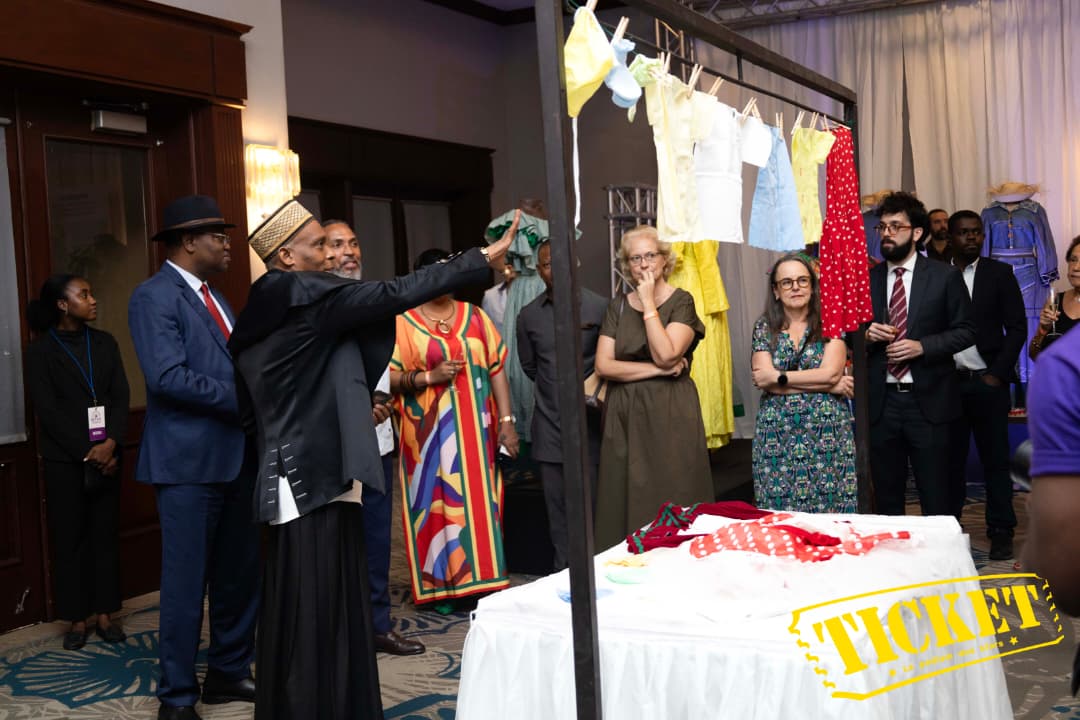
The presence of the National Bureau of Ethnology also marked this meeting. Dedicated to the exhibition of heritage pieces, the BNF distinguished itself through an exceptional display, where the objects were clearly visible and readable for the public.
By bringing together artists, clothing creations, and heritage objects, Réveil national demonstrated that Haitian culture has multiple ways of telling its story.
Beyond their differences, these presentations share a common goal of keeping the collective memory alive and valuing Haitian identity.





Commentaires
Aucun commentaire pour le moment. Soyez le premier à réagir.