
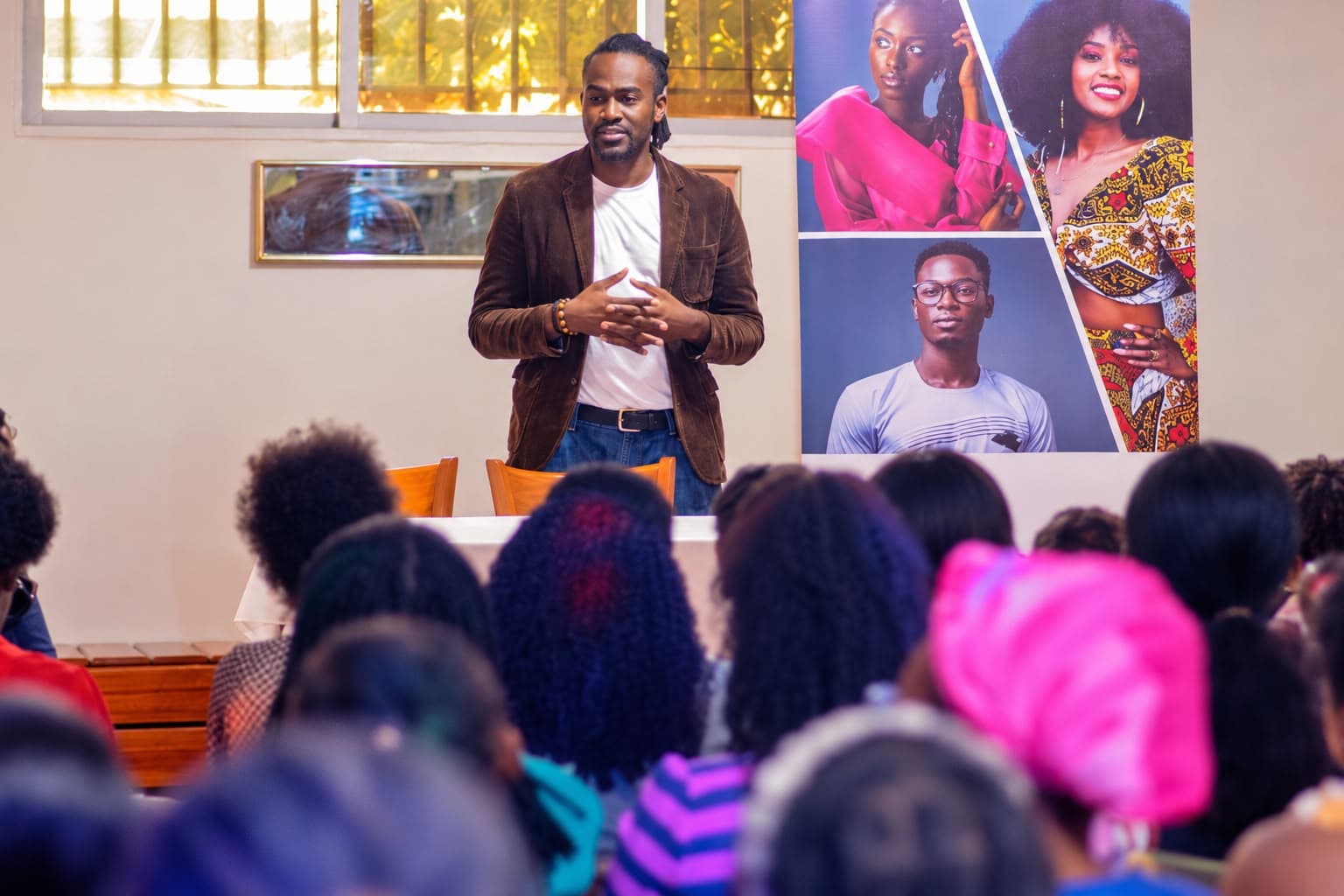
After two years of interruption, <\/strong>Rendez-vous Rad Lakay<\/strong><\/i> makes its return with a 7th edition scheduled for Saturday, October 24 at the Montana hotel. Driven by the Òganizasyon Pou Pwomosyon Rad Ayisyen (OPPRA), this initiative aims to highlight the know-how of Haitian creators and artisans, while opening the debate on the need for a public clothing policy. In this interview, Jackson Badeau Castor, president of OPPRA, discusses the ambitions of this event, the challenges faced by Haitian fashion stakeholders, and the prospects for developing a true national garment industry.<\/strong><\/p> Making Haitian fashion a fully-fledged economic sector<\/strong><\/p> Le Nouvelliste<\/strong> : After a two-year break, <\/strong>Rendez-vous Rad Lakay<\/strong><\/i> returns. How does OPPRA intend to highlight Haitian garment creation on the occasion of this 7th edition, scheduled for this Saturday, October 24 at the Montana hotel? <\/strong><\/p> Jackson Badeau Castor:<\/strong> After two years of pause, we return with the conviction that Haitian fashion must be regarded as a fully-fledged economic, cultural, and strategic sector. With OPPRA, we want to showcase the know-how of our creators, artisans, tailors, and producers, but also to open a reflection on a genuine Haitian public clothing policy.<\/p> It is not enough to sporadically encourage creators: it is necessary to establish a framework that supports local production, training, access to equipment, quality, marketing, and opening up to new markets.<\/p> Our ambition is to contribute to the development of a competitive, ecologically responsible fashion that carries a strong identity. We want Haitian garments to be worn more in Haiti, but also to find their place among the diaspora and in international markets.<\/p> A day dedicated to creation, exchange, and reflection<\/strong><\/p> Le Nouvelliste: Can you present this event in broad strokes? How will this edition unfold in the different spaces of the Montana hotel, and what experiences does it hold for participants and the public? <\/strong><\/p> Jackson Badeau Castor:<\/strong> The event revolves around several complementary activities: a sale-exhibition allowing the public to discover and purchase local creations, conferences and exchanges on the Haitian public clothing policy, a fashion show, networking moments between artisans, creators, entrepreneurs, and partners, as well as cultural entertainment with Jeanjean Roosevelt.<\/p> We wish for participants not only to admire creations but to leave with new ideas, useful contacts, and a better understanding of the economic potential of Haitian fashion. Rendez-vous Rad Lakay<\/i> is both a showcase, a meeting space, and a day of reflection on the future of the industry.<\/p> The OPPRA, a key player in promoting Haitian know-how<\/strong><\/p> Le Nouvelliste: You are at the head of OPPRA, an organization that works to promote Haitian clothing. What is its mission, what are its main objectives, and what actions is it taking to encourage local production and value the know-how of our creators? <\/strong><\/p> Jackson Badeau Castor:<\/strong> The mission of OPPRA — Òganizasyon Pou Pwomosyon Rad Ayisyen — is to make known and promote Haitian know-how in the fashion sector. We want to help build an industry capable of producing locally, creating jobs, transferring skills, and valuing our identity.<\/p> Our objectives are to develop a competitive, environmentally friendly fashion that is recognizable by its identity, while exploring new markets, particularly within the Haitian diaspora.<\/p> We are also working on capacity building. OPPRA has engaged in training actions in photography, as creators need professional images to present and sell their products. We also offer training in sewing and leatherwork. A training program in fabric painting aimed at young people is also in preparation. Other initiatives are underway abroad around weaving techniques.<\/p> Jackson Badeau Castor: culture as a lever for dignity and development<\/strong><\/p> Le Nouvelliste: Who is Jackson Badeau Castor? Beyond your role as president of OPPRA, what journey led you to design and promote Haitian fashion, and what vision guides your commitment today? <\/strong><\/p> Jackson Badeau Castor:<\/strong> I am Jackson Badeau Castor, a writer, Haitian cultural operator, photographer, and Haiti enthusiast. My commitment to promoting fashion stems from the conviction that our culture is not just a heritage to preserve: it can also be a driver of creation, dignity, employment, and development.<\/p> I believe that the Haitian person is going through an existential war: a struggle to preserve their place, memory, trust, and ability to envision their future. In this struggle, our culture and sports are weapons and shields. They allow us to tell who we are, transmit our know-how, and build spaces of solidarity.<\/p> This vision guides my work with OPPRA and the cultural initiatives we develop.<\/p> Producing locally amid competition from imported products<\/strong><\/p> Le Nouvelliste: The Haitian market remains heavily marked by the presence of imported clothing products. In this competitive context, what are the main challenges faced by local creators and producers? Does Haitian fashion have the necessary assets to establish itself durably against this competition? <\/strong><\/p> Jackson Badeau Castor:<\/strong> The challenge is to enable Haitian producers to compete with imported items, in a context where artisans often lack suitable equipment, financing, specialized training, visibility, and structured distribution channels. It is also necessary to work on quality, production capacity, promotion, and public trust in products made in Haiti.<\/p> But we have assets: creativity, the richness of our textiles and traditions, the talent of our artisans, and the connection of the diaspora to Haitian identity. To transform these assets into sustainable results, we need a public clothing policy that supports local production, facilitates training and access to tools, encourages local purchasing, and helps Haitian businesses access other markets.<\/p> I also want to launch a specific plea in favor of Haitian shoemakers. They must federate, organize within a representative structure, and collectively bring their proposals to the authorities and relevant institutions.<\/p> We must open the debate on mechanisms that would allow shoes destined for schoolchildren to be produced in Haiti, utilizing Haitian shoemakers and workers when production capacities, quality requirements, and necessary conditions permit.<\/p> Such a orientation could support local workshops, create jobs, and give young people a concrete reason to believe in artisanal trades. We need to move from the isolation of artisans to true collective strength.<\/p> Structuring the industry and opening new economic perspectives<\/strong><\/p> Le Nouvelliste: <\/strong>Rendez-vous Rad Lakay<\/strong><\/i> aims to bring together artisans, creators, designers, and fashion entrepreneurs around the issues of development and valorization of Haitian know-how. How can this meeting concretely contribute to structuring the industry, stimulate exchanges between its actors, and create new economic perspectives for Haitian fashion? <\/strong><\/p> Jackson Badeau Castor:<\/strong>Rendez-vous Rad Lakay<\/i> can help structure the industry by bringing together, in one space, artisans, tailors, designers, shoemakers, leatherworkers, entrepreneurs, institutions, and partners.<\/p> The sale-exhibitions facilitate encounters between producers and clients; networking can lead to collaborations and new sales opportunities; the conferences allow for formulating common proposals.<\/p> This edition will also be a day of reflection around a framework document for a Haitian public clothing policy. Among the proposals we wish to discuss is the creation of a Fashion and Sewing Academy in Haiti, to structure training, transmit know-how, and prepare a new generation of professionals.<\/p> We want exchanges to go beyond the event and contribute to the development of concrete proposals for the future of the sector.<\/p> A production workshop and new initiatives to ensure the event's sustainability<\/strong><\/p> Le Nouvelliste: This 7th edition comes after two years of interruption. What are the main innovations of this edition compared to the previous one, and what developments do you wish to bring to <\/strong>Rendez-vous Rad Lakay<\/strong><\/i> to ensure its prominence and sustainability? <\/strong><\/p> Jackson Badeau Castor:<\/strong> The major innovation is the project to create a large production workshop accessible to OPPRA member artisans. The aim is to pool certain working resources and provide creators with better conditions to develop and produce their models.<\/p> We also want to strengthen training and expand available skills in the sector, particularly in photography, sewing and leatherwork, as well as fabric painting, for which training is being prepared. We are also pursuing training initiatives abroad around weaving techniques.<\/p> Rendez-vous Rad Lakay<\/i> is part of a broader agenda: several events are planned each year in the North and South of the country. In November, we are also preparing, with our partners from Belgium, the second edition of the Afro-Caribbean Fashion Salon.<\/p> Our goal is to grow these initiatives over time by linking them to training, production, networking, and access to markets.<\/p> Le Nouvelliste: What message would you like to convey to the public, fashion enthusiasts, and all those wishing to support Haitian creation? Why should they participate in <\/strong>Rendez-vous Rad Lakay<\/strong><\/i>, this Saturday, October 24, at the Montana hotel? <\/strong><\/p> Jackson Badeau Castor:<\/strong> I invite the public, fashion enthusiasts, institutions, businesses, and all those who believe in Haitian potential to take part in Rendez-vous Rad Lakay<\/i>. Coming means discovering creations, directly supporting artisans, buying local, meeting professionals, and contributing to an essential reflection on the future of our clothing sector.<\/p> Supporting Haitian fashion is not just about supporting clothing: it’s about supporting jobs, skills, a local economy, and an identity. We must empower artisans to produce, federate, and conquer new markets, both in Haiti and within the diaspora.<\/p> I hope that this day will help us transform our admiration for Haitian know-how into concrete and sustainable commitments.<\/p> Interview by Claude Bernard Sérant<\/strong><\/p> <\/figure>
 <\/figure>
 <\/figure>





Commentaires
Aucun commentaire pour le moment. Soyez le premier à réagir.