
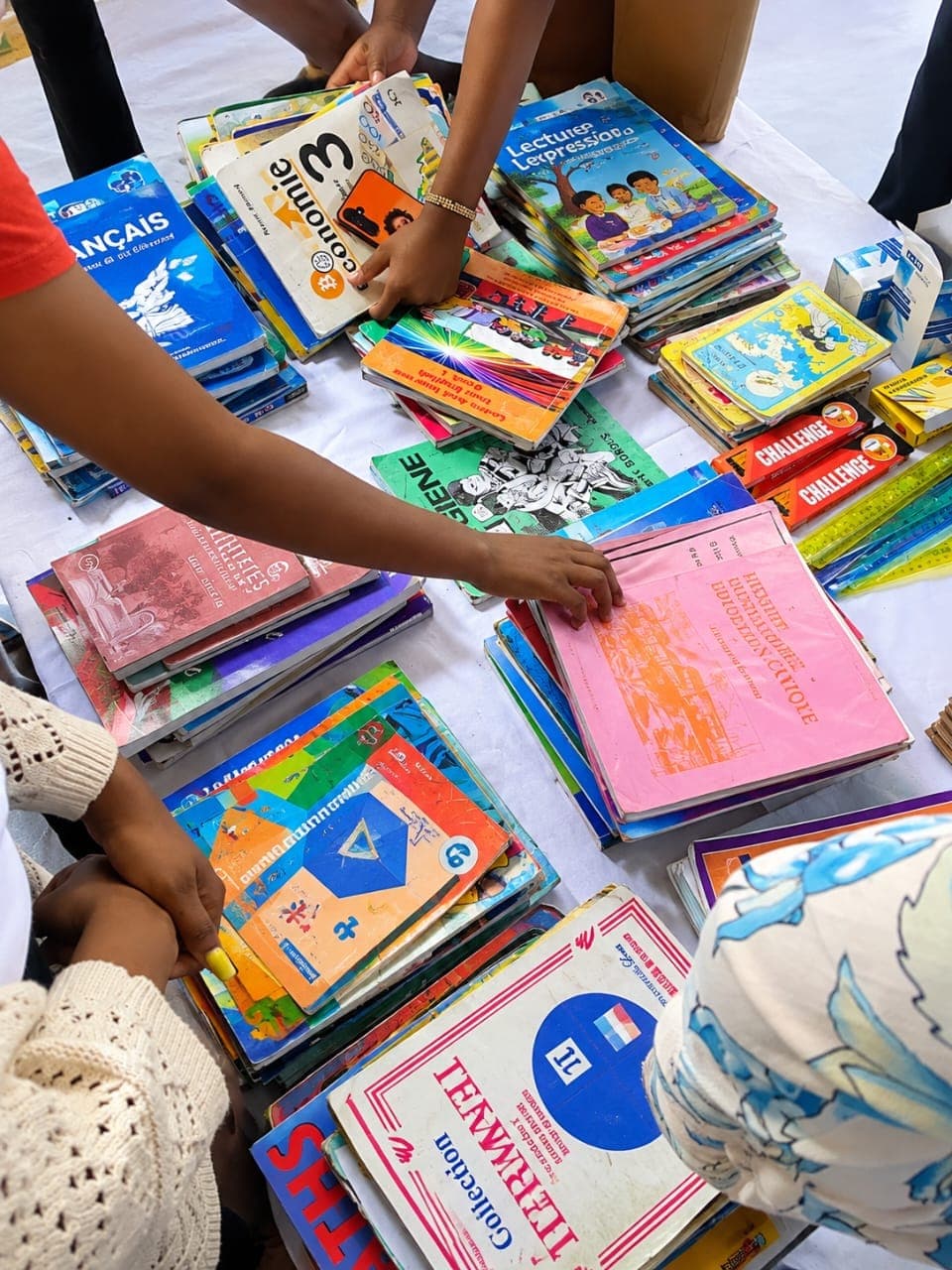
On Saturday, October 17, 2026, the community Les Jeunes Épanouis (LJE)<\/i>, in partnership with Hope and Books<\/i>, organized a distribution of school books at the Église de Dieu de Delmas 67. This initiative, which allowed 35 elementary and secondary students to receive books and school supplies, marks the culmination of a campaign to raise awareness about donating books and paves the way for a more sustainable commitment to their reuse.<\/p>
A campaign to circulate books<\/strong><\/p> For nearly a month, Les Jeunes Épanouis<\/i> and Hope and Books<\/i> mobilized donors around a simple approach: encouraging the sharing of school books that their owners no longer used. Through this campaign, the two organizations aimed to raise awareness among their community about the possibility of giving a second life to books and making them accessible to other students.<\/p> The distribution on October 17 brought this mobilization to fruition. At the end of the campaign, the collected books were handed over to new users, thus providing a concrete response to the calls for donations made over the previous weeks. The initiative also highlighted the potential of recycling textbooks as a means to capitalize on existing resources and contribute to learning.<\/p> Thirty-five students benefiting from a solidarity initiative<\/strong><\/p> The day took place at the Église de Dieu de Delmas 67, in an atmosphere marked by sharing and educational solidarity. After opening the event, the organizers introduced Les Jeunes Épanouis<\/i>, the project behind this mobilization, as well as the official partnership with Hope and Books<\/i>, before proceeding with the distribution of the books.<\/p> In total, 35 students, from first-grade elementary to New Secondary IV, benefited from school books. Additional supplies were also provided to support them in their academic journey.<\/p> Beyond the number of beneficiaries, this meeting gave a tangible dimension to the campaign: books that had already served other students were able to find their place in a learning environment. Their transmission showcases the possibility of extending the usefulness of books beyond the school journey of their first owners.<\/p> Giving your books is contributing to another's learning<\/strong><\/p> This initiative could not have been achieved without the participation of those who accepted to donate their books. By choosing to share them, the donors made their reuse possible and helped bring available resources closer to students who might need them.<\/p> The recycling of school books is precisely based on this logic: to circulate the books, promote their reuse, and recognize that a book no longer needed by one student can still be a valuable resource for another. It is not simply about giving what one has in surplus, but about participating in a chain of knowledge transmission.<\/p> Making recycling school books an annual event<\/strong><\/p> For Les Jeunes Épanouis<\/i>, the distribution on October 17 does not represent an end in itself. The community intends to continue this approach and embed the recycling of textbooks in a dynamic that will renew each year, with the ambition to mobilize more donors and expand the number of student beneficiaries.<\/p> This perspective involves maintaining awareness efforts beyond collection periods. Families, alumni, schools, and anyone with still usable school books are encouraged to consider donating as a concrete means of contributing to education. Such mobilization would gradually increase the number of books put back into circulation and give this practice a greater reach within the community.<\/p> Through this commitment, the organization Les Jeunes Épanouis<\/i> aims to encourage a change in reflex: when a school book is no longer useful to its owner, its journey should not necessarily end there. It can continue on its path, find another user, and contribute to new learning.<\/p>



Commentaires
Aucun commentaire pour le moment. Soyez le premier à réagir.