
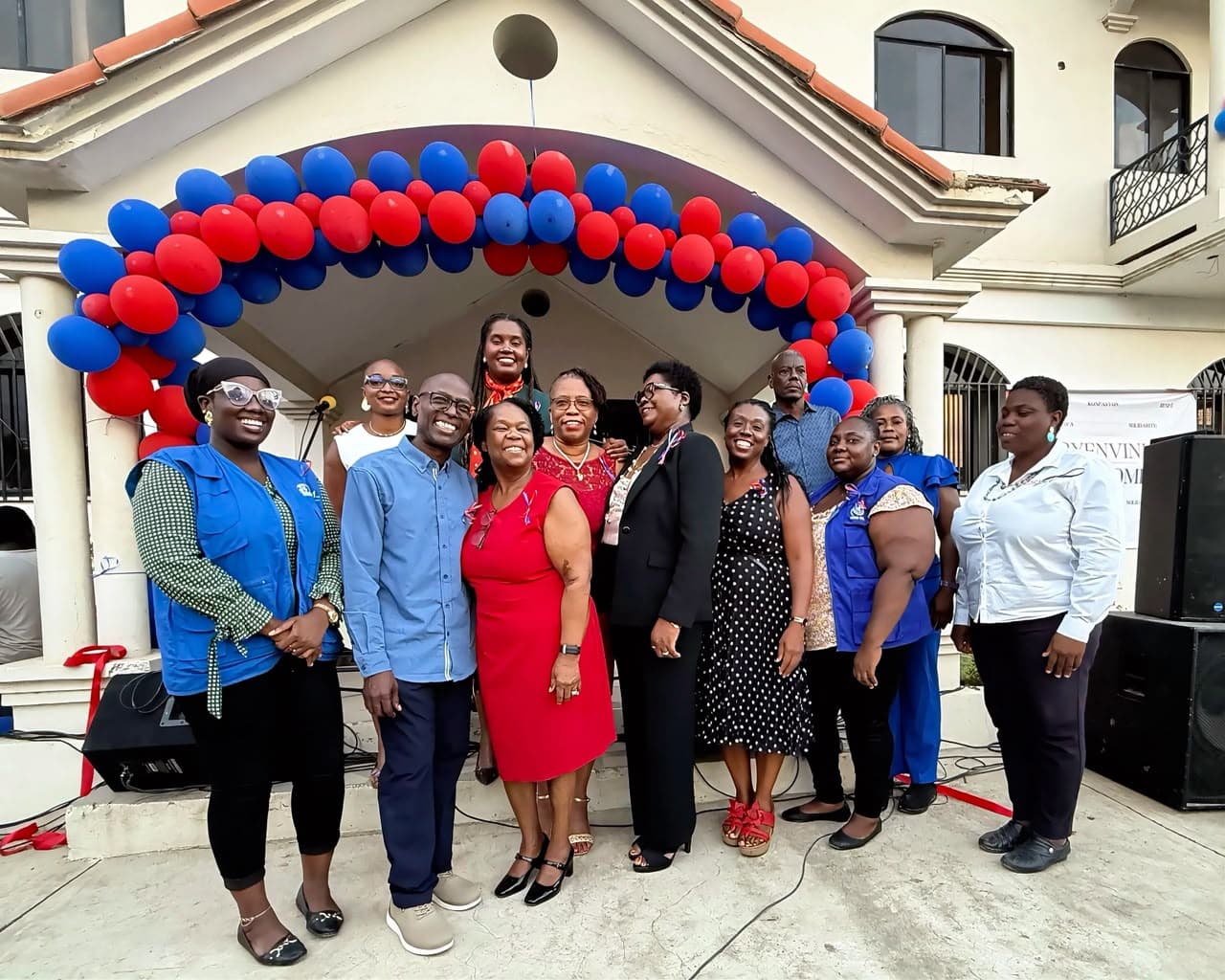
A coalition of about 38 organizations established in Haiti and in the diaspora inaugurated the BED ROCK reception center in Zovensen, along National Road Number 1, in Cap-Haitien, on Wednesday, October 28, 2026. This initiative aims to provide social, administrative, and professional support to repatriated Haitian nationals, particularly from the United States.<\/i><\/p>
The BED ROCK<\/i> center, whose name refers to the English terms Building, Ecosystem, Dignity, Reintegration, Opportunity, Compassion, and Knowledge<\/i>, reflects the desire of its initiators to build an ecosystem based on dignity, reintegration, opportunities, compassion, and knowledge.<\/p>
This structure seeks to provide a concrete response to the difficulties faced by Haitian migrants who are forced to return to their country, often after several years spent abroad.<\/p>
According to Dr. Géralde Vital Gabeau, one of the project’s main coordinators, the primary objective is to make repatriated migrants understand that they are not abandoned and that organizations are mobilizing to support them in their reintegration process.<\/p>
“We want our fellow citizens to know that they are not alone. We have decided to mobilize to offer them dignified support and enable them to rebuild their lives in Haiti,” she explained.<\/p>
The coordinator specified that the center plans to intervene in several areas, including reception, orientation, administrative assistance, professional support, and access to digital tools.<\/p>
A digital space is expected to allow beneficiaries to maintain contacts abroad, while a professional networking system will facilitate exchanges between qualified migrants and institutions seeking human resources.<\/p>
The officials also plan to assist repatriated individuals in their efforts to obtain administrative documents, including tax identification numbers, passports, and driver’s licenses, as well as in the schooling of their children.<\/p>
A digital platform named Ayiti Home Link<\/i> will allow migrants to register online, specify their needs, and showcase their professional skills to benefit from tailored support. The center is expected to intervene after the initial reception operations carried out by the National Migration Office (ONM). Its officials are also considering collaborating with human rights organizations, notably the Support Group for Repatriates and Refugees (GARR), as well as with Jesuit organizations.<\/p>
Ms. Gabeau also announced that similar structures could be established in other departments of the country. She indicated that the project would normally require an investment estimated at two million US dollars, but partner mobilization made it possible to realize this first establishment in Cap-Haitien.<\/p>
For her part, Dr. Guerda Nicolas, also involved in this initiative, strongly condemned the treatment reserved for Haitian migrants by U.S. authorities, particularly those affected by measures related to Temporary Protected Status (TPS).<\/p>
She recalled that many Haitian nationals entered the United States legally, where they work, pay taxes, and participate in the economic life. “These fellow citizens entered the United States legally. They work and pay their taxes. Deciding today to expel them under these conditions constitutes, in our view, a violation of their rights,” she condemned.<\/p>
Ms. Nicolas praised the commitment of diaspora organizations that continue their efforts to denounce what they view as arbitrary decisions and defend the rights of Haitian migrants.<\/p>
Present at the ceremony, the former president of the Interim Municipal Commission of Cap-Haitien, Angie Bell, congratulated the partner organizations for this collective initiative. She stated that the development of Haiti necessarily requires mobilizing its own human resources and solidarity among its citizens. “We cannot always wait for help from abroad. Haitians themselves must take initiatives to save their country. Unity and the spirit of konbit<\/i> remain essential to overcoming our difficulties,” she declared.<\/p>
The ceremony was also marked by the intervention of Djunie Saïdena Alexis, representative of Buzz International Network Communication Center<\/i> (Buzz INCC), a project partner.<\/p>
In her speech, she emphasized the role of training and employment in the reintegration process of migrants. “Every compatriot who returns to the country deserves to find respect, support, and opportunities to rebuild their lives with dignity,” she stated.<\/p>
The representative of Buzz INCC<\/i> indicated that the company currently employs more than 300 people and aims to create 10,000 jobs in Haiti over the next seven years. “Your experience has value. Your skills have value. You have a place and a role to play in the future of the country,” she told the repatriated Haitian migrants. She also praised Ayiti Community Trust<\/i> and other partners involved in implementing this initiative.<\/p>
The inaugural ceremony took place in the presence of Pastor Joseph Voltaire, representatives of IOM and ONM, as well as several members of civil society.<\/p>
Through BED ROCK<\/i>, the partner organizations aim to go beyond mere humanitarian assistance to propose a sustainable support mechanism likely to promote the social and economic reintegration of repatriated migrants.<\/p>
The success of this initiative will now depend on the continuity of the announced services, resource mobilization, and the ability of the various partners to translate their commitments into concrete results.<\/p>




Commentaires
Aucun commentaire pour le moment. Soyez le premier à réagir.