
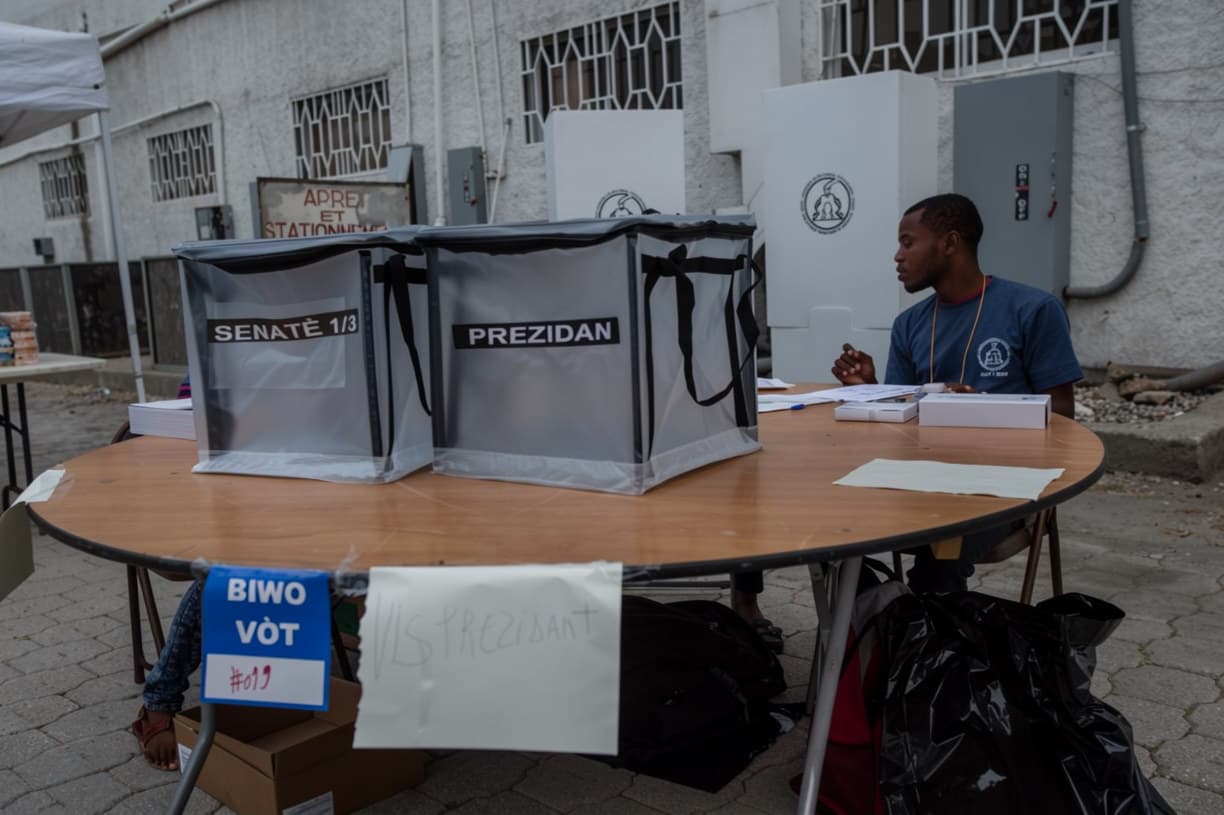
For thousands of young people born between 1999 and 2008, the elections scheduled for July 18, 2027 could mark their first electoral experience. They were children or teenagers in 2016, and now they are adults wanting to choose their leaders. Growing up amidst political crises, insecurity, and economic hardships. As this deadline approaches, some are eagerly waiting to vote, while others are questioning the conditions under which the election will take place.<\/i><\/p>
Nearly eleven years after the last presidential election, Haiti is preparing to return to the polls. In November 2016, when Haitians went to the polls to choose their president, the 50th legislature, and local and municipal officials, a large part of this generation was not yet of voting age. Some were in middle or high school, while others were just finishing their childhood. Since then, the country has experienced a series of crises, transitional government changes, and a gradual weakening of its institutions.<\/p>
Their adolescence and entry into adulthood have also been marked by the assassination of President Jovenel Moïse, on the night of July 6 to 7, 2021. The last head of state elected by universal suffrage, he was killed while the country was already experiencing a severe political crisis. The Parliament was defunct, and the president was the last elected official still in office at the national level. Since this tragedy, Haiti has not organized any elections.<\/p>
Now of legal age, these young people face a prospect they have never known: participating in the selection of a president, parliamentarians, mayors, and other local officials. For them, the upcoming elections therefore represent not only a political appointment but also an opportunity to make their voices heard and engage in decisions that affect the country's future.<\/p>
But enthusiasm does not erase questions. While some are eager to discover the polling stations, others doubt the authorities' ability to organize the elections in a context where insecurity continues to disrupt daily life.<\/p>
For Jasmine, this first participation comes with mixed feelings. At 27, she is delighted to finally vote, but she also feels some embarrassment at the idea of experiencing something so late that many citizens encounter as soon as they reach adulthood.<\/p>
"I have heard about the elections, but now I will have to participate. I still feel embarrassed to experience this for the first time at my age. Normally, this should have already been my second participation," she confides.<\/p>
Her testimony reflects the regret of a young woman who wished to have known the polls much earlier. At 27, she is about to undergo an experience that citizens of many countries discover at the age of 18. For her, this first participation also recalls the long years during which Haiti remained without organizing another presidential election.<\/p>
Vote, but above all, make a thoughtful choice<\/strong><\/p> Beyond the desire to participate in the vote, another question concerns these young people: the choice of future leaders. For Harry, a graduating student in legal sciences, youth participation should not be limited to merely showing up at a polling place. It also requires understanding the stakes and measuring the consequences of one's choice. "I invite young people to participate in the elections so that we don't have to experience a situation where, upon reaching our twenties, we are just beginning to vote. We must make smart choices and support candidates who have projects, vision, and the necessary capabilities to lead the country," he believes. For him, voting is not just about checking a name on a ballot. It is also essential to take the time to know the candidates, examine their proposals, and evaluate their capacity to address the problems of the country. A process he considers essential to prevent voters from making decisions without a real understanding of whom they are entrusting their future to.<\/p> This desire to participate is accompanied, however, by a certain distrust of the political class. After years of unfulfilled promises and successive crises, part of the youth is awaiting concrete answers. Security, access to education, job opportunities, and living conditions stand among their main concerns. All these issues will weigh in on their choice of candidates.<\/p> Despite its demographic weight, youth is slow to register<\/strong><\/p> Before dropping their ballot into the box, future voters must take a first step: registering on the electoral roll. The Provisional Electoral Council (CEP) launched the registration operations on July 20, 2026. Young people wishing to participate in the upcoming elections are therefore called to complete the necessary formalities.<\/p> At 19, Jacky claims he has already completed this step. Registered on the electoral roll, he encourages other young people to follow suit. However, he regrets the lack of awareness campaigns aimed at informing the population about the steps to take. "I have already registered as a voter, and I invite young people to do the same. However, I notice that the Provisional Electoral Council neglects awareness campaigns to encourage citizens to register," he laments.<\/p> The latest data published on the CEP's website indicates about 940,000 registered voters on the electoral lists. Among them, fewer than 200,000 are aged 18 to 28. These figures reflect a low presence of young people among those already registered and provide a first glimpse into their engagement in the registration process. The place of this age group in the electoral process deserves particular attention. According to data from the United Nations Development Programme (UNDP), over five million people aged 15 to 39 live in Haiti. They represent 42.8% of the total population. Behind these figures lies the demographic weight of a youth whose expectations go far beyond just the electoral question. Their involvement in the vote could influence political choices, provided that the political and security climate allows for effective participation.<\/p> A generation born between two elections<\/strong><\/p> The Provisional Electoral Council (CEP) has set July 18, 2027, as the date for the first round of presidential and legislative elections, as well as for the holding of a constitutional referendum. The second round is scheduled for October 4, 2027, coinciding with local territorial elections.<\/p> To trace back the last presidential election held in Haiti, one must go back to November 20, 2016. This election brought Jovenel Moïse to the presidency. Since then, no other presidential, legislative, municipal, or local elections have been held in the country. Successive political crises, institutional instability, and the deterioration of the security situation have prolonged this absence of electoral appointments.<\/p> For the young people born between 1999 and 2008, the deadline of July 18, 2027, carries particular significance. All will have reached the age of 18 by the time of the first round. For those who have never been to the polls before, it will be the opportunity to participate in choosing the next elected officials. However, it is necessary to be registered on the electoral lists and meet the conditions set by law, particularly Article 59 of the new version of the electoral decree published on October 6, 2026.<\/p> But between the electoral calendar and the reality on the ground, several uncertainties remain. In a country where armed violence continues to disrupt daily life and limit movement, the ability for each citizen to vote freely remains a major concern. The effective holding of the election will depend, in particular, on the security conditions in the various regions of the country.<\/p> For the youth, the appointment in July 2027 is not just a date on the electoral calendar. Each approaches it with their lived experiences, expectations, and concerns. Through the testimonies of Jasmine, Harry, and Jacky, the anticipation of a generation that has grown up without a true national electoral appointment begins to take shape.<\/p> After about eleven years without presidential, legislative, or local elections, several questions remain pending and await answers from the CEP and the government led by Prime Minister Alix Didier Fils-Aimé. Will these young people finally be able to go to the polls on July 18, 2027? Will security conditions allow voters to freely participate in the various elections, from choosing the president and parliamentarians to selecting their municipal and local representatives?<\/p> Like Jasmine, Harry, and Jacky, many young people also wish to have a say in the decisions that affect their daily lives. After several delays, including the one on December 13, 2026, the effective holding of the announced elections remains a crucial condition to allow this generation to experience its first electoral experience and finally make their voice heard.<\/p>



Commentaires
Aucun commentaire pour le moment. Soyez le premier à réagir.