

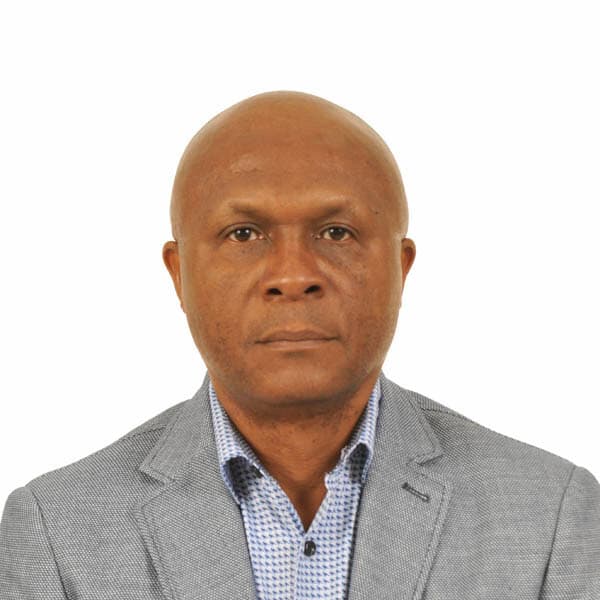
At the 31st Conference of the Parties on climate, held in Antalya, Turkey, Haiti's Environment Minister and head of the Haitian delegation, Valéry Fils-Aimé, made a case for climate financing that is truly accessible to vulnerable countries. "The climate is moving much faster than climate finance," he emphasized on November 16, 2026, during a panel organized by the Haitian delegation on the theme "Amplifying the Caribbean's voice on funding and building resilient prosperity." This formula encapsulates the gap between the urgency on the ground and the sluggishness of financing mechanisms.<\/p>
With figures to support his position, the minister recalled the extent of the losses suffered by the region. "Between 2000 and 2024, Caribbean countries have incurred over $53 billion in damage related to climate disasters," he indicated, accounting for more than 90% of all damages recorded among small island developing states globally. For Valéry Fils-Aimé, the nature of the debate has shifted: the goal is no longer to demonstrate the vulnerability of these countries, but to move from commitment to disbursement.<\/p>
To bolster his request for mechanisms tailored to the realities of countries, the minister presented what Haiti is already bringing to the table. The country has an adaptation plan that identifies 340 concrete actions, 21 of which are deemed priority. It participates in the co-management of the National Park of the Three Bays, the largest marine protected area in Haiti, covering 76,000 hectares. Finally, it has set a goal of 47% renewable energy in its nationally determined contribution. These elements show that projects exist and the challenge now is to ensure their financing.<\/p>
The minister then proposed that the Caribbean speak with one voice on three concrete demands. The first concerns access criteria: an effective consideration of multidimensional vulnerability in the eligibility and allocation criteria for climate funding, alongside traditional income indicators. The second relates to the governance of funds: direct access for national and regional institutions, which know their territories best. The third pertains to financing conditions: faster procedures and instruments that enhance resilience without exacerbating debt. "A devastated country should not be asked to take on more debt to rebuild," the minister concluded.<\/p>
These priorities, advocated by the Haitian delegation in its negotiation process, are finding a concrete echo. According to a statement from the Ministry of Environment published on November 15, 2026, Haiti has been selected for the first cohort of the ARISE program (Accelerating Resilience Investments and Innovations for Sustainable Economies), for funding of nearly $30 million. The announcement was made by the director of the Climate Investment Funds (CIF), Tariye Gbadegesin, during a meeting with the minister. The program aims to accelerate investments and innovations that strengthen the climate resilience of populations and promote the development of sustainable economies.<\/p>
This funding is to serve as leverage for new public and private investments, particularly in the protection and resilience of coastal areas, especially in Cap-Haïtien, as well as in renewable energies. However, the funds are not yet available: the approval of the program and the disbursement are contingent upon the submission of an investment plan to the CIF.<\/p>
Thus, at the heart of the negotiations in Antalya, Haiti is defending clear claims and recording a first tangible result, the realization of which will now depend on the preparation of this investment plan.<\/p>




Commentaires
Aucun commentaire pour le moment. Soyez le premier à réagir.