
A month after the disappearance of four Salvadoran soldiers in Santo 17, on October 18, 2026, El Salvador has significantly increased its military presence in Haiti and has built a sense of goodwill since then. Haitians, after more than 5 years of distress, aspire to see the end of the tunnel and see Nayib Bukele, president of El Salvador, as an unexpected ally.<\/i><\/p>
It all began on Sunday, October 18, 2026, when four Salvadoran soldiers, members of the Gang Suppression Force (FRG), disappeared in Santo 17, in the Cul-de-Sac plain, after an attack attributed to armed criminal groups. According to explanations provided by the Salvadoran army, the four men, aviation technicians, were returning to their base in an armored vehicle when they fell into an ambush. They had gone shopping at a wrong establishment.<\/p>
The assailants threw Molotov cocktails at their armored vehicle. The soldiers, according to a statement from the Salvadoran army released 24 hours later, were able to escape before losing contact with their command.<\/p>
The FRG's reaction was immediate. Helicopters and armored vehicles were dispatched to the area to try to locate the soldiers. Clashes took place between the engaged forces and gang members, while several ground and aerial approaches were undertaken. Operations continued in the following days, notably with the use of explosive drones.<\/p>
The disappearance of the soldiers prompted a reaction from Salvadoran President Nayib Bukele. On October 21, in a message published in Haitian Creole on X, the leader announced an operation aimed at locating his compatriots and issued an ultimatum to the armed groups.<\/p>
“We launched a military operation today to rescue them. We have only one goal: to bring our four compatriots home, alive and unharmed,” said the Salvadoran head of state, warning the gangs that the attacks carried out until then were nothing compared to what awaited them if they did not release the soldiers.<\/p>
By October 22, more than a hundred Salvadoran soldiers had arrived in Port-au-Prince. Other contingents followed, bringing the number of deployed soldiers to over 2,000 in just a few days. Salvadoran authorities presented this mobilization as an operation to locate the four missing technicians.<\/p>
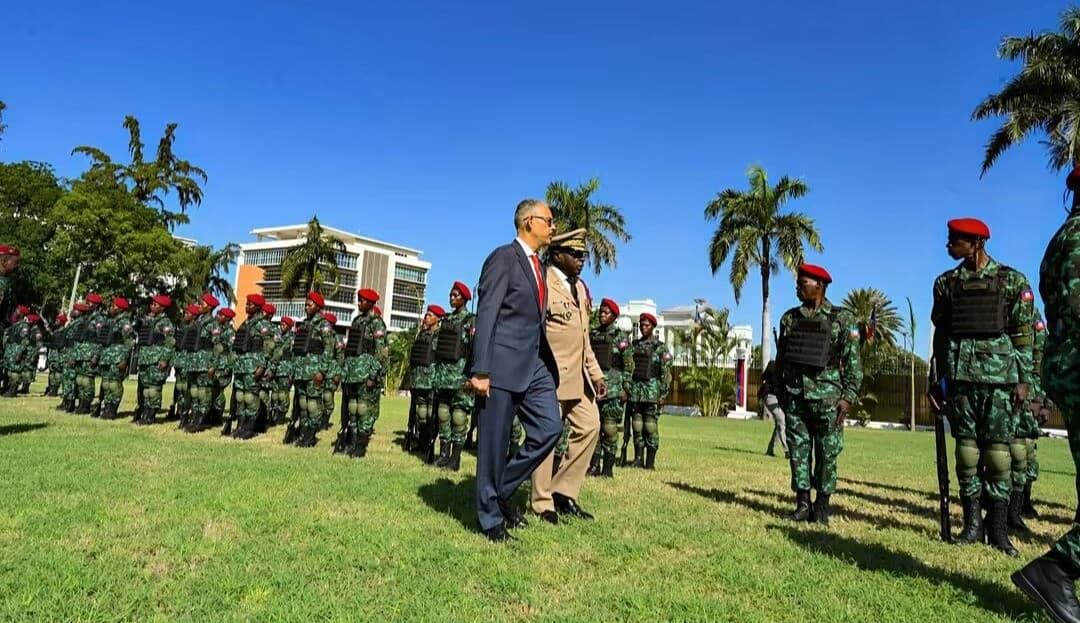
On October 28, following a phone call between Nayib Bukele and Haitian Prime Minister Alix Didier Fils-Aimé, the two governments announced their willingness to strengthen operational cooperation in the fight against gangs.<\/p>
In response to the questions raised by the scale of the Salvadoran deployment, Prime Minister Alix Didier Fils-Aimé held a press conference on November 3, 2026, to clarify his government's position. The head of government emphasized that the foreign forces present on national territory were meant to support Haitian institutions and not to replace them. He also reaffirmed that the Haitian state retained responsibility for leading the country's security efforts.<\/p>
Salvadoran operations quickly exceeded the perimeter of Santo. Soldiers engaged in interventions in several neighborhoods controlled by criminal groups, particularly in Croix-des-Bouquets, downtown Port-au-Prince, and in the areas of Village-de-Dieu.<\/p>
This Salvadoran offensive, however, did not fail to raise concerns within the American administration. On November 8, Secretary of State Marco Rubio stressed the need for better coordination between Salvadoran forces and the FRG to avoid accidental clashes between the two forces. Le Nouvelliste <\/i> learned that Prime Minister Alix Didier Fils-Aimé has created the “Joint Information Center (JIC)” among all forces on the ground to address this coordination issue.<\/p>
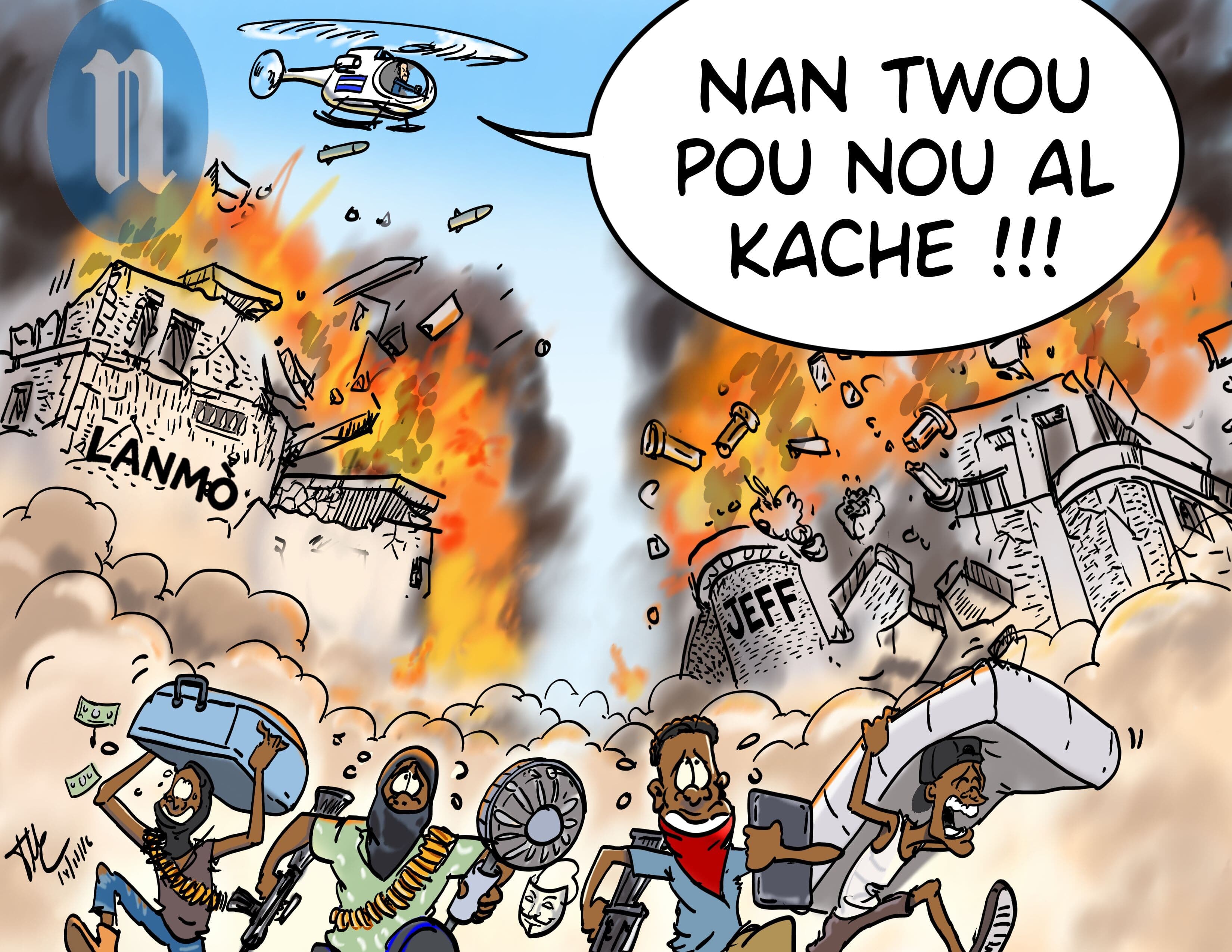
On November 10, the day after concerns were expressed by Washington, Nayib Bukele released a video showing airstrikes against the residence of Wilson Joseph, alias “Lanmò San Jou,” leader of the gang “400 Mawozo,” in Croix-des-Bouquets. According to a government source contacted by Le Nouvelliste <\/i>, the residence was destroyed. These rocket strikes, carried out from helicopters, increased the pace in the fight against criminal groups after the appearance of explosive drones.<\/p>
Two days later, on November 12, a joint operation involving the PNH, the Armed Forces of Haiti (FAd’H), the Task Force, and Salvadoran special forces allowed for the recapture of the Sylvio-Cator stadium, in downtown Port-au-Prince.<\/p>
The presence of Salvadoran soldiers in this sector has also changed the security situation around the Salomon market and the Léogâne portal. Witnesses reported the absence of some armed men who used to extort passersby near the Salomon market.<\/p>
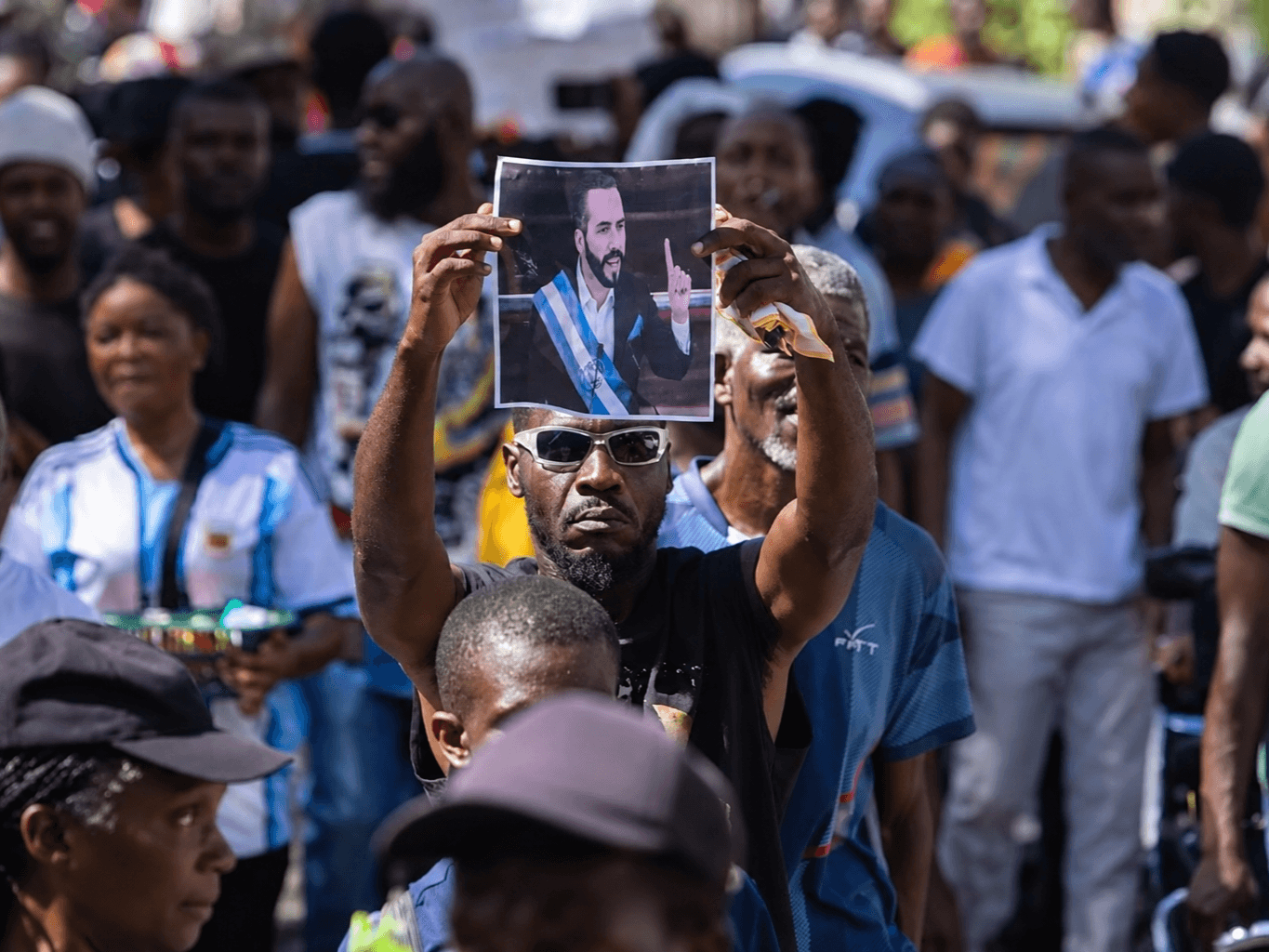
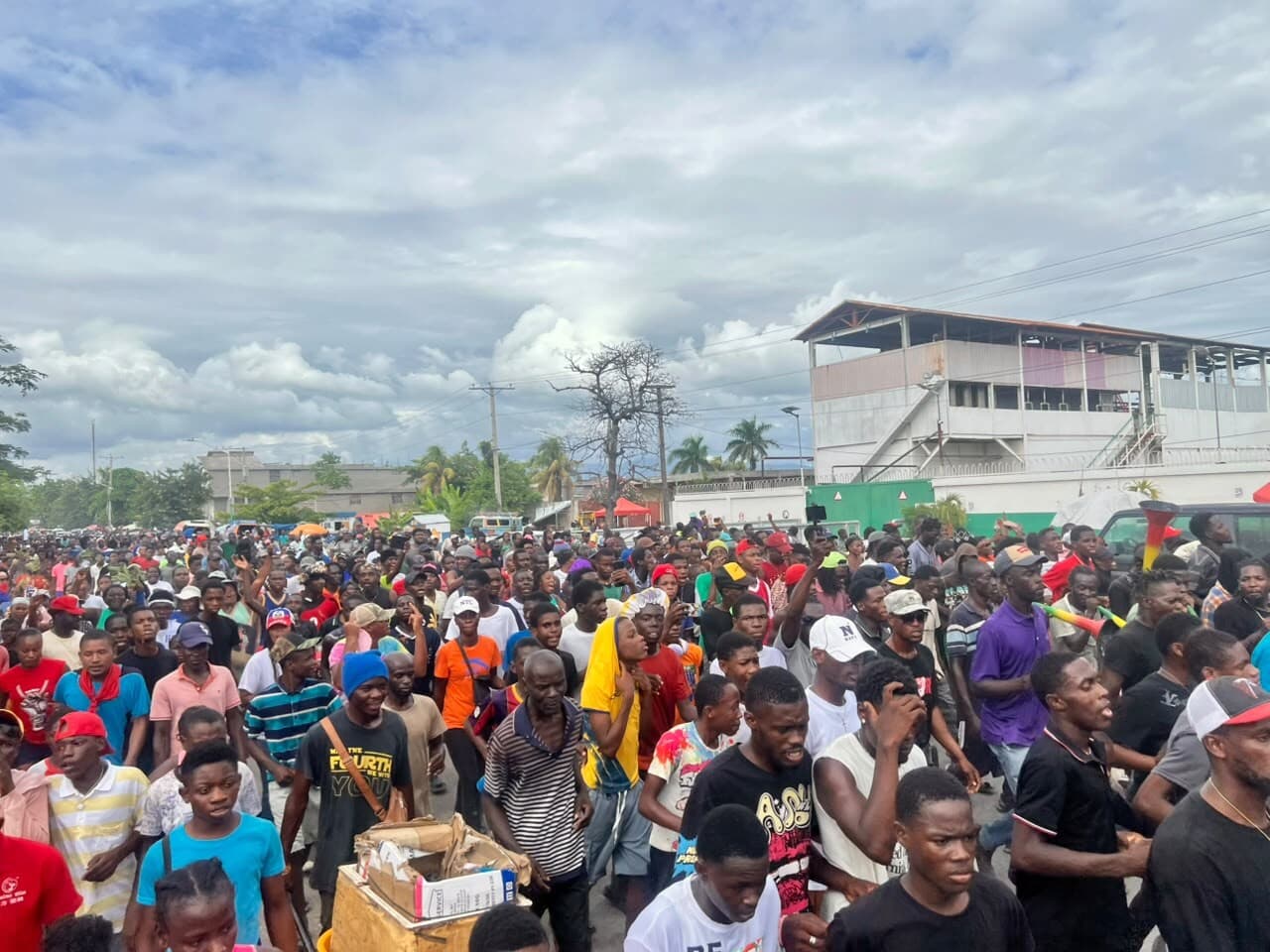
Salvadoran operations have generated visible enthusiasm among some sections of the Haitian population. On Tuesday, November 17, thousands of protesters took to the streets in several areas of the metropolitan region of Port-au-Prince, in Cap-Haitien, Jacmel, and Jérémie.<\/p>
On Tuesday, November 17, in a festive atmosphere, processions were observed in downtown, Delmas, Pétion-Ville, and Kenscoff. Armed with signs, banners, and branches from trees, the protesters chanted slogans in support of the Salvadoran leader.<\/p>
Support demonstrations continued on Wednesday, November 18, 2026, in Les Cayes and Gonaïves and in Port-au-Prince.<\/p>
This popular mobilization coincided with a new phase in relations between Haiti and El Salvador. On November 17, the Council of Ministers, meeting at the Villa d’Accueil under the presidency of Prime Minister Alix Didier Fils-Aimé, ratified a cooperation agreement between the two countries.<\/p>
According to a statement from the Prime Minister's Office, this decision marks a new stage in strengthening bilateral relations, particularly in light of the security challenges facing Haiti. However, Haitian authorities have not yet made public the detailed provisions of this agreement, including those relating to the duration of the deployment, operational modalities, and the coordination of forces on the ground.<\/p>
Since the arrival of Salvadoran forces in Haiti, the Haitian National Police (PNH), the Task Force, and the Gang Suppression Force (FRG) seem to have regained a boost of encouragement. Both forces have been increasing interventions, particularly in the metropolitan area of Port-au-Prince, with operations aimed at dislodging gangs from their strongholds. The FRG has launched an offensive against criminals in Gros Morne and Cité Soleil. The PNH and the Task Force conducted an intervention leading to the death of gang leader Mathias Saintil and are conducting offensives in Village de Dieu.<\/p>
On November 18, a month after the disappearance of his compatriot soldiers, Salvadoran President Nayib Bukele announced that Salvadoran forces had attacked the house of the criminal group leader from Canaan, Jeff Gwo Lwa. This house, located in Canaan, epitomizes the opulence of these criminals who profit from the population's misfortune. “Kado mwen pou pèp ayisyen a nan anivèsè Batay Vètyè a,” wrote the Salvadoran head of state in a phrase that has become familiar.

Commentaires
Aucun commentaire pour le moment. Soyez le premier à réagir.