
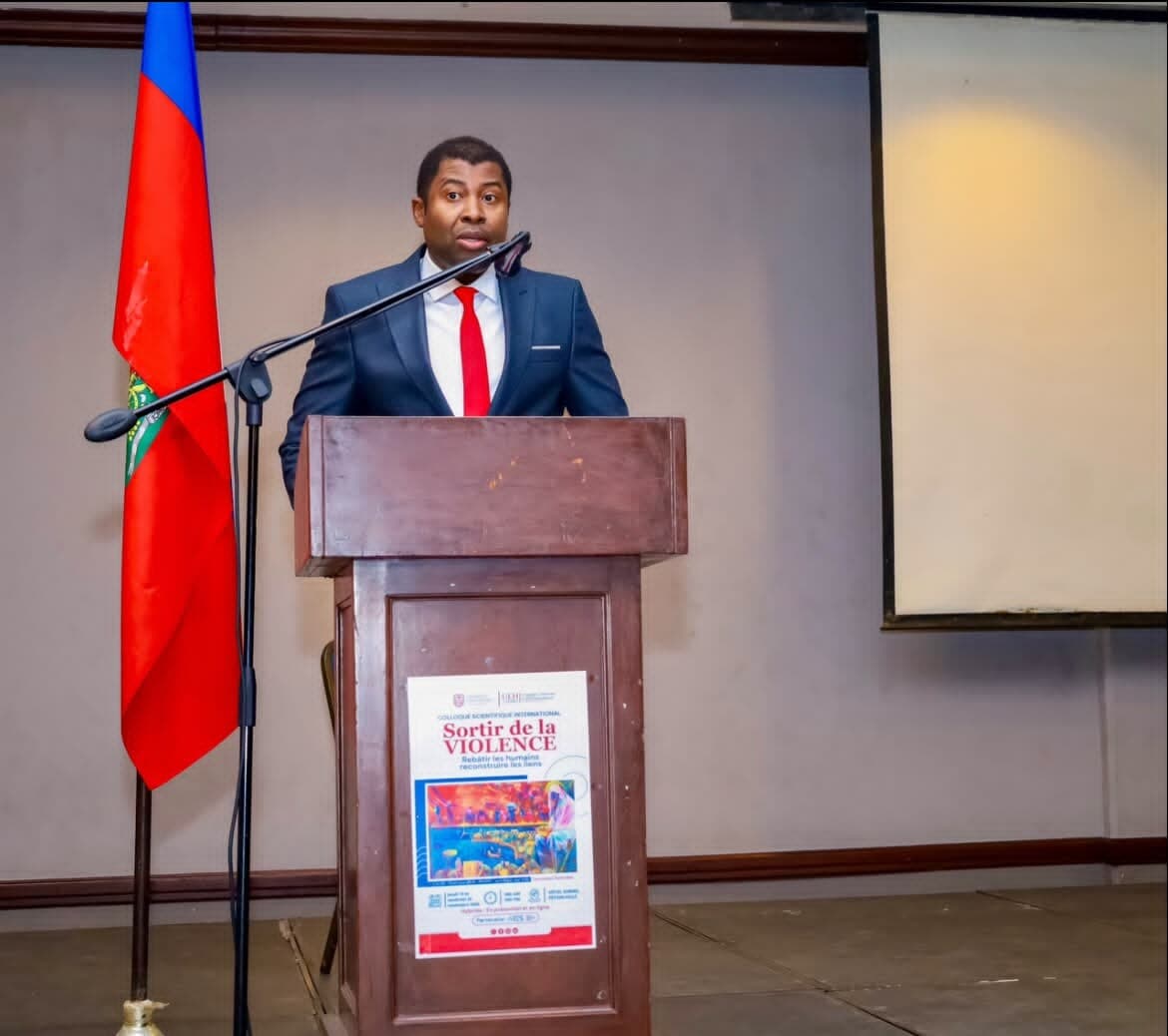
The rectorate of the State University of Haiti (UEH) organized a national and international symposium on November 19 and 20, 2026, around the theme "Overcoming Violence: Rebuilding Humans, Reconstructing Bonds." This meeting, held at the Karibe Hotel, brought together professors from UEH, academics from foreign institutions, and students from various entities of the university to reflect on the causes of violence in Haiti and sustainable solutions to overcome it.<\/p>
In his opening remarks, the rector of UEH, Dieuseul Prédélus, emphasized the commitment of the academic institution to the production of knowledge and the promotion of scientific research. "This symposium addresses the work of understanding one of the most serious crises that Haitian society has experienced throughout its history," declared Dr. Prédélus. He recalled, citing data from the United Nations, that violence has resulted in more than 5,600 deaths in Haiti, while kidnappings for ransom and sexual violence continue to multiply.<\/p>
For the rector, this crisis cannot be resolved without mobilizing knowledge and academic research. He underscored the importance of putting scientific knowledge at the service of decision-makers in order to better understand the various dimensions of this issue. "As long as this violence keeps us captive, no development plan will yield the expected results. Overcoming violence does not simply mean silencing the guns, but rebuilding the political, institutional, social, and human conditions that make collective life possible," asserted Rector Prédélus.<\/p> Overcoming Violence, A Long Process<\/strong><\/p> For his part, the research director at UEH, Dr. Jean Waddimir Gustinvil, acknowledged that the process of overcoming violence is far from easy. He particularly stressed the need for a collective approach and a deep understanding of the mechanisms that perpetuate this situation.<\/p> "Violence is not destiny, but overcoming it is neither simple, nor quick, nor linear. We must consider this exit together to build its meaning," Mr. Gustinvil noted during his opening speech. According to him, it is not enough to eliminate the physical manifestations of violence to hope for a sustainable outcome. It is also necessary to transform the structures that produce and reproduce it, particularly precarity, exclusion, and corruption.<\/p> The research director explained that the idea for this symposium emerged following a workshop organized last April by the Languages, Discourse, Representations Laboratory (LADIREP) focusing on researchers' reflections on the increasing scale of violence in Haitian society. "The State University of Haiti does not claim to provide immediate solutions. It assumes its own responsibility: to produce rigorous knowledge, clarify public debate, and open a space where knowledge can meet. This symposium is an interdisciplinary scientific and academic initiative, rooted in Haitian reality and open to the international community," he emphasized.<\/p> Rebuilding Humans and Reconstructing Bonds<\/strong><\/p> Returning to the theme of the meeting, Professor Roberson Edouard asserted that overcoming violence necessarily involves the reconstruction of individuals and social bonds. In an inaugural conference presented remotely, he proposed the development of an emancipation policy from violence that is neither naïve nor punitive.<\/p> This policy should, according to him, be articulated around seven axes: institutional strengthening, individual skill development, support for victims, education and the promotion of a culture of peace, protection of citizens, strengthening the skills of those intervening with victims, as well as monitoring and evaluating actions taken.<\/p> The professor also emphasized the need to take into account, in any strategy to combat violence, the reintegration of marginalized individuals, the reconstruction of fraternal bonds, the repair of harms, and support for victims. He believed that such an approach must also address the conditions that promote the reproduction of violence, including poverty, exclusion, impunity, corruption, institutional weakness, and stigmatization.<\/p> Work as a Means to Overcome Violence<\/strong><\/p> Also speaking remotely, Mourad Bouziane, a professor at the University of Béjaïa in Algeria, highlighted the role of work in the process of overcoming violence. "Work helps to overcome violence when it rebuilds both individuals and bonds," he affirmed.<\/p> For the professor, this overcoming should be understood as a process that takes place over time and involves both individual and social transformations. Drawing particularly on the work of researchers Maruna and Giordano, he described this process as a gradual change that engages identity, self-narrative, cognitive transformations, and the social context in which individuals evolve.<\/p> The holding of this symposium comes in a context marked by the persistence of armed gang violence and the efforts made by state authorities, with the support of foreign forces, to restore security in the country. In this situation, UEH intends to contribute to national reflection by mobilizing the resources of research and scientific knowledge.<\/p> At the end of the two days of discussions, the various contributions presented will be compiled and published as symposium proceedings, to make the reflections and proposed solutions available to decision-makers and the general public.<\/p>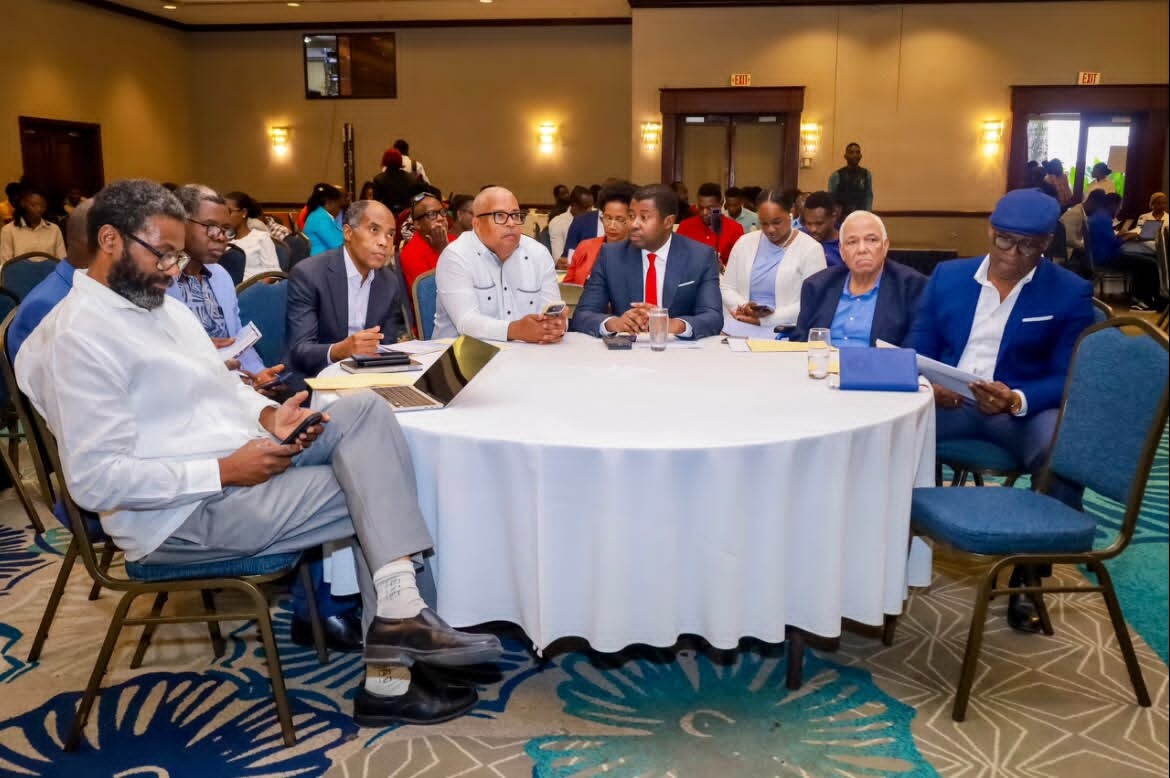 <\/figure>


Commentaires
Aucun commentaire pour le moment. Soyez le premier à réagir.