The Haitian society has been mired in a multidimensional crisis for nearly a decade. No elections have been organized, while de facto governments succeed one another. Until June 2021, the PHTK-Jovenel duo controlled almost the entire public sphere. The democratic ideal is suffocated by a tug-of-war between the ruling power and the opposition: one opts for the sharing of a portion of power, the other for its complete conquest. Thus, the balance of power prevails over dialogue and public debate. Ultimately, each camp has its militia, according to reports from investigations conducted by UN bodies and sanctions imposed by the international community.
President Jovenel Moïse, protégé of former President Joseph Michel Martelly, is assassinated in power on July 7. In the aftermath, the country transforms into an unprecedented consensual regime. Following the coalitions of armed groups G9 An Fanmi e Alye (June 2020) and Viv Ansanm (July 2023), the entire political elite joins forces and takes control of the state. Four national pacts have been signed to legitimize the transition and grant it a legal framework: the Montana Accord (August 30, 2021); the Accord for Calm and Effective Governance (September 11, 2021); the National Consensus for an Inclusive Transition and Transparent Elections (December 21, 2022); the Political Accord for a Peaceful and Orderly Transition (April 3, 2024). The time of the turncoats and political opponents is thus over. As a result, this endless transition has already celebrated its fifth birthday without much dissent.
The current dire situation is the corollary of the strategy of (re)conquering power adopted by the post-Duvalier political class. For forty years, political transition has taken precedence over alternation. Democratic powers have been contested and overturned at the cost of consensus cohabitation governments. Indeed, of the seven presidents elected by direct universal suffrage (Jean-Bertrand Aristide, elected twice), only three have completed their term (René Garcia Préval, also elected twice, and Joseph Michel Martelly), against about fifteen provisional presidents and transitional governments.
Today, the political elite seems to be changing course. Its new strategy consists of alternating false alternations under the auspices of popular sovereignty. It thus makes elections the talisman capable of restoring the authority of the state and democratic order. But how to organize voting in this deadly context? How to stimulate citizen participation?
The political class is tinkering at all costs to meet the requirements of the electoral decree, which has been adjusted repeatedly to its convenience. The CEP is fumbling with the schedule, while its statistics worry electoral experts: to date, only one million voters are registered on the electoral roll for elections that should have been held in December, representing nearly 17% of an estimated electorate of 6 million citizens. In the 2016 elections, held in a relatively serene atmosphere, the turnout was 21%.
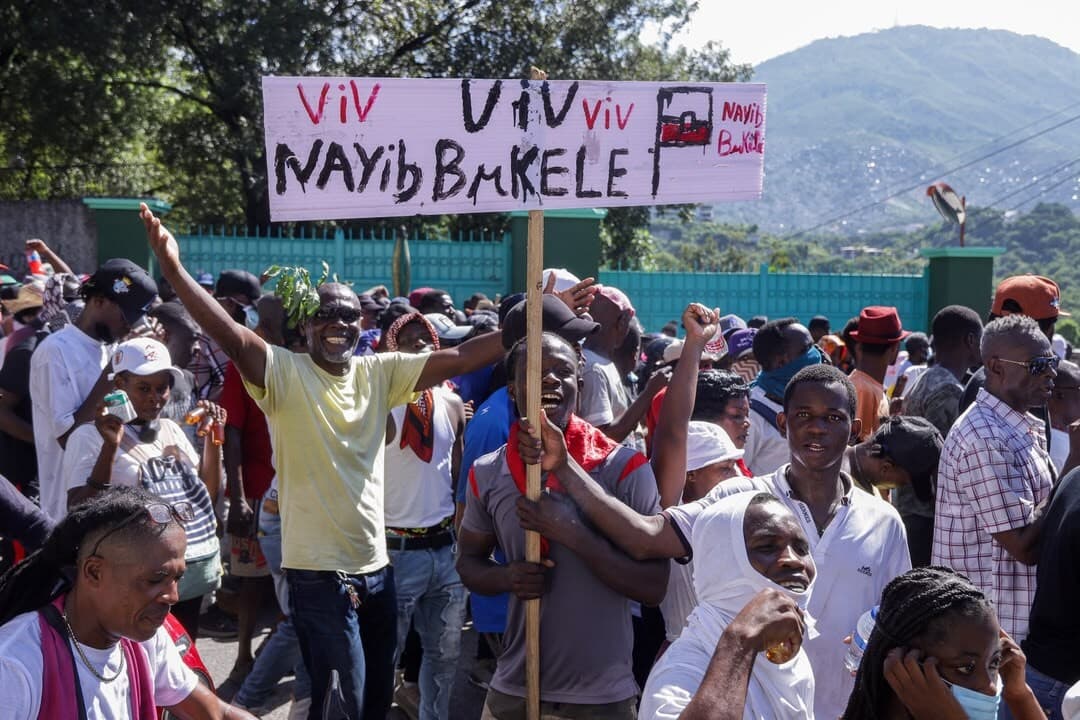
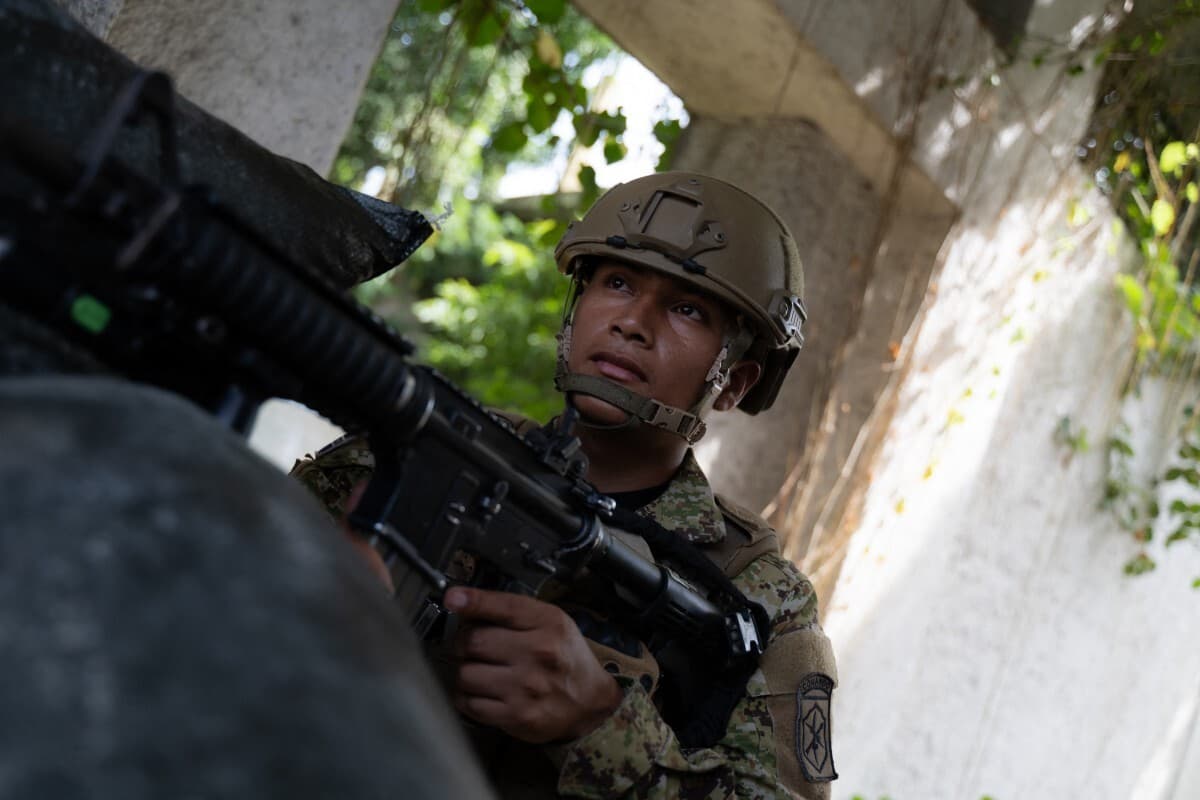
However, uncertainties regarding the holding of elections are gradually dissipating with the deployment of more than 2,000 Salvadoran soldiers and the registration of Joseph Michel Martelly for the presidential election. Indeed, a popular sentiment has recently swept across social media: "Nou p ap vote bandi legal; nou p ap vote moun ki t a dwe al nan prizon." This reveals the enthusiasm of the youth at the idea of going to the polls to choose their leaders, while censoring those who have plunged the country into chaos. No one sees in Martelly and his PHTK allies anything but electoral marketing figures, pseudo-candidates promoted to measure the degree of participation. Additionally, hailing Salvadoran President Nayib Bukele as their providence, the population finally believes they see the end of armed groups and insecurity.
The political class seems to be on the verge of achieving its goal. The electoral machine is finally well underway. According to its expectations, the youth, at the very least, would naively embark on a perilous path: that of the polls, in a climate of terror. However, these elections would not lead to the restoration of peace and democracy in Haiti. On the contrary, they would further entrench the country in serious turbulence, unless they disturb Viv Ansanm. They would also not result in a return to public order, since it appears that it is heirs of this very political elite who will be elected and will again run the state institutions. If the political elite is genuinely concerned about public peace and democracy, it would do better to take the bull by the horns.


Commentaires
Aucun commentaire pour le moment. Soyez le premier à réagir.