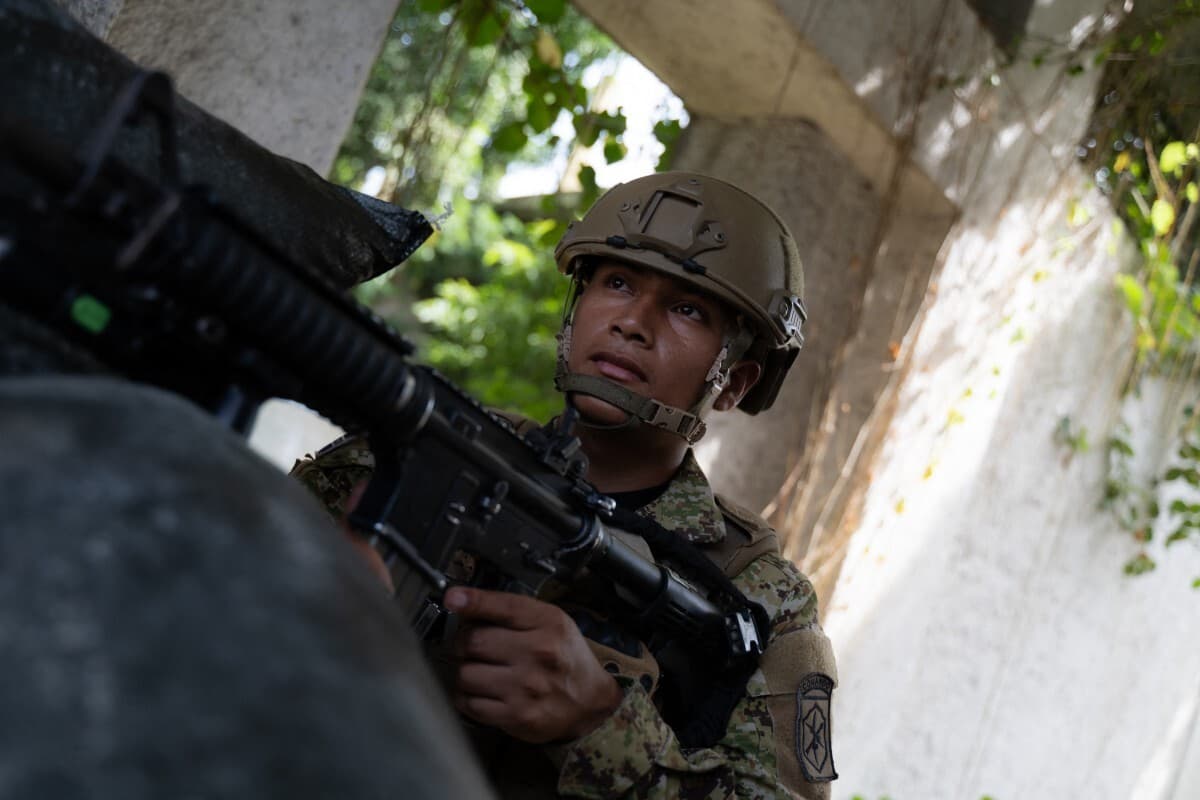
We salute this commitment with respect while expressing our deep concern regarding the disappearance of five Salvadoran military personnel reported in the Croix-des-Bouquets area. Their situation calls for sustained mobilization, rigorous institutional coordination, and the pursuit of all actions that could enable us to locate them and establish the exact circumstances of their disappearance.
We would also like to highlight the role of the Haitian Prime Minister, Mr. Alix Didier Fils-Aimé, who accepted this cooperation initiative and contributed, through the necessary logistical provisions, to the deployment and maintenance of Salvadoran contingents on national territory. The establishment of the base at the Sylvio Cator stadium notably illustrates the efforts made to facilitate this support.
In this regard, we believe this initiative deserves recognition as a manifestation of political responsibility and a willingness to cooperate. It also calls, in the long term, for a consolidation of relations between our two states, in a spirit of reciprocity, trust, and solidarity.
We would be grateful, furthermore, if you could convey our feelings of gratitude to the President of the United States, Mr. Donald Trump, for his support in the efforts made to locate the missing Salvadoran military personnel. In such a complex security environment, cooperation among international partners remains a determining factor for the success of ongoing initiatives.
The statements from American authorities, particularly those related to the stakes of this mission by U.S. Secretary of State, Mr. Marco Rubio, testify to the strategic importance given to the stabilization of Haiti. However, it should be noted that the success of this commitment should not be evaluated solely based on immediate military results, but also on its capacity to contribute to the sustainable reconstruction of national institutions.
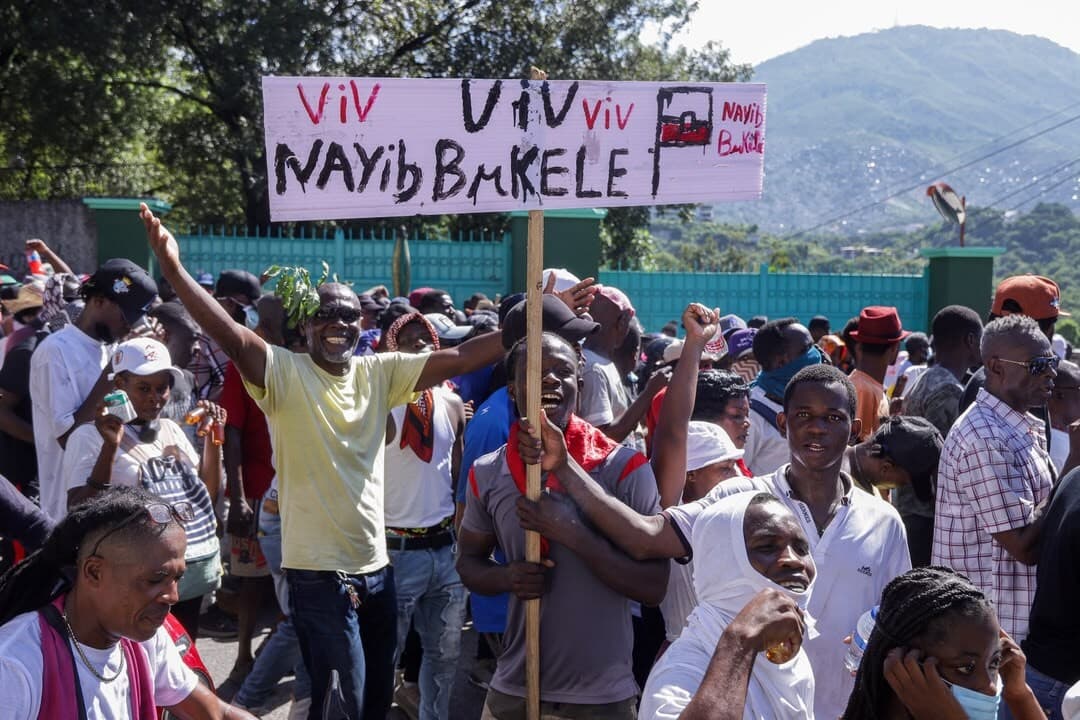
The Haitian people welcome this expression of solidarity with a legitimate hope. For over six (6) years, armed groups have exercised a particularly concerning grip over vast portions of metropolitan Port-au-Prince. The human, economic, social, and institutional consequences of this situation are considerable.
The images broadcasted by national and international media testify to the magnitude of the disaster. Families are displaced, infrastructures are destroyed, economic activities are paralyzed, and entire generations are exposed to uncertainty. The current violence not only jeopardizes Haiti's present but also threatens the development prospects of its children for decades to come. The image speaks volumes immediately after the takeover of the Sylvio Cator Stadium.
It is precisely within this context that our approach is framed within a dual perspective: to express our gratitude for your commitment and to respectfully draw your attention to several political, strategic, and institutional considerations that could enhance the effectiveness of this cooperation.
I. ON SECURITY AND HUMANITARIAN PRIORITIES
1. Continue the search for the missing military personnel
We encourage your administration to maintain the search efforts concerning the five Salvadoran military personnel reported missing. As long as their fate is not definitively established, it is essential to continue investigations. The determination to locate these men is also a duty of solidarity towards their families and the Salvadoran nation.
2. Consider the complexity of the armed groups phenomenon
The fight against criminal organizations in Haiti should not be limited to sporadic interventions or the neutralization of a few known figures in the criminal milieu (MAISON LANMO SAN JOU, JEFF CANAN DIT GROS LWA, IZO, ETC.). These structures have networks, affiliates, financial resources, and recomposition capacities that make their dismantling particularly complex.
It therefore appears essential to integrate interventions within a comprehensive Consolidation strategy, combining intelligence, institutional capacities, judicial cooperation, and the gradual restoration of public authority.
3. Strengthen the protection of contingents and the security of movements
The security configuration of certain urban areas requires particular vigilance. The risks associated with the movements of contingents, ambushes, and the modes of transport used by criminal groups require rigorous prevention and protection measures.
We encourage, in this regard, a permanent coordination among the responsible entities, a regular assessment of risks, and planning adapted to the realities on the ground.
4. Consolidate analysis and intelligence capabilities
A thorough knowledge of the territory, criminal networks, and their modes of operation constitutes an essential prerequisite for any effective security strategy. It would therefore be advisable to strengthen the institutional mechanisms for collecting, processing, and sharing intelligence, in compliance with national competencies and applicable regulations.
Such an approach would allow better targeting of interventions, reduce risks to populations, and improve coordination among the various actors involved.
II. ON HISTORICAL SOLIDARITY AND CLOSER RELATIONS BETWEEN PEOPLES
5. Inscribe this cooperation within a friendship between Haiti and El Salvador
The Haitian people wish for this initiative to surpass the scope of a circumstantial security accompaniment to become the starting point of a friendship and sustainable cooperation with the Salvadoran people.
Haiti has a unique history, marked by its struggle for freedom, its independence, and its contribution to the universal history of peoples seeking emancipation. It would be particularly significant for this page of international solidarity to also serve as a reminder to the world of Haiti's historical place, its human resources, its economic potential, and its capacity to actively participate in regional cooperation dynamics.
III. ON THE NECESSITY OF A STRATEGIC AND INSTITUTIONAL PARTNERSHIP
6. Consider the conclusion of a sustainable bilateral agreement
We respectfully wish to encourage Your Excellency to continue dialogue with the Haitian Prime Minister, Mr. Alix Didier Fils-Aimé, to explore the possibilities of concluding a bilateral agreement, taking into account eight (8) points. This cooperation will be more structured and sustainable. Such an instrument could cover several strategic areas:
- Cooperation in security and the fight against transnational organized crime;
- Transfer of skills and strengthening the capacities of national institutions;
- Sharing expertise and developing security technologies;
- Modernization of physical and institutional infrastructures;
- Energy cooperation and the development of production capacities;
- Technical and vocational training for Haitian human resources;
- Support for public policies aimed at stabilization and reconstruction.
It should therefore not simply extend occasional assistance, but build an architecture of cooperation capable of producing measurable and sustainable results.
In this perspective, we favor an approach based on the principle of a win-win partnership, in which each state contributes according to its capabilities and benefits from the outcomes of mutually beneficial cooperation.
7. Inscribe the agreement within the respect of international law and state sovereignty
From a legal standpoint, it is important to recall that states, in their capacity as subjects of international law, have the ability to conclude treaties and bilateral agreements, subject to the compliance with applicable international law rules.
The participation of the United Nations or other international organizations could be considered, particularly for the formalities of registration and publicity of conventional instruments, in accordance with relevant provisions of the United Nations Charter.
However, it remains essential that any initiative of this nature adheres to the imperative norms of general international law (jus cogens), the contractual commitments of the parties as well as the fundamental principles of sovereignty, legal equality of states, and non-interference in matters within their national jurisdiction.
The Haitian people, as a source of political and democratic legitimacy, must be placed at the heart of this approach. International cooperation should not replace national will; it should rather contribute to strengthening the capacities of the Haitian state to fully exercise its sovereign responsibilities.
8. Transform a gesture of solidarity into a diplomatic legacy
History will remember the initiatives that have contributed to bringing peoples closer and consolidating relations between nations.
The commitment of the Republic of El Salvador could thus set an encouraging precedent for a new dynamic of cooperation among the states in the region.
We encourage Haitian authorities to continue with the logistical, administrative, and institutional arrangements necessary for the success of this support, while working towards defining common objectives in the medium and long term.
Haiti possesses considerable human, cultural, economic, and geographical resources. Its potential only awaits to be valued in a favorable political and security environment.
Mr. President,
Our conviction is that security does not represent an isolated goal: it is the foundation upon which institutional stability, economic recovery, social justice, and sustainable development must rest.
Friendship between nations takes on its full value when it translates into concrete commitments, mutual trust, and a common willingness to build the future.
We hope that the rapprochement between Haiti and El Salvador can open a new chapter of cooperation in which today’s solidarity will become the foundation of tomorrow’s achievements.
This is the expression of the Haitian people to the people of El Salvador.
For a sovereign, stable, and forward-looking Haiti.


Commentaires
Aucun commentaire pour le moment. Soyez le premier à réagir.