

.<\/p>
A home is a place where everyone can feel safe. Yet, billions of people around the world lack adequate housing. As the global housing crisis worsens, government representatives and industry experts are convening at the United Nations headquarters in Nairobi on November 26 and 27 to examine ways to address it.<\/strong><\/i><\/p> For many people living in informal settlements, the housing crisis goes hand in hand with the climate crisis.<\/p> “People are not sleeping at night because they do not know if their home will still be standing the next day,” explains Anacláudia Rossbach, Executive Director of UN-Habitat – the UN agency working to make cities more sustainable and hosting this meeting.<\/p> The goal is to better understand the scope and nature of the homelessness problem, improve national policies in this area, and ensure that housing can withstand the increasing environmental and climate pressures.<\/p> This is the third session of the Intergovernmental Expert Working Group on Adequate Housing for All (OEWG-H), established in 2023. This group aims to develop a comprehensive set of recommendations that will be presented to the UN-Habitat Assembly in 2029.<\/p> Speaking to UN News ahead of the meeting, Ms. Rossbach highlighted the importance of raising awareness among member states about the housing crisis and reaching consensus on how to address it.<\/p> A boy stands in a busy street in Dhaka, Bangladesh, holding a flower and a few belongings.<\/i><\/p> Putting Housing on the Agenda<\/strong><\/p> Adequate housing involves the right to live somewhere safely, peacefully, and with dignity. For instance, individuals should not fear being evicted or living in dangerous housing because it was built with unsuitable materials. She also emphasized the need to put the issue of homelessness on the global housing agenda.<\/p> “We estimate that around 300 million people are living without a roof, but there is no global definition of homelessness,” she stated.<\/p> Having such a definition would make it easier to integrate homeless individuals into housing policies, in line with internationally agreed objectives.<\/p> However, having a home does not necessarily mean it is safe. The latest UN-Habitat report on the world's cities (*World Cities Report*) estimates that nearly 3.4 billion people lack adequate housing, with over 1.1 billion living in informal settlements or slums. This situation is typically accompanied by a lack of security of tenure, inadequate sanitation, or limited access to clean water.<\/p> While governments face the challenge of improving the existing housing stock and building new homes, they must also consider the environmental consequences of construction, as well as the location of new housing. “Housing is the cornerstone of adaptation,” she stressed.<\/p> Developing Policies in Consultation with Communities<\/strong><\/p> To address the housing crisis, it is essential to listen to those most affected. Ms. Rossbach emphasized the importance of involving local authorities and communities — particularly the most vulnerable — in the development of housing policies. Local administrations, she explained, are closer to the populations they serve and are therefore better positioned to understand their needs.<\/p> From communities and local authorities to researchers and the private sector, initiatives are already underway to tackle the challenges related to housing. “Solutions are being found. Innovations are emerging, and boundaries are being pushed,” she asserted.<\/p> At this meeting, UN-Habitat will launch the first version of its Housing Knowledge Platform, which gathers data, strategic resources, and examples of best practices from around the world.<\/p> Despite the scale of the global housing crisis, Ms. Rossbach finds reasons for hope in the solutions that are already emerging on the ground.<\/p> “The decisions made here will have a direct impact on people’s lives,” she stated. “So let us keep the people at the heart of our concerns throughout this week.”<\/p>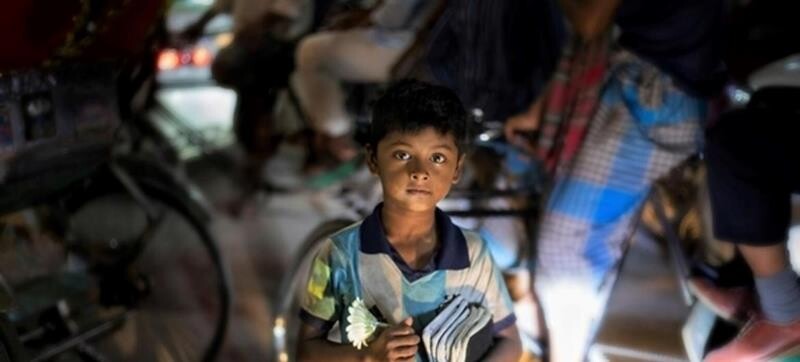 <\/figure>



Commentaires
Aucun commentaire pour le moment. Soyez le premier à réagir.