
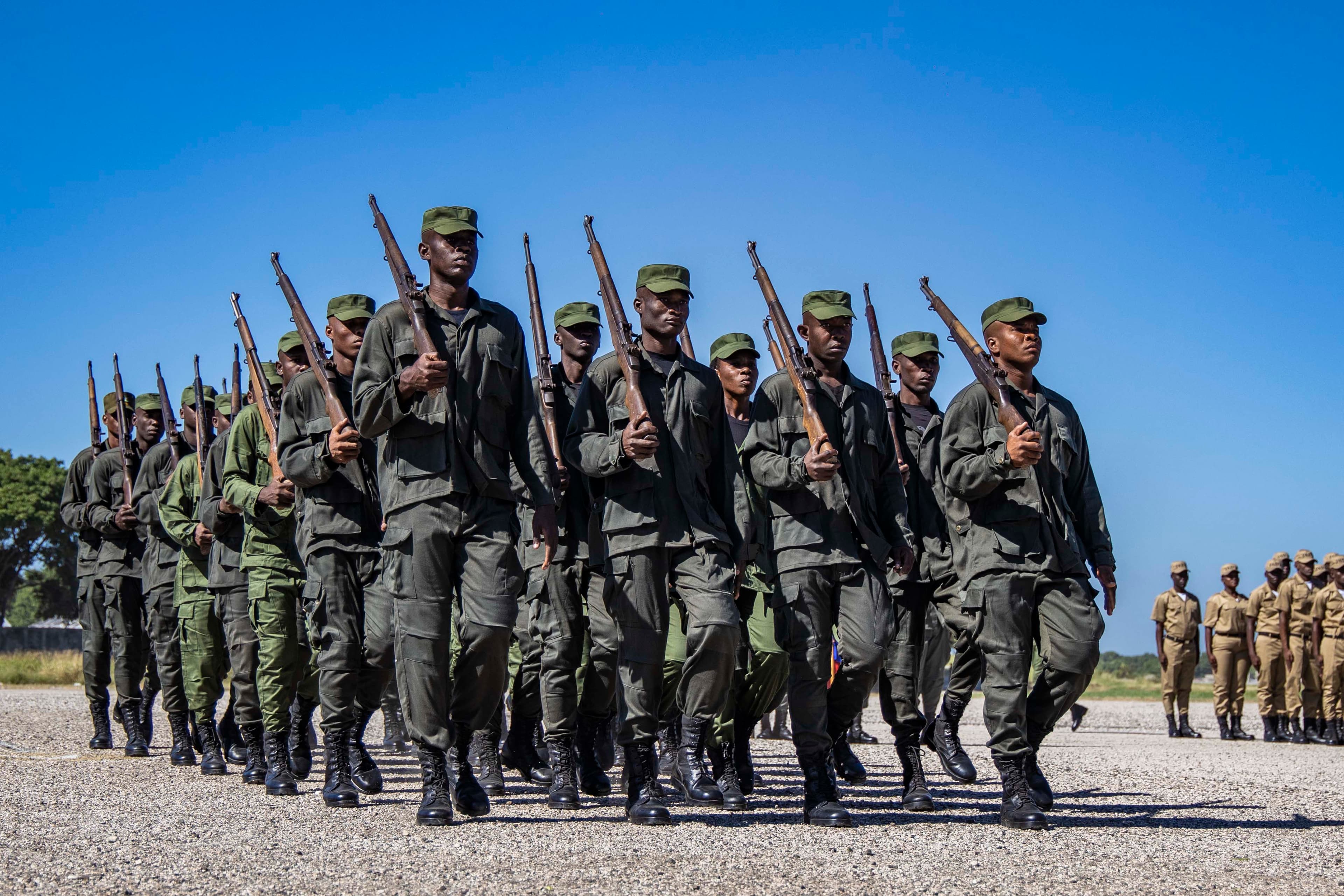
From the first steps toward the remobilization of the Armed Forces of Haiti (FAd’H) under the presidency of Michel Joseph Martelly to the effective remobilization of the military institution in May 2017 by President Jovenel Moïse, despite the contrary opinions of most of our international partners, there has been much controversy surrounding the question of the army, particularly regarding the urgency of this remobilization during a period of crisis affecting every part of society. Those opposed to the remobilization of the army have not failed to point out the missteps and politicization of the military institution, while others have focused instead on the role this institution played in the construction of Haiti’s nation-state, and the crucial contribution it can make to the effort aimed at reclaiming national sovereignty and restoring the authority of the State. This debate surrounding the army, which is now closed, had the positive effect of allowing both supporters and opponents of the army to delve once again into national history, and encouraging them to learn more about this centuries-old institution, which is indispensable to any attempt to understand the evolution of our history as a people.
As tumultuous as the history of all the country’s major institutions, the history of the Haitian army has had its share of turmoil and crises, as well as its share of glorious moments and achievements. For reasons related to the length of my presentation, I will not discuss here the characteristics of the public force in the 19th century, rightly called the Century or Period of the Bayonets. After the U.S. Occupation (1915–1934), which created the Gendarmerie d’Haïti, the military institution changed its name on three occasions: Garde d’Haïti (1928), Armée d’Haïti (1947), and Forces Armées d’Haïti (1958). Radically transformed into a partisan army, subservient to the Macoute regime, and therefore politicized and servile, it was never able to play a defense role; it always remained confined to that of a police and repressive force, hence the expression “armé kraze zo.” The Haitian army that emerged from the U.S. Occupation, distorted by Colonel Paul Eugène Magloire and disastrously transformed by Duvalierism, collapsed on Monday, September 19, 1994, like a sandcastle, after the coups d’état of General Henri Namphy and Prosper Avril, and the failed coup by the Biamby-Rébu-François trio.



Commentaires
Aucun commentaire pour le moment. Soyez le premier à réagir.