Between statements such as "we remain committed to Prime Minister Ariel Henry" or "we acknowledge that he is detained outside the country" or "we are in favor of establishing the Presidential Council," members of the December 21 Accord have mixed opinions on Ariel Henry's future. His absence does not seem to impact his allies to the same extent.
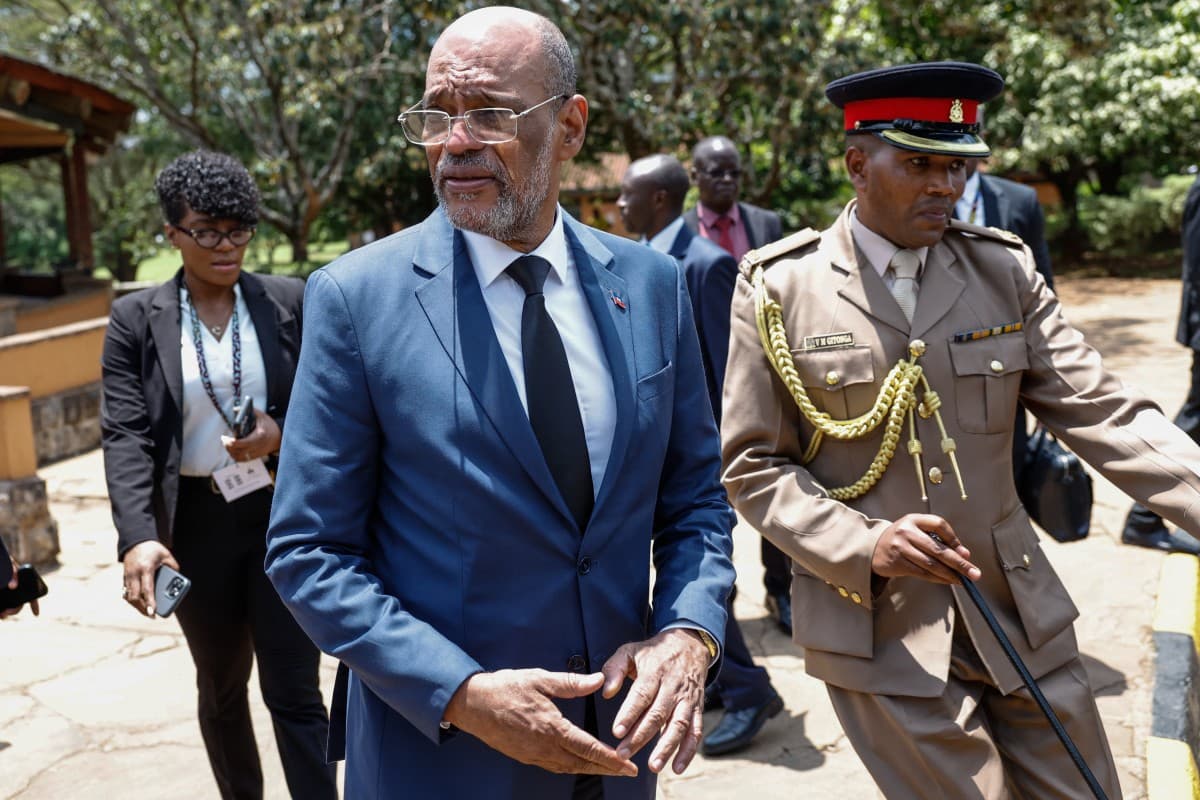
The head of government left the country on February 25, 2024, for official missions abroad that took him to Guyana and Kenya. Despite the end of his visits several days ago, the Prime Minister is unable to return to the country due, among other reasons, to acts of violence by armed gangs. Some of his allies within the December 21 Accord show solidarity with him. Others denounce what they consider a form of humiliation. A third category displays a certain indifference. But all are looking forward and opting for the establishment of the Presidential Council.
The days of Prime Minister Ariel Henry seem numbered at the Primature. His allies seem aware of the situation. They continue to discuss with the heads of government of CARICOM and suggest that they will move forward.
"We indeed had a meeting of more than an hour and 30 minutes with CARICOM on Thursday, March 7, 2024. The discussions took place with respect despite differences of opinion. At the moment, we are trying to come to an agreement among ourselves on the composition and responsibilities of the Presidential Council. We remain committed to Prime Minister Ariel Henry," declared Me André Michel, a signatory of the December 21 Accord, to Le Nouvelliste.
The political actors' discussions with CARICOM notably focus on establishing a five-member Presidential Council. Stakeholders are invited to designate representatives to shape this new structure, which will be responsible for leading the transition.
Former deputy Abel Descollines, a signatory of the December 21 agreement, told Le Nouvelliste that there is a majority trend among the Prime Minister's allies in favor of appointing a representative of the December 21 Accord to the Presidential Council.
"To date, the signatories are actively working towards a consensual choice. There is a strong likelihood that it will be a member signatory to the consensus," he explained.
When asked about the future of Ariel Henry within the December 21 Accord, Abel Descollines indicated, "Unfortunately, within the political consultation group, we have no news of the Prime Minister. We are unable to tell you what his future will be."
"We acknowledge that he is detained outside the country. We have also noted that there is a vacancy in the state's function of sovereign organization, which could possibly lead to a power vacuum," predicted the former parliamentarian.
According to him, "what we need is for the country to return to normal functioning. We need to find the best way to facilitate the continuation of the interim period to ensure the organization of elections," he said without demanding Ariel Henry's presence in the continuation of the interim period.
Joseph Domingue Orgella is the coordinator of the National Council of Haitian Civil Society (CNSCA) and a signatory of the December 21 Accord. For him, Ariel Henry's inability to return to the country after his trips abroad is the result of a lack of sovereignty and dependence of the country. For him, this does not only concern Dr. Henry but involves all of Haiti.
"Even if the Prime Minister were to leave office tomorrow, his departure must be negotiated. We do not have the right to humiliate him," he said.
Joseph Domingue Orgella stated that he is in favor of establishing the Presidential Council.
Meanwhile, CARICOM heads of government also met last Thursday with civil society organizations. Caribbean officials invite the leaders of these organizations to designate their representative within the Presidential Council. These representatives condition their participation in the new structure on the complete absence of representatives of armed groups at the negotiation table, reported actors who participated in the meeting to the newspaper.
As for political opposition actors, namely OPL, PHTK, EDE, Fanmi Lavalas, Accord Montana, En Avant, Unir, the first to discuss with CARICOM heads of government, they have still not reached an agreement on their representatives within the Presidential Council.
 .com

Commentaires
Aucun commentaire pour le moment. Soyez le premier à réagir.